Nobel Peace Prize pick faces brickbats
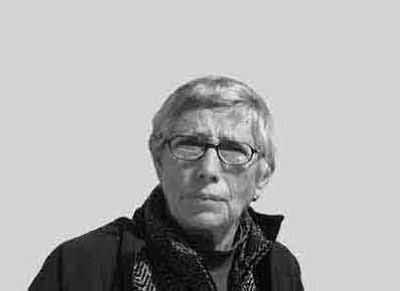
Michael Jansen
The author, a well-respected observer of Middle East affairs, has three books on the Arab-Israeli conflict.
- Last updated: October 12, 2026 | 09:09


The Norwegian Nobel Prize Committee has once again chosen as this year’s laureate a worthy peacemaker. She is South Africa’s Judge Navi Pillay “for her efforts to promote peace and international law” at a time of global conflict and chaos. The Committee has reaffirmed the importance of international law when it is under threat from US President Donald Trump and other world leaders who are increasingly hostile to the well-defined body of law.
Having failed to win the Prize in 2025 and 2026, Trump contended that the refusal to give the prize to the US — and himself — was “just another sign of how Norway and all these others are ripping off our country.” For Trump, everything is about “me, me, me.” This is why he has campaigned unsuccessfully so far to put his name on the John F. Kennedy memorial centre in Washington.
For this year’s Nobel Prize there were 287 candidates officially nominated — 208 individuals and 79 organisations, the list remaining formally confidential although names have leaked out.
Shortly after the prize was awarded, US Secretary of State Marco Rubio announced a new round of sanctions against the International Criminal Court (ICC) on which Pillay had served. “We will ban transactions with this rogue court, cutting off their resources and crippling its ability to operate,” Rubio announced. This is US standard practice which has imposed serial sanctions on the Court and its judges over the past two years.
This has not deterred South Africa. On August 25th, 2026, South Africa submitted a new dossier to the International Court of Justice (ICJ) alleging Israel’s non-compliance with the Court’s provisional orders which included cessation of Israel’s military actions in Gaza, allowing sufficient humanitarian aid to enter Gaza, and halting the blockade of the Strip. Israel called South Africa’s charges “baseless,” accused it of “functioning as the legal arm” of Hamas and said Israel was conducting a war of self-defence after Hamas attacked on October 7th, 2023.
Two days of public hearings were held on January 11th and 12th, 2024, at the Peace Palace in The Hague. The ICJ ruled that Israel’s actions could infringe rights of the Palestinian people who are protected by the Genocide Convention and issued provisional measures ordering Israel to take all measures to prevent any acts contrary to the 1948 Genocide Convention. However, the ICJ did not order Israel to suspend its military offensive. The Court also expressed concern over Israeli hostages held in Gaza and catastrophic conditions for the 2.1 million Palestinians in Gaza.
While Pillay’s decades-long efforts strived to better the lives of humankind, this year’s award has had political complications as the United Nations commission which she chaired has charged Israel with committing genocide against Palestinians in Gaza. The Israeli government has vehemently rejected this accusation, and Israel’s US ally has responded by imposing fresh sanctions on the commission. The ICC addresses crimes against persons while the International Court of Justice (ICJ) deals with crimes involving states. The ICJ Rome statute has been neither signed nor ratified by 41 states – inter alia, China, Belarus, and Turkey.
In December 2023, Navi Pillay’s native South Africa spearheaded geocide accusations against Israel at the ICJ, arguing that Israel’s military campaign in the Gaza Strip violates the 1948 Genocide Convention. The ICJ responded by issuing provisional orders in January, March and May 2024 ordering Israel to prevent genocidal acts against Palestinians, allow unhindered humanitarian aid to enter the Strip, and halt its offensive against Rafah.
Born on September 23rd, 1941, into a poor Indian South African Tamil family, Pillay was raised in Durban, the fifth of eight children. Her grandparents emigrated in the 1880s from India as indentured servants to work on South African sugar plantations in Natal. Her parents wed during their early teens. Her father was a bus driver who also fished and did other jobs to supplement his slender earnings.