Pakistan announces free public transport as energy crisis bites
Last updated: April 4, 2026 | 18:33
Passengers board a government bus at a bus stop in Islamabad on Saturday. AFP
A woman passenger arrives at a government bus stop in Islamabad. AFP
Tariq Butt, Gulf Today Correspondent / AFP
State-run public transport in Pakistan's capital and most populous province will be free for the coming month, officials said Friday, after the government drastically raised fuel prices due to the Iran war.
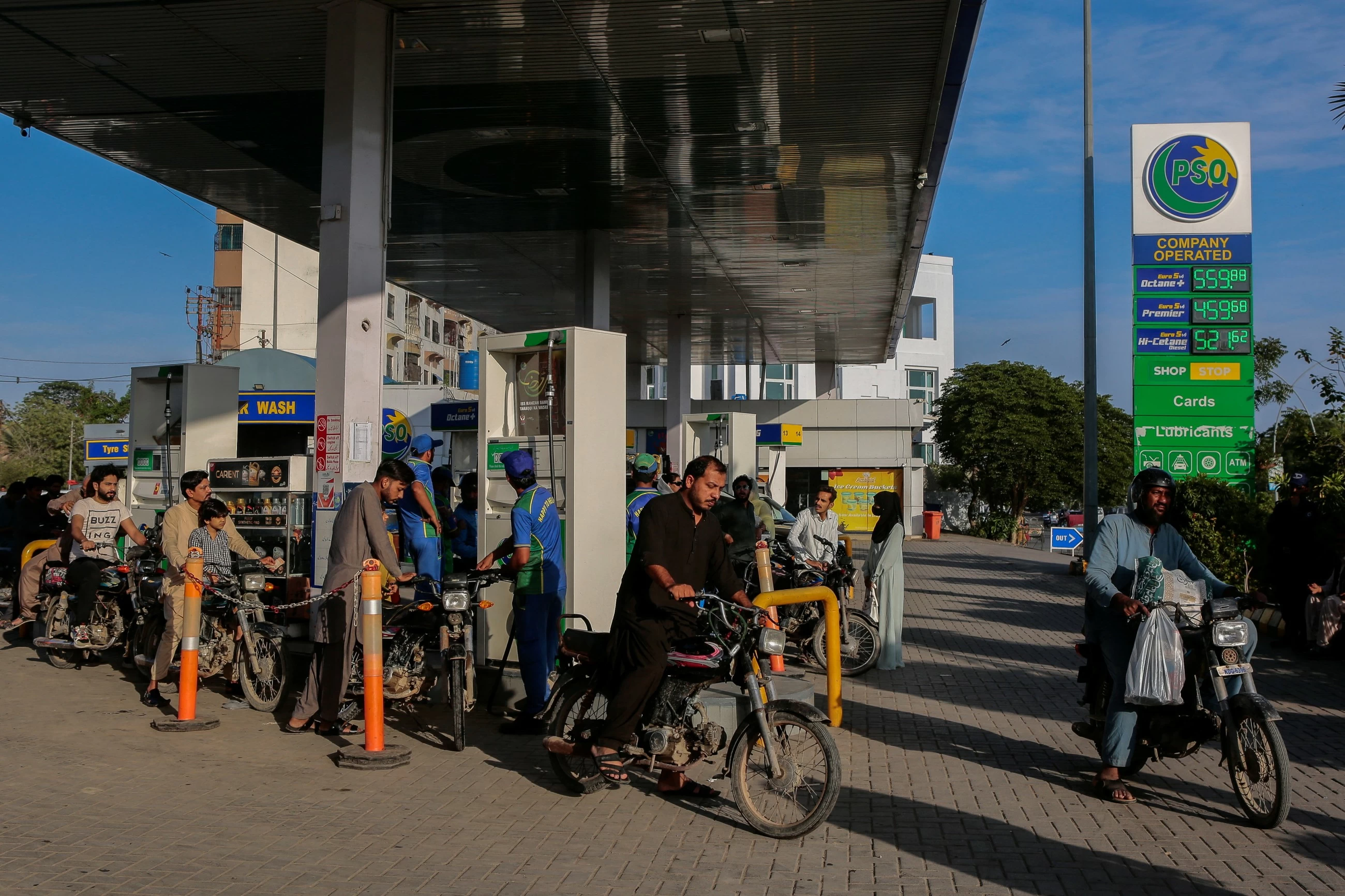
The announcement came after street protests and long queues of motorcycles at fuel stations triggered by a late-night decision to impose a 42.7 perccent rise in the price of petrol to Rs485 (US$1.74) per litre.
Prime Minister Shahbaz Sharif backpedaled late on Friday, saying he was reducing the levy and setting petrol prices at Rs378 per litre.
In a late-night address to the nation, he also declared that all federal cabinet members would forgo their salaries for the next six months as part of austerity measures.
"This decrease will be applicable for at least one month," Shahbaz said. "I promise I will not rest until your life is back to normal," he added.
His seven-minute televised address came after the unprecedented increase in petroleum prices sparked outrage from across the country.
Shahbaz began his address by saying he is once again addressing the nation at a challenging time, with a war ongoing in the Middle East. He
said the oil prices have skyrocketed in the entire region, creating difficulties for the common man. "Oil prices have increased significantly in global markets. Inflation has broken the backs of the world’s powerful economies.”
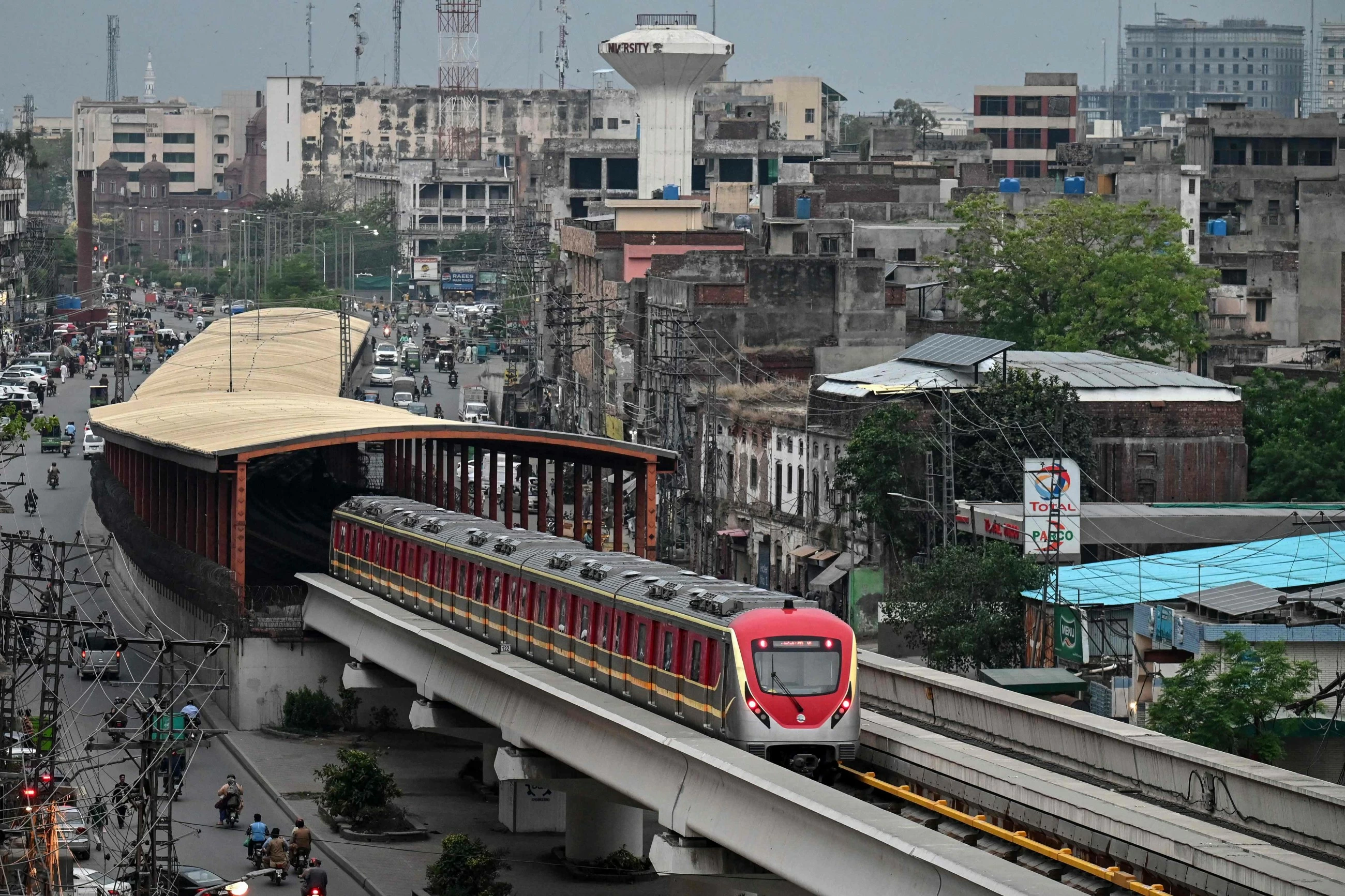
A metro train glides along an elevated track in Lahore. AFP
The prime minister hoped that the war in the region would end soon and peace would be established.
He stated that extensive consultations were held at the President's house prior to the announcement of the relief measures.
The premier outlined a relief package, including subsidies for transporters and financial support for small farmers, which was announced by the federal ministers a day earlier.
Shahbaz did not reduce the price for diesel, which will remain at 520 rupees per litre following a 54.9-percent price hike.
ECONOMIC BURDEN
"All public transport in Islamabad will be made free of cost for the general public for the next 30 days, starting tomorrow (Saturday)," Interior Minister Mohsin Naqvi wrote on X.
The government will bear a burden of Rs. 350 million rupees, he added.
People get fuel at a petrol station in Karachi. Reuters
The chief minister of Pakistan's most populous province, Punjab, also lifted the cost of travel for state-run public transport, and announced "targeted subsidies" for trucks and buses.
Maryam Nawaz Sharif urged operators not to pass on increased costs to passengers, adding: "We promise to relieve the public of economic burden as soon as conditions improve."
In Sindh, the provincial government in Pakistan's biggest city, Karachi, announced similar subsidies for motorcyclists and small farmers.
The US-Israel war on Iran, launched on February 28, has plunged the Middle East into conflict, with Iranian retaliatory strikes hitting targets across the Gulf and virtually freezing shipping in the Strait of Hormuz.
The key waterway normally sees about a fifth of the world's energy supplies pass through it, much of it bound for Asia.
The government has unveiled a raft of austerity measures designed to save fuel, including moving many government offices to a four-day workweek, extending school holidays and moving some classes online.
PROTESTS
Pakistan is classified as a lower-middle-income country, with roughly 25 percent of its 240 million population living in poverty, as per World Bank data.
The government hiked fuel prices by 20 percent in early March but has spent weeks resisting further increases, and insisting that it could absorb higher prices and not pass them on.
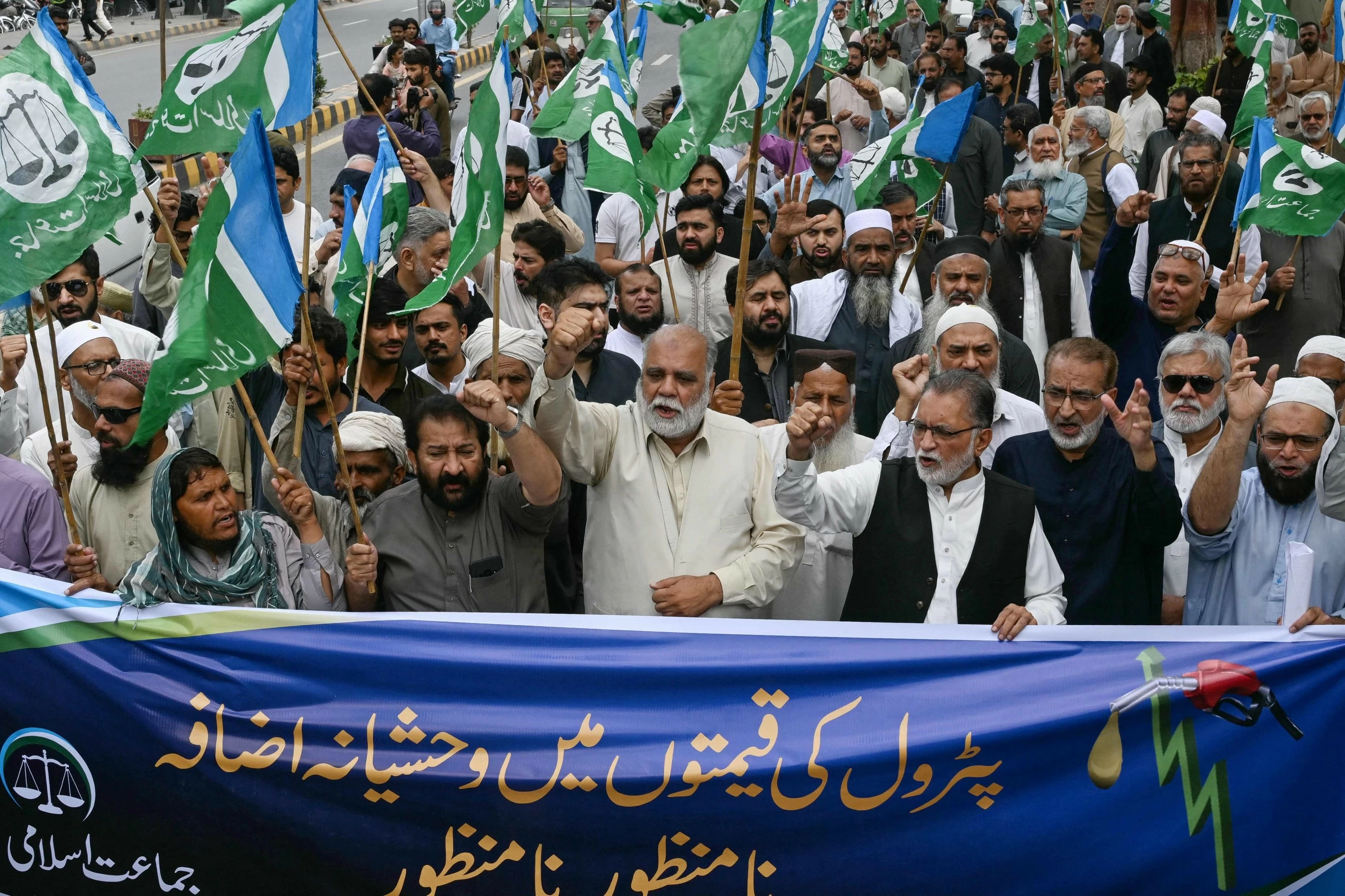
Activists and supporters of Pakistan's Jamaat-e-Islami Party shout slogans during a protest against the recent hike in fuel prices in Lahore. AFP
On Friday, dozens protested in the Punjab capital Lahore, calling on ministers to reverse the decision.
"The government, overnight, has dropped a 'petrol bomb' on its people," Naveed Ahmed, a 39-year-old protestor, told AFP.
"Our nation cannot bear this situation right now. This storm of inflation must be stopped, and relief should be provided to the public," he added.
Several Asian countries have hiked fuel prices or implemented other measures to address the crisis sparked by the Iran war.
On Thursday, Bangladesh increased prices of liquefied petroleum gas used for cooking and compressed natural gas used in some cars by 29 per cent.
Earlier this week, the International Monetary Fund warned that vulnerable economies, such as Pakistan, did not just face pressure from higher energy prices, but from supply chain snarls as well.
The IMF announced on March 28 that had reached an initial agreement with Pakistan to unlock a new $1.2-billion package as part of its support programmes for the country.
"The rise we are seeing is not due to the (Iran) war, but to pressure from the IMF, pressure that must be resisted," said another protester in Lahore, Hafiz Abdul Rauf.
"For God's sake, step back from these demands and show some compassion for the people."