Pakistan, Saudi, Turkish and Egyptian ministers discuss ways to end US-Iran war
Last updated: March 29, 2026 | 21:44
Pakistan, Turkish, Saudi and Egyptian foreign ministers meet to discuss regional de-escalation in Islamabad on Sunday. Reuters
This handout photograph taken on March 29, 2026 and released by Pakistan's Ministry of Foreign Affairs shows Pakistan's Foreign Minister Ishaq Dar (2R) walking with his counterparts Turkey's Hakan Fidan (R), Saudi Arabia's Faisal bin Farhan (2L) and Egypt's Badr Abdelatty upon their arrival for a meeting at the Foreign Ministry office in Islamabad. Foreign ministers from Pakistan, Saudi Arabia, Egypt and Turkey were expected to meet on March 29 for talks on the war in the Middle East, with Islamabad acting as a go-between between the United States and Iran. (Photo by Pakistan Foreign Ministry / AFP) / RESTRICTED TO EDITORIAL USE - MANDATORY CREDIT "AFP PHOTO / - / Pakistan's Ministry of Foreign Affairs" - HANDOUT - NO MARKETING NO ADVERTISING CAMPAIGNS - DISTRIBUTED AS A SERVICE TO CLIENTS
Tariq Butt, Gulf Today Correspondent / Agencies
Pakistan, Saudi Arabia, Turkey and Egypt discussed "possible ways to bring an early and permanent end to the war" in the MIddle East on Sunday, Pakistan's Foreign Minister Ishaq Dar said.
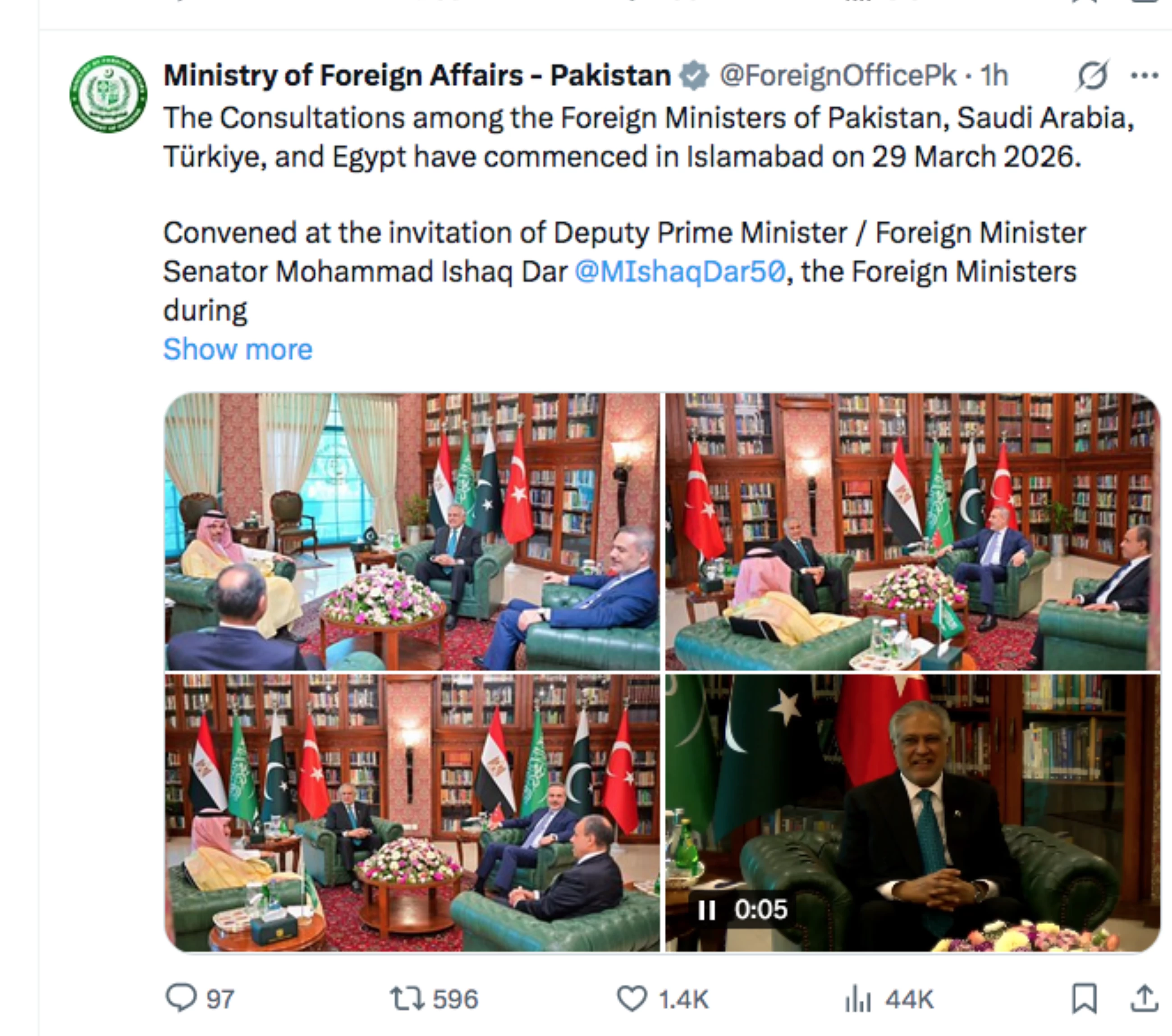
The four nations held joint talks to seek a de-escalation in the US-Iran war in Islamabad.
In a video recorded statement, Dar said all sides had expressed confidence in Pakistan's facilitation and that China "fully supports" the initiative to host the potential US-Iran talks in Islamabad.
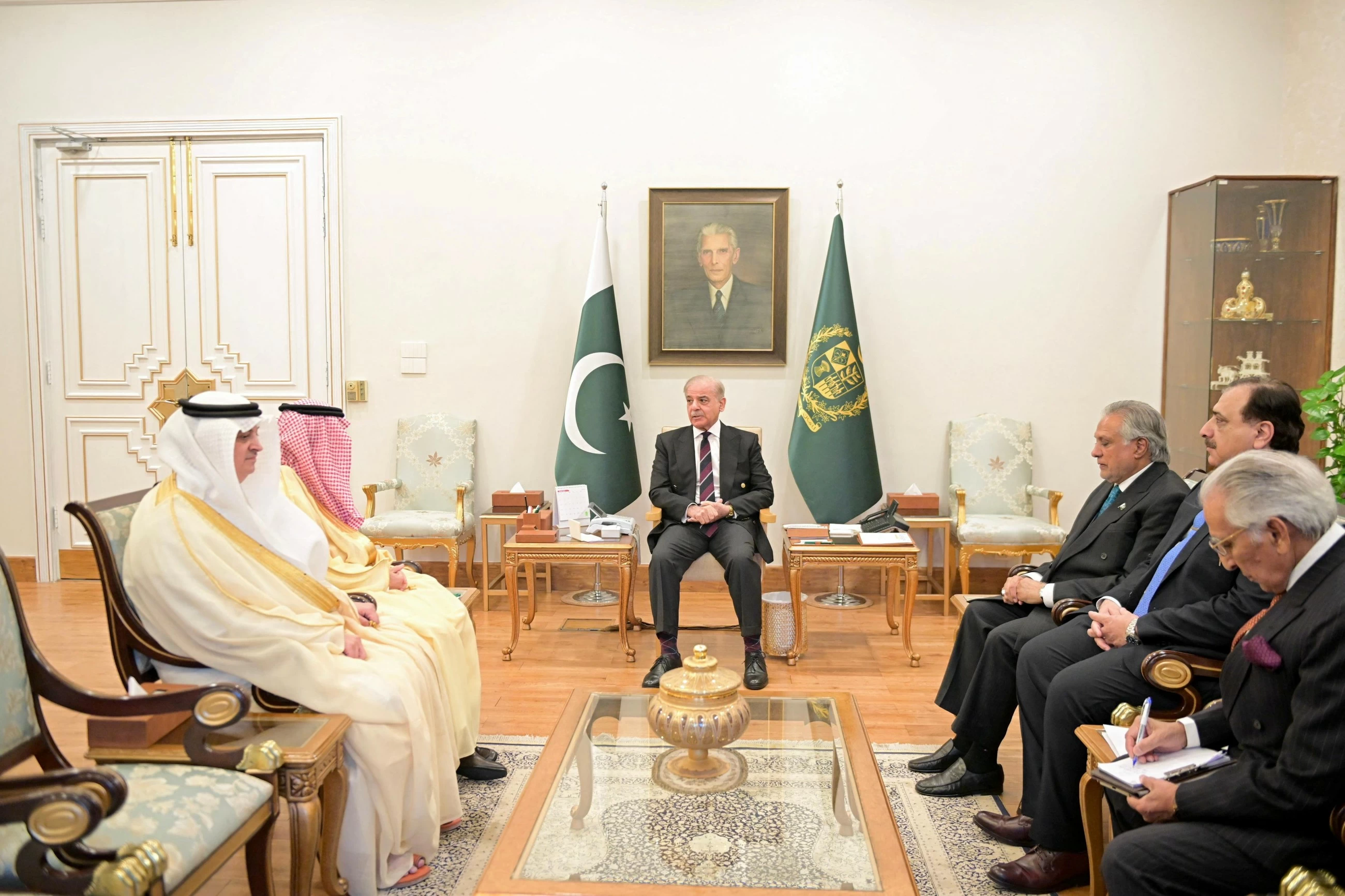
Later Dar said he had also held “very productive” bilateral meetings with the three foreign ministers (Turkey's Turkey's Hakan Fidan, Saudi Arabia's Faisal Bin Farhan and Egypt's Badr Abdelatty), who also called on Prime Minister Shahbaz Sharif.
PM Shahbaz Sharif and Saudi Arabia's Foreign Minister Prince Faisal Bin Farhan Al Saud hold talks in Islamabad. Reuters
“As you know, the purpose of this visit of the foreign ministers was to participate in the second meeting of consultations among Pakistan, Saudi Arabia, Turkey and Egypt, which was held in Islamabad. “You may recall that our first meeting was held in Riyadh on March 19, 2026,” he added.
Sharing details of Sunday’s quadrilateral meeting, Dar said the four foreign ministers had a very detailed and in-depth discussion on the current regional situation. “We also discussed possible ways to bring an early and permanent end to the war in the region.”
Dar said the four participants also expressed concerns that the ongoing conflict was “extremely unfortunate for its devastating impact on lives and livelihood across the wider region.”
“We agreed that this war is not in favour of anyone and would only lead to death and destruction; the unity of the Muslim ummah in these challenging times is of utmost importance,” he added.
Moreover, Dar said he briefed the visiting dignitaries on the prospects of potential US-Iran talks in Islamabad.
“The visiting foreign ministers expressed their fullest support to this initiative,” he said.
They “reaffirmed unity to contain the situation, reduce the risks of military escalation and create conditions for structured negotiations between relevant parties,” Dar said.
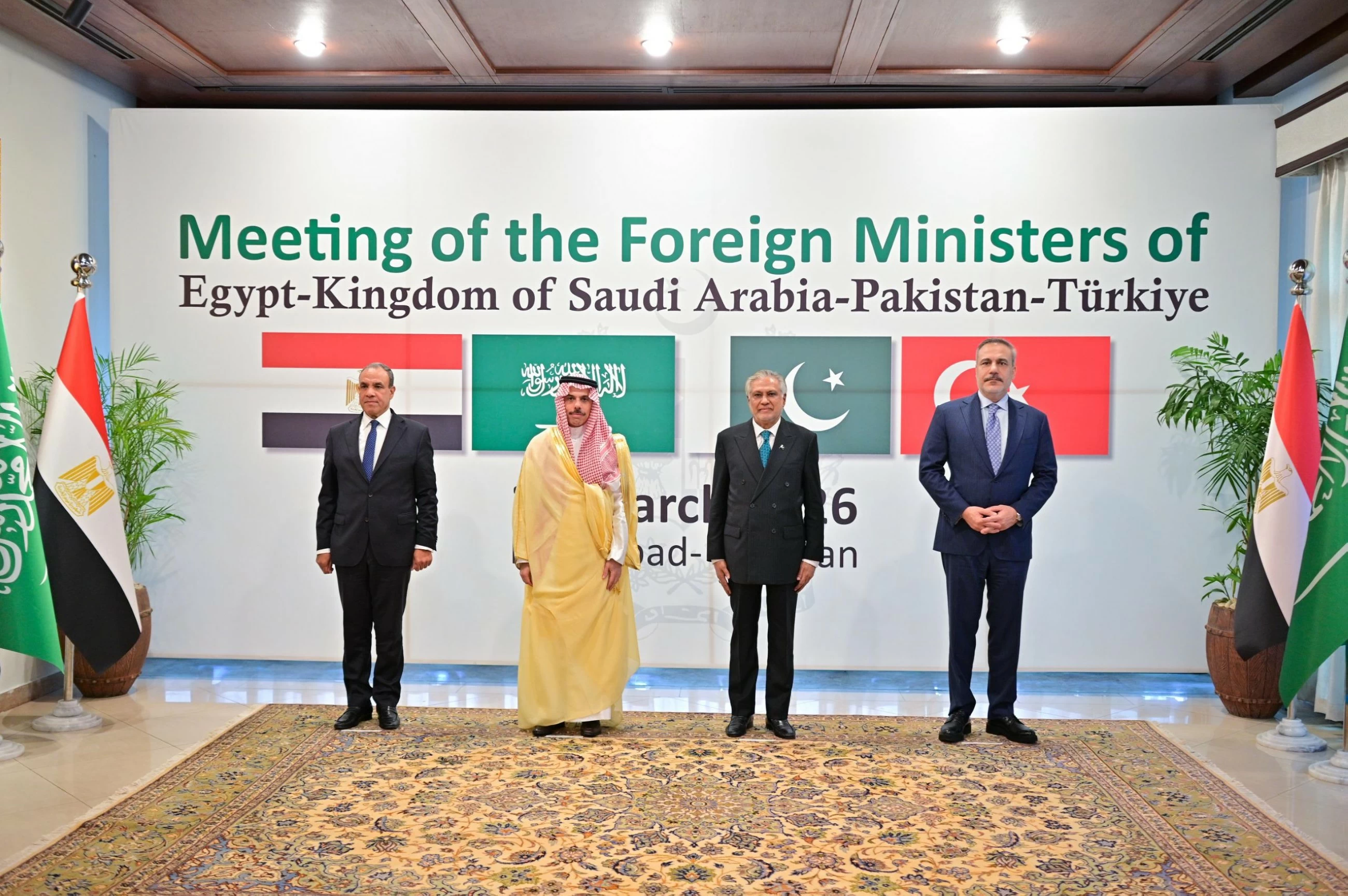
A group photo of the foreign minister of Pakistan, Saudi Arabia, Egypt and Turkey at the Foreign Office in Islamabad on Sunday. Photo / X
"We call for upholding principles of the UN Charter, including respect for sovereignty and territorial integrity of all," he added.
After the moot ended, Dar posted on X that he was pleased to welcome the foreign ministers of Saudi Arabia, Turkey, and Egypt to Islamabad for consultations.
“Grateful for their presence at this critical moment, reflecting our strong fraternal ties. Our candid and constructive discussions focus on the evolving regional situation and advancing peace and stability, while strengthening our partnership and deepening cooperation across diverse domains,” he posted on X.
Egypt's Badr Abdelatty and Hakan Fidan from Turkey arrived in Islamabad on Saturday night while their Saudi counterpart Faisal Bin Farhan touched down on Sunday afternoon.
Several roads leading to Islamabad's Red Zone — where key government buildings and diplomatic missions are based — were sealed off, AFP reporters said. Security was tight and the driveway of the foreign ministry was decorated with the flags of all four countries.
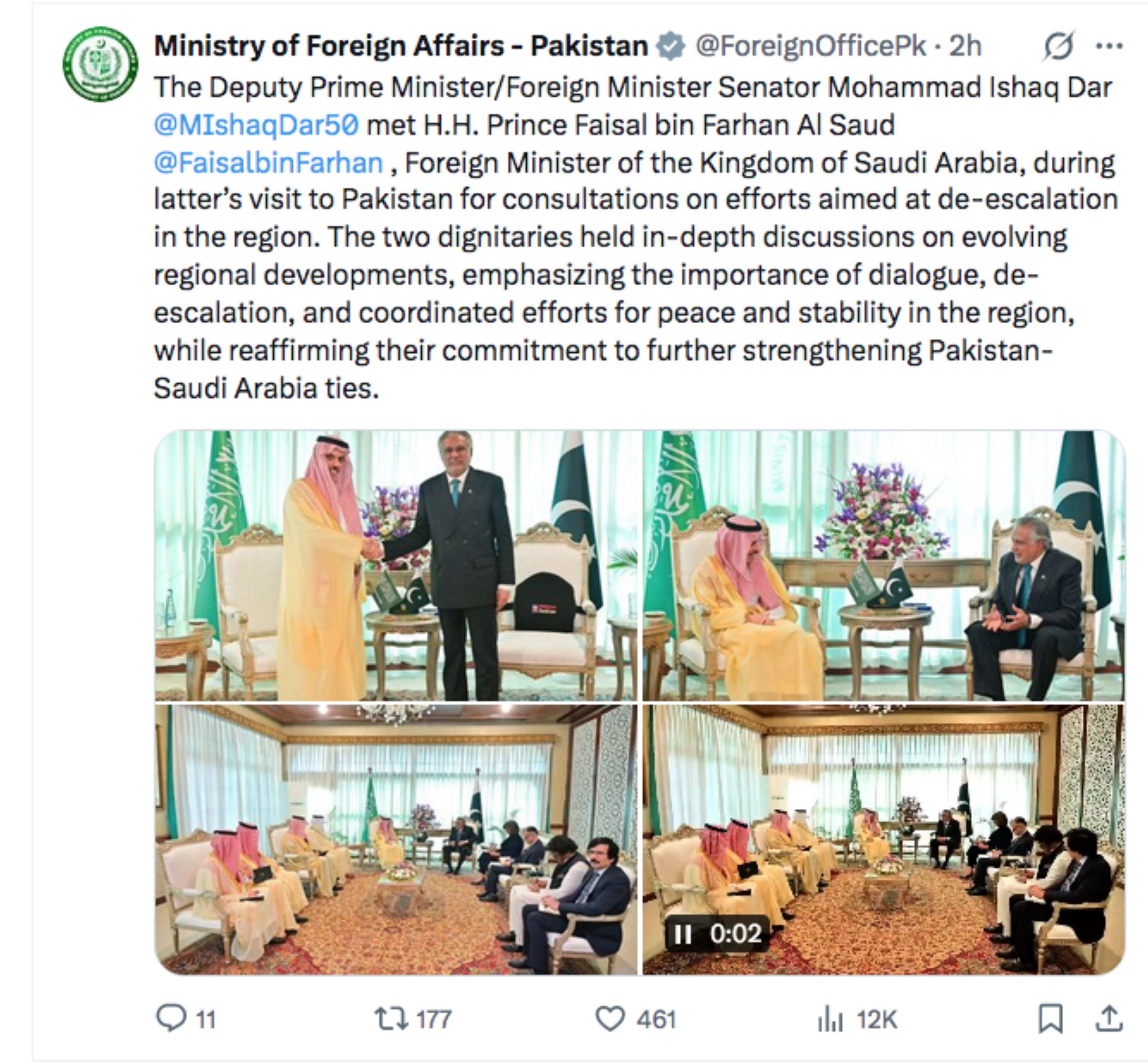
Before the meeting, Pakistan's Foreign Minister Ishaq Dar held separate bilateral talks with his visiting counterparts.
Fidan and Abdelatty also jointly met Pakistan's army chief, Field Marshal Asim Munir.
Egypt’s Abdelatty said the meetings were aimed at opening a "direct dialogue” between the US and Iran, which have largely communicated through mediators during the war.
The government in Pakistan has emerged as a key facilitator between Iran and the United States as their war drags on, serving as an intermediary for messages between the two sides.
Iran allows 20 more Pakistani-flagged vessels to pass through Hormuz
Late on Saturday, Dar, who is also the country's deputy prime minister, said Iran had allowed 20 more Pakistani-flagged vessels — or two ships daily — to pass through the Strait of Hormuz.
In a post on X, he said two ships will cross the Strait daily.
"This is a welcome and constructive gesture by Iran and deserves appreciation. It is a harbinger of peace and will help usher stability in the region," he said. "This positive announcement marks a meaningful step toward peace and will strengthen our collective efforts in that direction," Dar said.
"Dialogue, diplomacy, and such confidence-building measures are the only way forward," he said and tagged US Vice President JD Vance, US Secretary of State Marco Rubio, Iranian Foreign Minister Abbas Araghchi and US special envoy Steve Witkoff in the post.
The world has been facing a global fuel crunch in the aftermath of a US-Israeli war on Iran, which has been going on for nearly a month.
The fuel crisis has resulted from the disruption of traffic in the Strait of Hormuz - a corridor that carries 20 per cent of global liquified natural gas and a quarter of seaborne oil.
Earlier, Iran had permitted two Pakistani cargo ships to transit through the Strait of Hormuz.
Meanwhile, a Pakistani oil tanker had also transited through the Strait on March 16 - the first such voyage by a non-Iranian tanker since the start of the war.
The development came hours after Prime Minister Shahbaz Sharif spoke to Iranian President Masoud Pezeshkian and apprised him of Pakistan's diplomatic outreach efforts to organise peace talks between Washington and Tehran, in a phone call that lasted over an hour.