Pakistan emerges as potential peace broker between US, Iran: Report
- Last updated: March 25, 2026 | 22:10


Pakistan has re-emerged at the centre of global attention - transitioning from a country once perceived as isolated into a pivotal actor in regional and international affairs, said a report.
Just a few years ago, Pakistan faced diplomatic and economic uncertainty, along with a narrative of isolation. Today, it is being discussed as a potential mediator in one of the world’s most volatile conflicts that has affected almost every individual on the planet, the report said.
At a time when the entire world is suffering from the fallout of the ongoing Iran war, with no hope of any immediate end, Pakistan has made headlines, with international media reporting while quoting sources, that it is mediating between the United States and Iran.
This shift is not accidental. It reflects a deliberate strategy combining diplomatic outreach and civil-military cohesion. The strong working relationship between Prime Minister Shahbaz Sharif and Field Marshal Asim Munir has been central to this effort, blending political leadership with institutional strength.
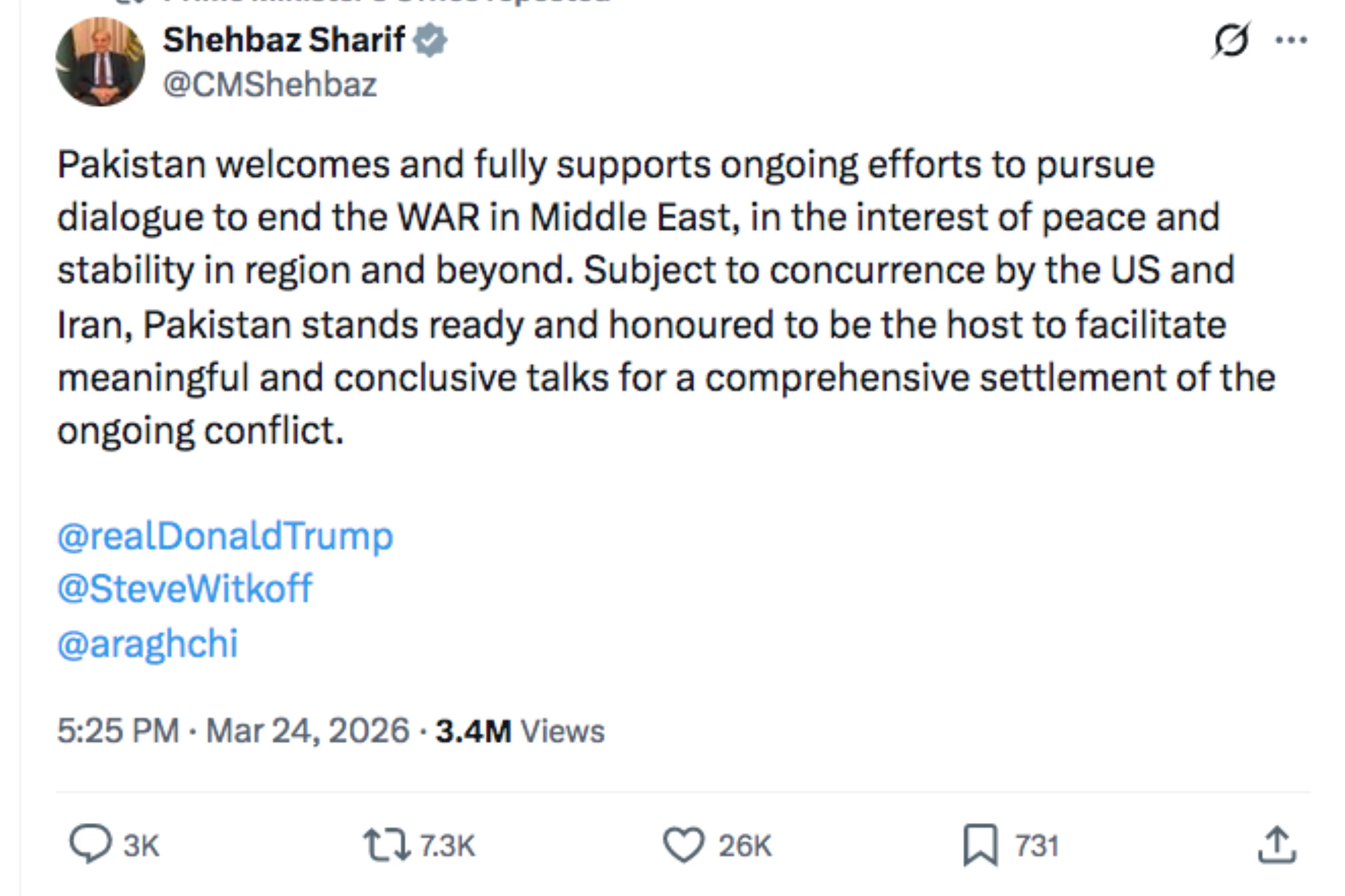
Shahbaz Sharif has publicly offered Islamabad as a venue for dialogue between the United States and Iran, underscoring Pakistan’s commitment to peace and stability. “Pakistan stands ready and honoured to facilitate meaningful and conclusive talks,” he stated on his X account, positioning the country as a credible and neutral mediator at a time of escalating global uncertainty.
Soon after, US President Donald Trump reposted Shahbaz Sharif’s post on X, conveying subtle endorsement and raising hopes of a possible end to the war sooner rather than later. This all suggests that through back-channel diplomacy, Pakistan is playing a quiet but critical role in relaying messages between Washington and Tehran. Coordination with important Muslim countries further reflects Islamabad’s growing diplomatic weight. The prime minister, army chief and Foreign Minister Ishaq Dar are seen hectically involved in interacting with concerned foreign players.
The report said behind this diplomatic resurgence lies an unprecedented level of civil-military coordination. According to senior officials, the premier and Field Marshal have maintained continuous, real-time communication during the present Gulf crisis, much like their coordination during the Pakistan-India standoff in May last year.
This unity is proving decisive, as it did during the confrontation with India. Pakistan’s handling of regional tensions drew international recognition for its restraint and clarity. The country not only managed to avoid escalation but also projected itself as a responsible nuclear state committed to dialogue — earning praise from some of the world’s most influential capitals, particularly Washington.
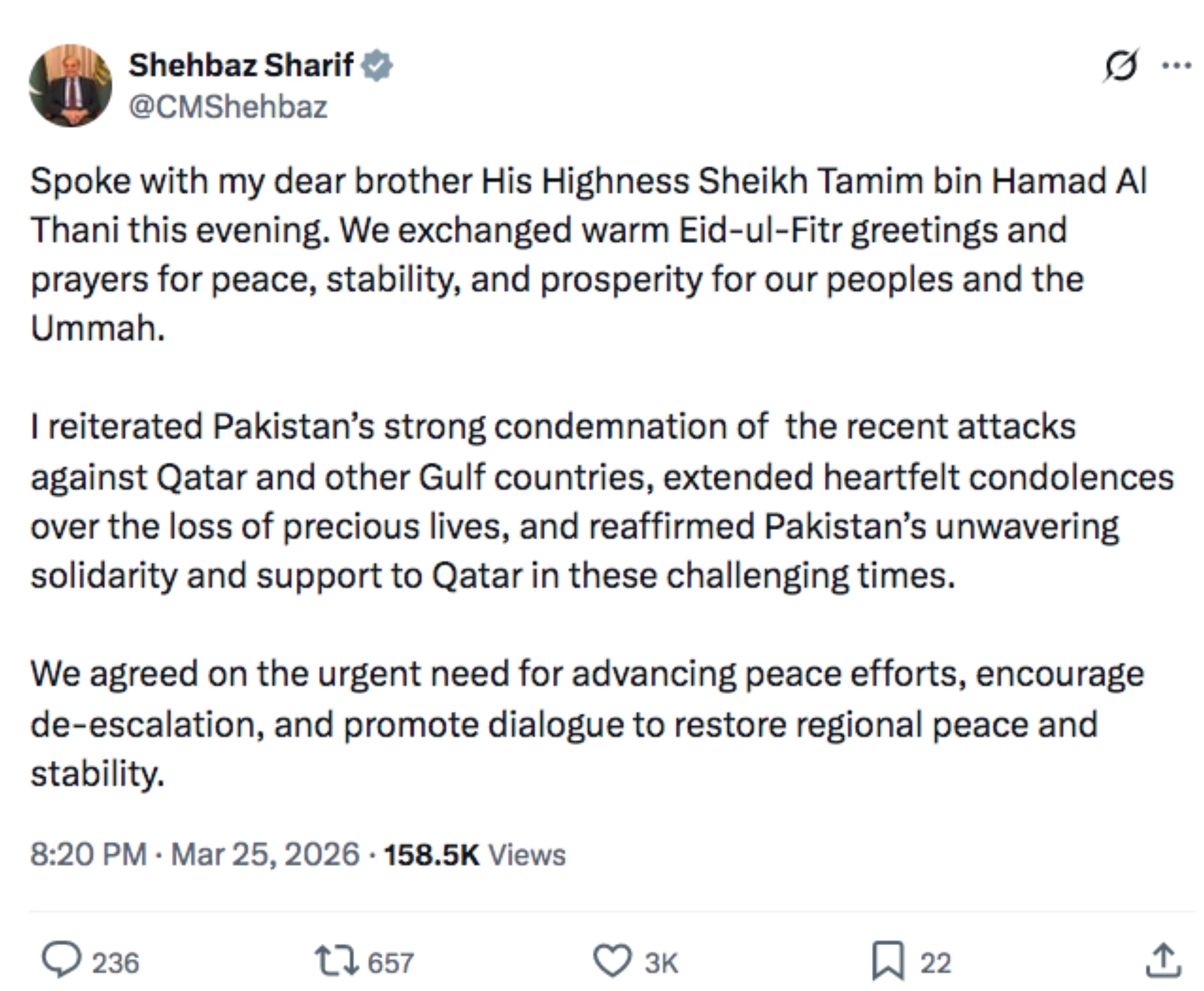
On Wednesday, PM Shahbaz briefed Saudi Crown Prince Mohammed Bin Salman on Pakistan’s diplomatic efforts to reduce tensions in the Middle East, while condemning recent Iranian attacks on the Kingdom and reaffirming Islamabad’s support for Riyadh, the Prime Minister’s Office said.
“The Prime Minister briefed the Saudi Crown Prince on Pakistan’s constructive diplomatic outreach to all parties urging de-escalation and resolution of differences through dialogue and diplomacy,” PM’s office said in a statement circulated after the phone call.
Malaysian Prime Minister Anwar Ibrahim has welcomed Pakistan’s offer to host negotiations between US and Iran, calling it a critical moment for diplomacy.
Addressing a meeting in Indonesian capital Jakarta, Anwar said that the initiative of Pakistani PM Shahbaz Sharif and other leaders of the region to resolve the conflict is commendable.
He said that Pakistan initiative is a last window for real diplomacy. He said that Malaysia will continue to support every credible effort for a just and lasting peace.
He showered praise on Pakistan, Oman, and others for stepping in to end Middle East conflict which was causing energy crisis in the entire world. Malaysia leader urged Washington and Tehran to engage seriously.