Pakistani minister says over 330 Afghan Taliban fighters killed in Operation Ghazab-lil-Haq
- Last updated: February 28, 2026 | 15:50


Pakistan's military, backed by artillery and air power, struck more military installations deep inside Afghanistan overnight and into early on Saturday, killing over 300 Afghan Taliban fighters in dayslong border clashes, a government spokesman and officials said.
Pakistan and Afghan forces have targeted each other's military positions since Thursday night, when Afghanistan launched a cross-border attack in response to Pakistani airstrikes in Afghanistan last Sunday.
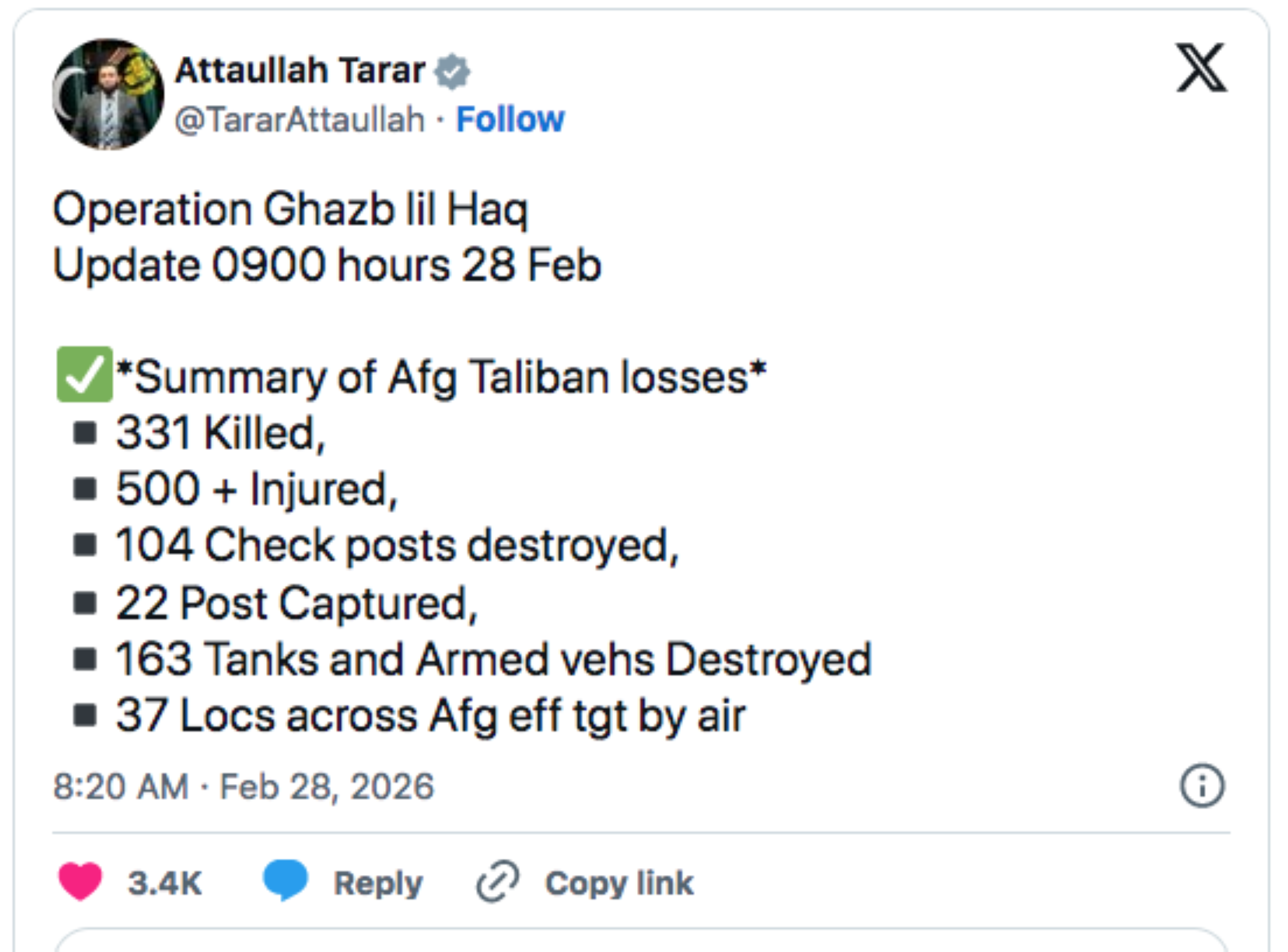
Pakistan's Information Minister Attaullah Tarar said on Saturday that more than 331 Afghan forces had been killed and over 500 others wounded during the ongoing military strikes in Afghanistan.
Pakistan destroyed 102 Afghan posts, captured 22 others and destroyed 163 tanks and armored vehicles at 37 locations during the Operation Ghazab-lil-Haq (Righteous Fury), he said.
There was no immediate comment from Afghanistan on the Pakistani claims. On Friday, Afghan government spokesman Zabiullah Mujahid said that Pakistan's claims that more than 100 Afghan forces had been killed were false.
Pakistan said it was targeting the outlawed Pakistani Taliban, known as Tehrik-e-Taliban Pakistan (TTP). The group is separate but closely allied with Afghanistan's ruling Taliban.
The armed forces of Pakistan launched Operation Ghazab-lil-Haq in retaliation to the Taliban regime’s unprovoked aggression along the Pakistan-Afghanistan border.
Security officials said the armed forces destroyed several key Afghan Taliban posts. Following Pakistan's decisive action, Afghan Taliban reportedly raised white flags at multiple positions.
They said that security forces effectively targeted Afghan Taliban positions using artillery and quadcopters, significantly weakening their defensive capabilities.
Tarar said that the military carried out a coordinated and effective operation following cross-border hostilities. He said that the operation resulted in significant losses for the Afghan Taliban, as at least 133 Taliban were killed, and more than 200 were injured.
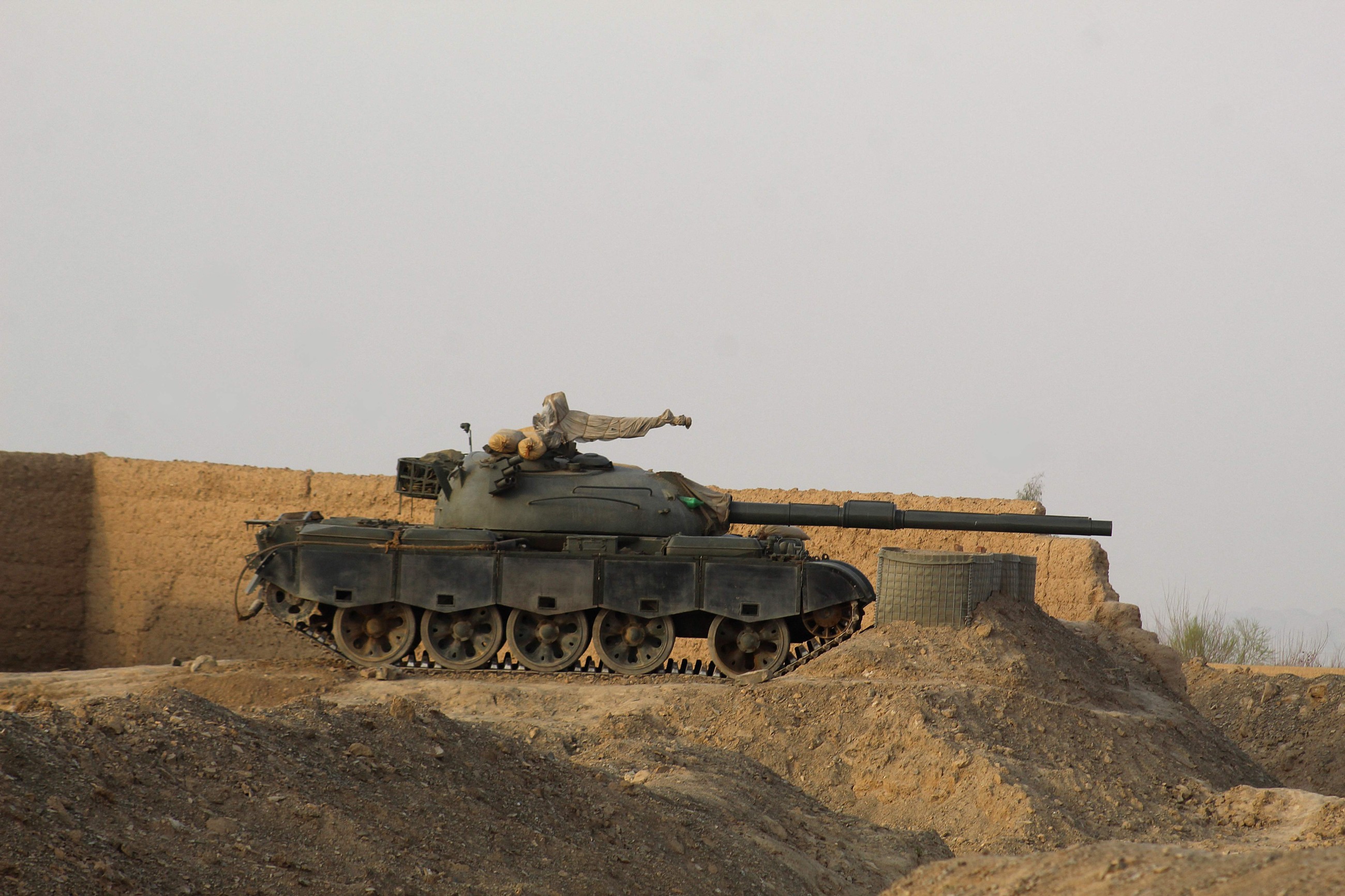
He said that 27 Afghan posts were destroyed, and nine were captured. In addition, he said more than 80 tanks, artillery guns, and armored personnel carriers (APCs) were destroyed during the engagement.
Tarar said that the Pakistan Air Force also conducted strikes in Kandahar, Kabul, and Paktia, and destroyed military installations belonging to the Taliban regime.
He said that two corps headquarters, three brigade headquarters, two ammunition depots, one logistics base, three battalion headquarters, two sector headquarters, and more than 80 tanks, artillery pieces, and armored personnel carriers had been destroyed.
"These very, very effective air strikes have been conducted by the Pakistan Air Force,” the minister said, citing the security officials.
He confirmed that two Pakistani soldiers embraced martyrdom and three sustained injuries while safeguarding the motherland.
"Our armed forces ensured the defense of the homeland with exemplary professional skills,” he said, adding that any future aggression would be met "with an iron hand.”
The minister said that hostile elements are spreading fake news on social media in the aftermath of the operation.
Defence Minister Khawaja Asif said that Pakistan’s patience has "reached its limit” and that a strong and decisive response is delivered to the aggression.
He said that no compromise would be made on national security. "There will be no compromise on Pakistan’s sovereignty and national safety,” he asserted.
Interior Minister Mohsin Naqvi warned that the Afghan Taliban would face serious consequences for their actions. He said that the Taliban regime deliberately targeted civilian populations, terming the move a cowardly act carried out under the cover of darkness.
"The attempt to target innocent civilians is condemnable and reflects the malicious intent of the,” he said, adding that such aggression was "unbearable and unacceptable.”