Huawei leads the next chapter of foldable innovation with a wider vision
- Last updated: October 29, 2026 | 18:57


Gulf Network
The next chapter for foldable smartphones is being shaped by a different question. Having demonstrated that displays can fold, manufacturers are now exploring which proportions make the most sense when those screens open.
Recent launches point towards a wider format. These devices unfold into a broad viewing area rather than a near-square display, creating more space for videos, documents and multiple apps. When closed, their shorter, wider dimensions resemble a passport more closely than a conventional book-style foldable.
Huawei helped establish this direction with the Pura X, introduced in China in March 2025. Joining a portfolio spanning flip, book-style and tri-fold devices, it brought a passport-style design built around a 6.3-inch inner display with a 16:10 aspect ratio. A 3.5-inch outer screen supported quick interactions without requiring users to unfold the phone.
The approach focused on giving the expanded screen a clearer everyday purpose, moving beyond the novelty of a folding display.
A wider canvas for everyday use
Launched in China this April, the Pura X Max develops that idea with a 7.7-inch inner display and a larger 5.4-inch outer screen. The expanded external display makes the phone more practical to use while closed, while opening it provides a broader surface for viewing content and getting things done.
Documents can display more information across the page, and videos have more room to fill the screen. How comfortably the wider body fits in the hand, however, remains a matter of individual preference.
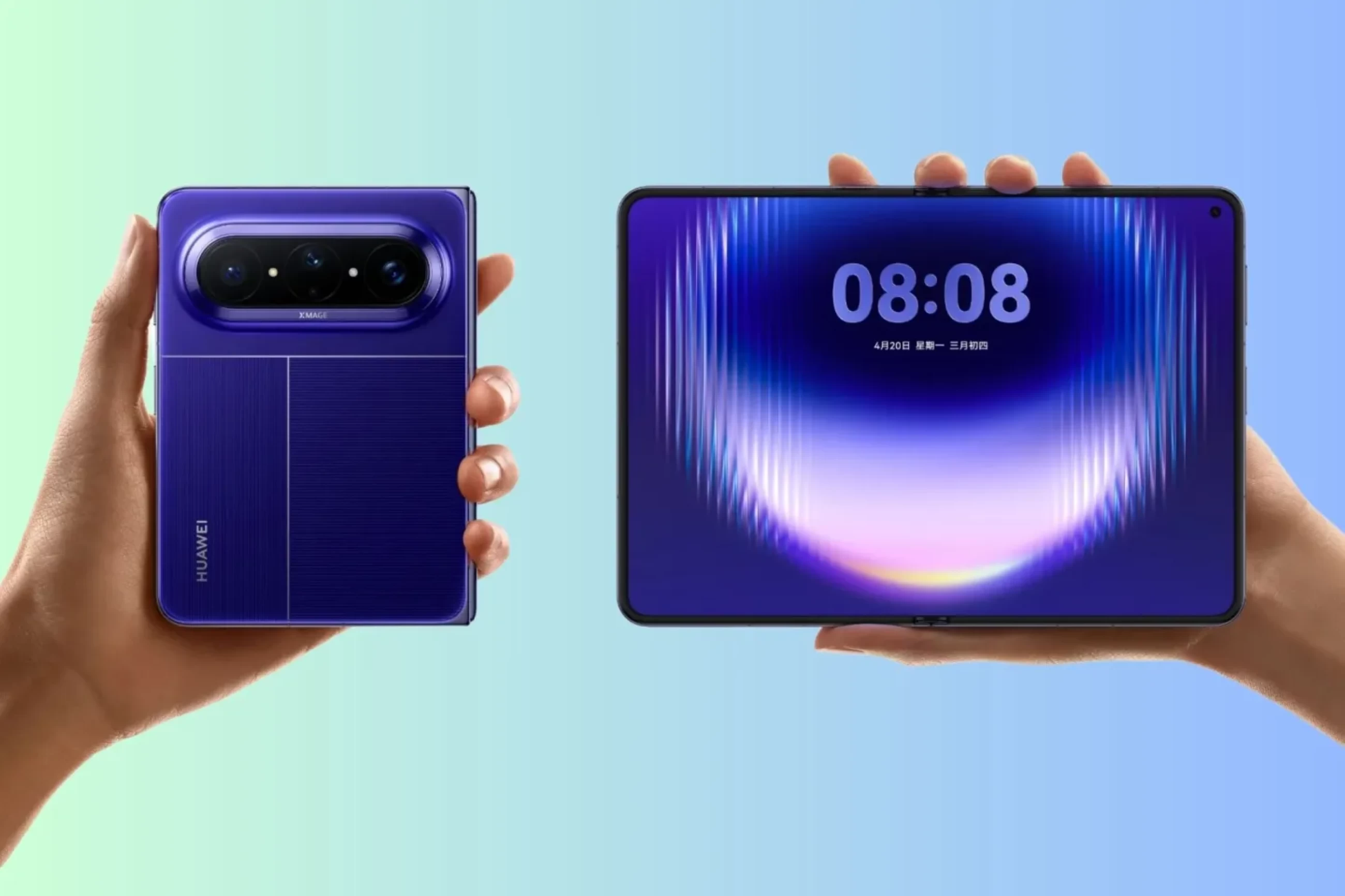
Making that format useful also requires more than changing the screen’s proportions. Foldables must accommodate a hinge and a second display within space that could otherwise house a larger battery or camera components. Balancing those demands with portability remains one of the category’s central challenges.
Bringing flagship features into the fold
On the Pura X Max, Huawei pairs the wider design with a rear camera system comprising a 50-megapixel main camera, a 12.5-megapixel ultra-wide camera and a 50-megapixel periscope telephoto camera with approximately 3.5x optical zoom.
The dedicated telephoto provides an option for capturing subjects at a distance, while support for close-up photography adds flexibility for nearer details.
A 5,300mAh battery powers the device, with support for up to 66W wired charging and 50W wireless charging. Together, these features form part of Huawei’s effort to bring familiar flagship capabilities into a foldable format.
Durability is another part of that equation. The outer display is protected by second-generation Kunlun Glass, while Huawei has also reinforced the inner screen and hinge. These measures address practical considerations for buyers investing in a device designed to be opened and closed repeatedly throughout the day.
From a new shape to a practical proposition
The original Pura X established Huawei’s early lead in wide-screen foldables. The Pura X Max builds on that foundation, combining the format with camera, battery and durability features intended to make it a capable everyday phone.
As other manufacturers explore similar proportions, the value of this design will increasingly depend on what it allows people to do comfortably, both with the screen open and with the device closed.
With discussion of a possible global launch for the Pura X Max, a wider audience may eventually have the opportunity to experience Huawei’s approach: a practical, durable wide-screen foldable with flagship-level camera performance and improved battery life.