Pakistan hikes petrol, diesel prices due to Middle East conflict
Last updated: April 3, 2026 | 20:35
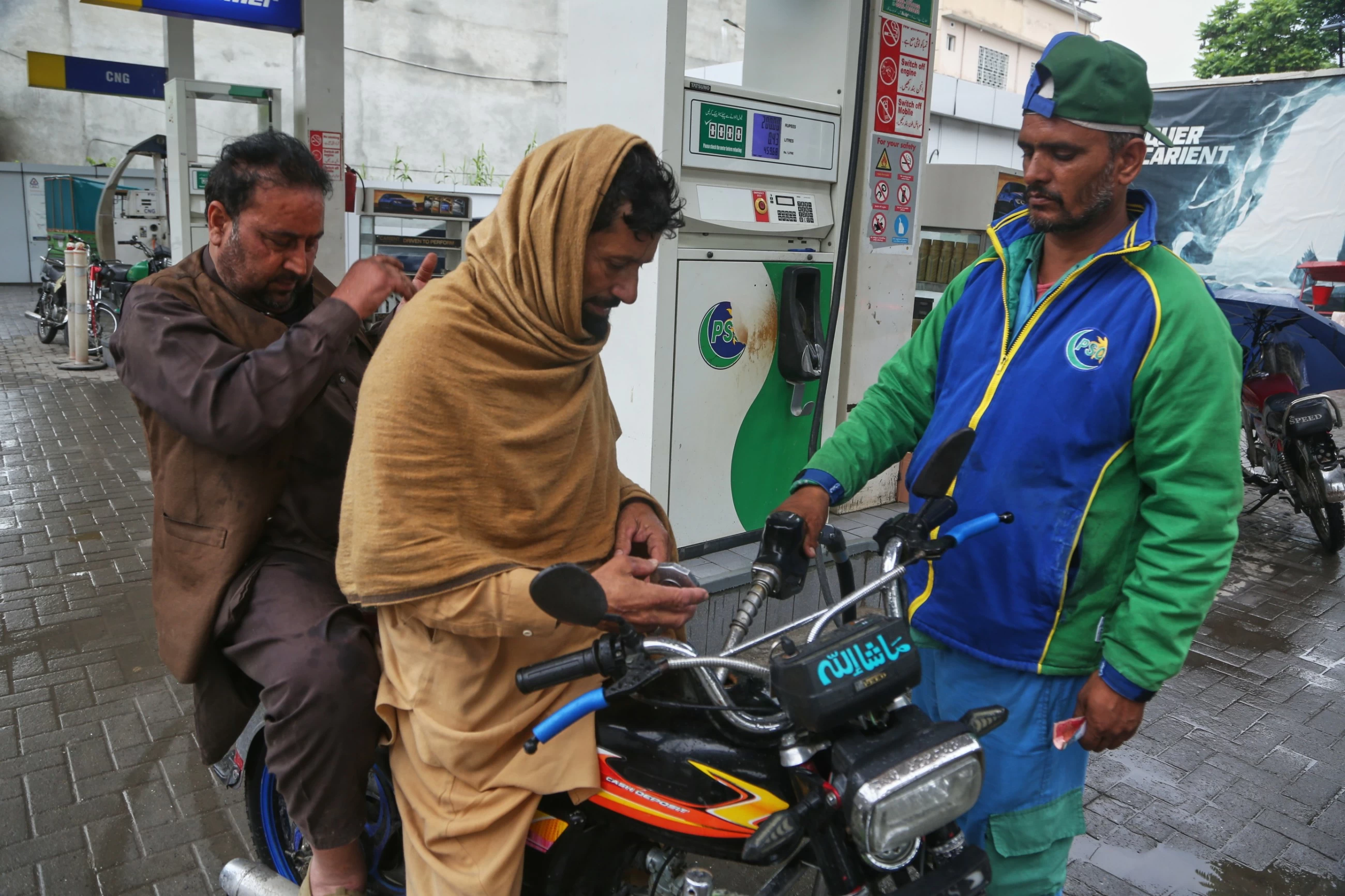
A motorcyclist looks at the display at a fuel station as he buys fuel in Peshawar, Pakistan, on Friday. AP
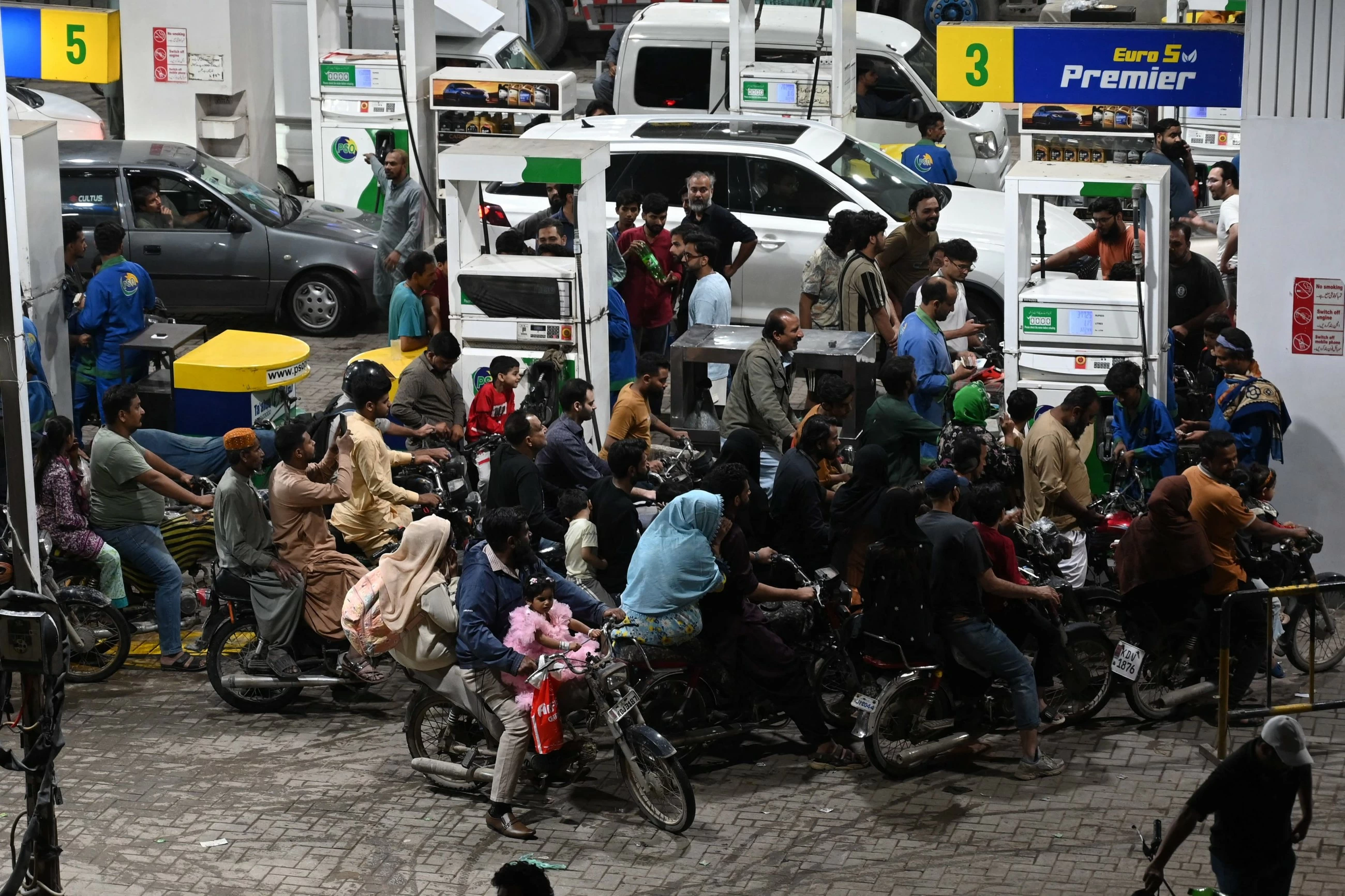
Clients queue at a gas station amid rising petrol prices in Karachi on April 3, 2026. US-Israel war on Iran, launched on February 28, has roiled global energy and equities markets, sending oil prices skyrocketing after Tehran virtually closed the key Strait of Hormuz. (Photo by Rizwan TABASSUM / AFP)
Pakistan's government on Thursday night drastically raised fuel prices in response to spiking global energy prices caused by the Iran war, the country's petroleum minister said in a press conference.
The new prices mark an increase of 42.7 per cent in petrol prices and 54.9 per cent in the price of diesel.
"The decision made today is that as per international markets, after the increase in the petrol prices the new price will be Rs458.40 ($1.64 per litre) which will be effective from tomorrow (Friday)," said Petroleum Minister Ali Pervaiz Malik.
As for diesel, "which has great importance for our workers and public transport," the price was set at Rs520.35 ($1.86) per litre, he said.
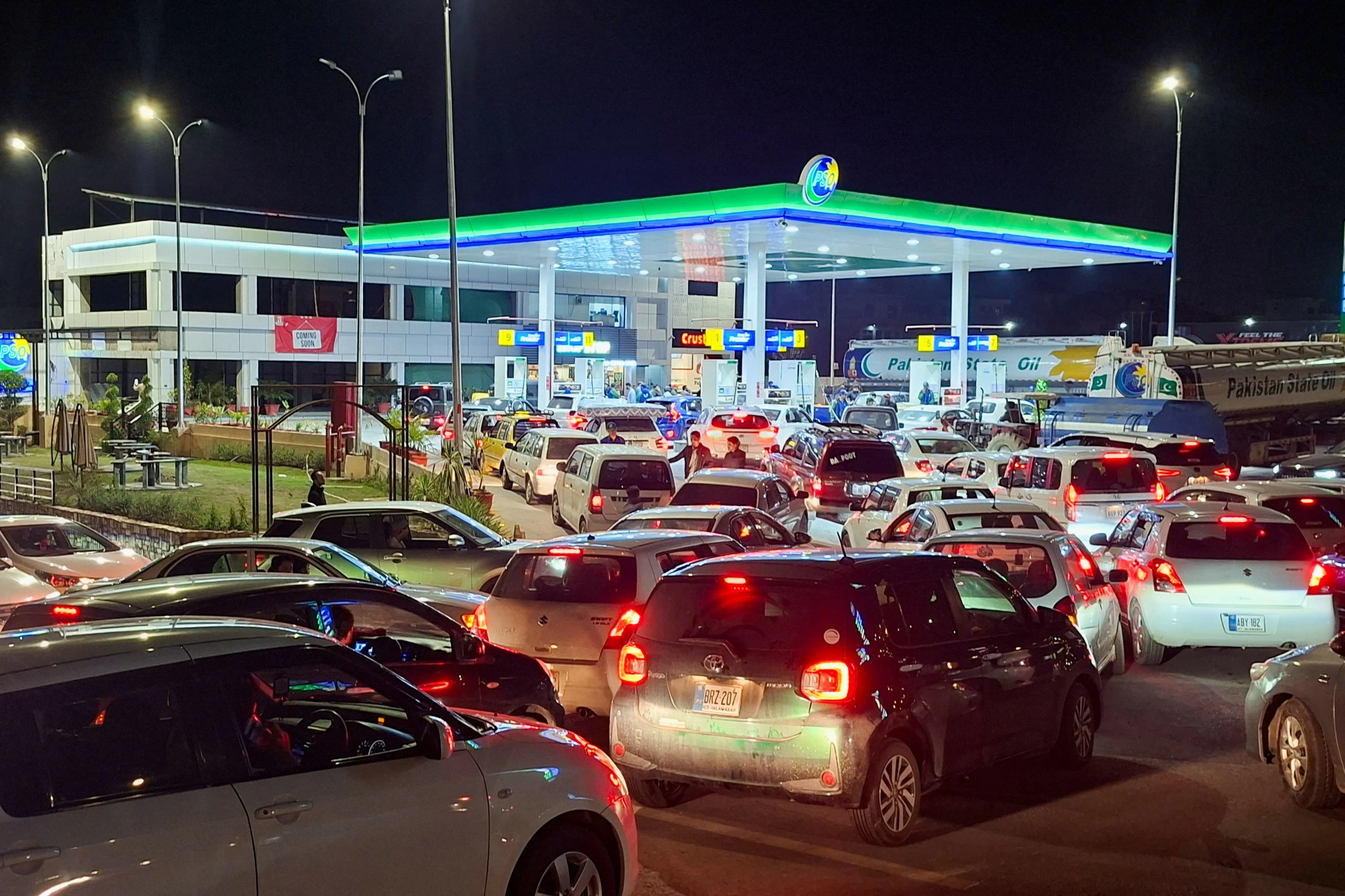
Vehicles wait for their turn to get fuel at a petrol station, as Pakistan raises fuel prices in Islamabad. Reuters
"The government has done its best, looking at its budget, to give people blanket protection" but was "forced" to pass along the price increase "because resources are limited and we do not currently see indications of the end of this war," Pervaiz said.
The US-Israel war on Iran, launched on Feb.28, has plunged the Middle East into conflict, with Iranian retaliatory strikes and virtually freezing shipping in the Strait of Hormuz.
The key waterway normally sees a fifth of the world's energy supplies pass through it, much of it bound for Asia.
Pakistan is heavily reliant on such oil and gas, and had earlier raised prices by 20 per cent on March 6, about a week into the war.
The government has unveiled a raft of austerity measures designed to save fuel, including moving many government offices to a four-day work week, extending school holidays and moving some classes online.
Pakistan is classified as a lower-middle-income country, with roughly 25 per cent of its 240 million population living in poverty, as per World Bank data.
Clients queue at a gas station amid rising petrol prices in Karachi. AFP
Earlier this week, the International Monetary Fund (IMF) warned that vulnerable economies, such as Pakistan, did not just face pressure from higher energy prices, but from supply chain snarls as well.
"Parts of the Middle East, Africa, Asia-Pacific, and Latin America face the added strain of higher food and fertiliser prices and tighter financial conditions," the IMF said in a post on its website.
Meanwhile, the IMF has shown reluctance to accept Pakistan's request for flexibility in petroleum levy adjustments, even as the government pushes for relief to shield consumers from the impact of rising global oil prices driven by the ongoing Iran war, said a report.
Quoting informed sources, the report said that Prime Minister Shahbaz Sharif has been briefed about the IMF's initial response, which did not favour any compromise on the levy structure. However, he directed the Finance Ministry to re-engage with the IMF and make a renewed case for easing the burden on the public.
A motorcyclist buys petrol after the government increased fuel prices amid surging global oil prices due to the Iran war, in Peshawar, Pakistan. AP
Officials said that the prime minister emphasised that passing on the full impact of the international oil price hike to consumers would be "too much" for the masses and could trigger a significant increase in inflation. He urged economic managers to explore all possible options to mitigate the fallout.
The development follows the government's earlier move to get the IMF nod for adjusting petroleum levies in a way that could absorb part of the price shock. However, the IMF remains cautious, viewing petroleum levies as a key revenue stream and an important component of ongoing programme commitments.
The issue had already come under discussion earlier this week. Sharif had instructed the Finance Division to engage the IMF over the levy structure on petrol and diesel, aiming to prevent any additional burden on the public amid surging global petroleum prices triggered by the Iran war.
The prime minister had asked the Finance Ministry to take up the matter with the IMF so that any required adjustment in petroleum prices could be offset against existing levies. Currently, the government imposes a levy of Rs100 per litre on petrol and Rs55 per litre on diesel, both forming part of IMF conditionalities.
The government has already extended substantial relief to consumers by spending around Rs129 billion in subsidies to keep fuel prices stable.
Officials said this relief was managed through cuts in the development budget and savings from other expenditures, reflecting the government's intent to cushion the public from external shock