The top job
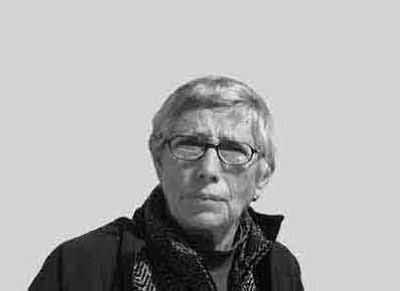
Michael Jansen
The author, a well-respected observer of Middle East affairs, has three books on the Arab-Israeli conflict.
- Last updated: November 5, 2026 | 15:43


The race to become United Nations secretary-general is reaching the finish line as incumbent António Guterres concludes his second term at the end of this year. The secretary-general is the organisation’s chief administrator and head of the UN system. Established in 1945 with the adoption of the UN Charter, the post requires the holder to be in “equal parts diplomat, advocate, civil servant and CEO.” Traditionally, the post rotates among continents and observers argue that a Latin American female should assume the role.
Costa Rica’s Rebeca Grynspan remained in the lead in the October 30 informal straw poll held by the United Nations Security Council. She was followed by Argentina’s Rafael Grossi and Guyana’s Carolyn Rodrigues Birkett. In fourth place was the Emirates’ Lana Nusseibeh, whose name was put forward after the straw poll was conducted. She appeared before the General Assembly for a public dialogue with UN member states and a handful of civil society groups on Oct. 27 and held separate interviews with the permanent Council members – China, Britain, France, the US and Russia – on the 28th.
Grynspan is a former Costa Rican vice-president who has led the UN trade and development organisation until six months ago. Grossi has been director-general of the International Atomic Energy Agency (IAEA) since December 2019. As her country’s former Foreign Minister, Carolyn Rodrigues Birkett has served as permanent UN representative since 2020. Lana Nusseibeh has been Minister of State at the Ministry of Foreign Affairs and Envoy of the UAE Minister of Foreign Affairs. She previously was the Emirates’ Permanent Representative to the United Nations from September 2013 to April 2024.
Born in 1978 in Abu Dhabi, Nusseibeh is the daughter of Zaki Nusseibeh, who was born in 1946 in Jerusalem, Palestine, during the British mandate. The Nusseibeh family belongs to the oldest Muslim dynasty in Jerusalem, where the Nusseibehs have formed close bonds with Arab Christians since the Arab conquest of Jerusalem in 637. Due to squabbling among Christian sects over the Church of the Holy Sepulchre, Christianity’s holiest site, the Sunni Muslim Nusseibeh family became custodians of the keys to the church. After Saladin seized the holy city from the Crusaders in 1187, the Joudeh Al Husseini family became co-custodians. The keys are handed over and the church doors opened in formal ceremonies, one of which I attended.
Nusseibeh received her early education in Abu Dhabi and Britain and earned bachelor’s and master’s degrees in history from Queens’ College, Cambridge. In 2003, she obtained an additional master’s degree in Israeli and Jewish diaspora studies from the School of Oriental and African Studies at the University of London. She settled in Abu Dhabi in 1967, where she worked as an independent journalist before becoming a government official. She speaks Arabic, English and Hebrew.
Nusseibeh worked as a consultant for UNESCO in Paris from 2000 to 2001 and subsequently took up a variety of roles which broadened her expertise. During the UAE’s membership of the Security Council from 2022 to 2023, Nusseibeh led the country’s delegation and twice served as President of the Council. Her diplomatic work included efforts to advance humanitarian assistance to Gaza, end restrictions on women’s rights in Afghanistan and strengthen international cooperation on peace and security. If appointed, she would become the 10th secretary-general and the first woman to lead the United Nations since its establishment in 1945. She would also become the first Emirati and Gulf Arab to hold the position, and only the second Arab, following Egypt’s Boutros Boutros-Ghali, who served from 1992 to 1996.
Her campaign, entitled “A United Nations for the Next Eighty Years,” focuses on conflict prevention, humanitarian action, institutional reform and strengthening international cooperation. When announcing her intention to run, she stated, “I am stubbornly optimistic about the future of our world, and the important role multilateralism will play in it. I am offering hands-on leadership on peace and security: acting earlier, bridging divides, and pursuing practical first agreements that save lives now and create space for broader peace. I will bring that same urgency and focus on results to development and human rights – building a more focused, responsive UN that delivers for the people it serves.”
In October 2026, she stepped back from her responsibilities as UAE Minister of State to concentrate on her candidacy. In the informal poll, conducted on Oct. 30, she received 11 “encourage” votes and four discouraging her candidacy, according to results seen by the UN’s PassBlue media outlet.
Dag Hammarskjöld and Kofi Annan have been regarded by historians as the UN’s best secretaries-general. The post is also risky. Hammarskjöld was killed in the plane crash which was almost certainly caused by an attack during the 1961 Congo crisis. He was flying to negotiate a ceasefire between the government and the secessionist mineral-wealthy Katanga province. I recall that event clearly: a legal adviser of Hammarskjöld was on the plane and I feared that this could be a friend of mine, but the fact that he could not speak French, the language of Congolese colonial rulers, saved his life.
Still-classified investigations revealed that the plane was allegedly attacked by a Belgian mercenary and pilot, Jan van Risseghem, who flew a Katangese jet supplied by France. Although he has denied involvement, filmmakers investigating the crash for the documentary “Cold Case Hammarskjöld” have found a friend of van Risseghem who, before his death, claimed the pilot admitted shooting down the UN plane. To confirm his ownership, UN bodies and some members have repeatedly called on the US, Britain and South Africa to open classified archives and communication intercepts to authenticate his confession.
Photo: TNS