‘They don’t produce literature:’ The politics of erasure
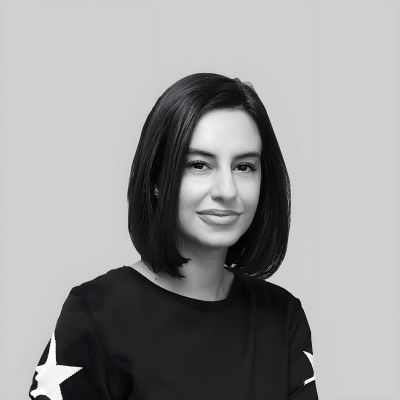
Aysha Taryam
Editor-in-Chief, Gulf Today News and Media.
- Last updated: October 28, 2026 | 18:04


At a campaign rally in Michigan, US Health and Human Services Secretary Robert F. Kennedy Jr. offered a sweeping anti-Arab generalization regarding the Middle East and North Africa. Addressing the crowd, Kennedy claimed that the world’s 500 million Arabs “don’t produce science,” earn no Nobel Prizes, win no Fields Medals, receive no Wolf Prizes, and “don’t produce literature”. Modern Arab societies, he argued, are defined primarily by stagnation, hatred, and conflict.
While political observers have grown accustomed to this administration’s lack of diplomatic etiquette and frequent reliance on insults, such rhetoric must not be normalized. The assertion itself is demonstrably inaccurate, easily contradicted by standard historical records and global academic achievements. In chemistry, Egyptian-American scientist Dr. Ahmed Zewail was awarded both the Wolf Prize and the Nobel Prize for establishing femtochemistry, while Jordanian-American chemist Dr. Omar M. Yaghi received both honours for his groundbreaking work on metal-organic frameworks. In mathematics, Sir Michael Atiyah received the Fields Medal, while in literature, Egyptian author Naguib Mahfouz won the Nobel Prize in 1988.
Yet, speakers like Kennedy deliver these untruths fully aware that their audience lacks the background to challenge them. The strategy relies on deliberate exploitation: politicians pander directly to a demographic they have actively discouraged from seeking higher education — the very same base Donald Trump famously urged to avoid traditional universities, framing higher education itself as a scam. By fostering a systemic distrust of academic institutions and historical records, campaign strategists ensure their supporters remain receptive to outrageous fabrications without the critical tools to fact-check them.
Dismissing this outburst as mere “campaign jargon” or rally-stage theatrics misses the far deeper psychological and political tactic at work. This is an explicit act of anti-Arab cultural erasure. To erase a people’s intellect, history, and humanity is to diminish them into a blank canvas upon which fear can be painted. By reducing an entire population to a caricature of perpetual violence and stagnation, the speaker seeks to strip an entire culture of its moral agency, transforming them from human participants in global progress into a flattened, distant “Other”.
The domestic context of these comments is directly linked to the current political landscape. In Michigan, a critical battleground state, the Senate race features Democratic nominee Dr. Abdul El-Sayed — a physician, epidemiologist, former Detroit health director, and Arab American. Facing a candidate whose professional background centres on public health and science, opposition surrogates have increasingly turned toward identity-focused anti-Arab and anti-Muslim rhetoric on the trail.
"To erase a people's intellect, history, and humanity is to diminish them into a blank canvas upon which fear can be painted."
This strategy reflects a familiar historical playbook that American political strategists have deployed for nearly two decades. During Barack Obama’s presidential campaigns, opposition surrogates faced a candidate whose identity challenged traditional norms. Rather than focusing purely on policy counter-arguments, elements of the opposition leaned heavily into identity-based suspicion, giving rise to the birtherism movement that demanded Obama “show us your birth certificate”. Accompanying this push were persistent, bad-faith accusations that Obama was secretly a Muslim — framed not merely as a factual misunderstanding, but as a disqualifying insult and an inherent slur.
Today, the exact same mechanics of anti-Arab bias and religious caricaturing are being adapted against a new generation of leaders. Just days before Kennedy’s speech, Donald Trump stood at a rally in Georgia and made casual jokes about Middle Eastern names, telling the audience that if you are ever in doubt about someone from the region, you can “just say ‘Mohamed’” because you have a 65 percent chance of being right. By reducing an ancient identity and a common faith name into a cheap punchline, the rhetoric subtly communicates to voters that an Arab or Muslim candidate remains outside the political mainstream — lesser, foreign, and easily dismissed.
Yet, treating these remarks as temporary, domestic “rally talk” underestimates how deeply foreign relations can be complicated by careless rhetoric. International observers do not draw neat boundaries between statements delivered at a federal microphone and those delivered on a campaign stage. When a sitting cabinet official characterizes an entire region of that magnitude as intellectually void and fixated on conflict, it introduces unnecessary diplomatic friction. Such anti-Arab statements complicate delicate international partnerships across the Middle East and North Africa, weaken America’s soft power, and create rhetorical openings for strategic competitors to present themselves as more respectful global partners.
When political movements find it difficult to rally voters around concrete policy proposals, healthcare reforms, or economic vision, creating a cultural contrast through anti-Arab tropes and the erasure of the “Other” becomes an attractive alternative. Painting an entire demographic with broad, negative strokes short-circuits nuanced policy debate, substituting complex discussions on governance with an emotional appeal to division.
The consequences of normalizing anti-Arab rhetoric extend well beyond campaign stops. When high-ranking public officials use national platforms to validate broad stereotypes, it fosters an environment that increases bias, harassment, and discrimination against Arab Americans and immigrant communities in their daily lives.
As head of the Department of Health and Human Services, Kennedy leads an institution grounded in empirical data and global scientific cooperation. Dismissing documented history and global academic contributions to score political points risks undermining the credibility of public health leadership and alienating the thousands of Arab American researchers and physicians working across the country’s healthcare system.
A healthy democratic process relies on robust debate over policy, governance, and vision—not on anti-Arab bias, the intentional erasure of cultural contributions, the targeted diminishing of a candidate’s heritage, or the reckless degradation of foreign relations. This Machiavellian approach to campaigning, which treats cultural disparagement as a pragmatic tool for electoral gain, carries profound diplomatic and social consequences. Relying on broad generalizations and cultural jabs is not a demonstration of political strength, but a dangerous reliance on division that weakens the nation both at home and abroad.