Student protests rattle European governments
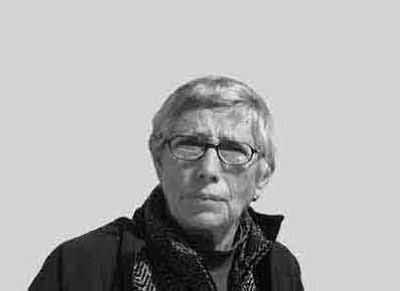
Michael Jansen
The author, a well-respected observer of Middle East affairs, has three books on the Arab-Israeli conflict.
- Last updated: October 25, 2026 | 19:31


People in the chronically turbulent Middle East are amazed and amused over multiple mass European protests over poor school conditions, teacher shortages, high fuel prices, inflation and deteriorating public services. French President Emmanuel Macron has appealed for calm while police have made of arrests and imposed local curfews. Inspired by the French example, protesters have also taken to the streets in Belgium, Italy, Portugal, Greece and Spain; in Albania and Serbia protests have erupted over corruption and the lack of political accountability and jobs.
The protests began in mid-September 2026 when French secondary school students walked out over teacher shortages and dilapidated classrooms. Trade unions, workers, and housing activists streamed into the streets. In Spain and Portugal, tent camps sprang up in major cities in protest over the lack of housing and soaring rents.
In Italy, despite the government's iron hand, people have repeatedly rallied during right wing Giorgia Meloni’s four years in office. The Meloni government has targeted protesting minors, empowered the police, deployed 500 troops in Milan, and made parents financially accountable for their childrens’ destruction and pillaging. Several government security measures have been imposed in the south where truck drivers have protested high petrol prices by blocking roads and halting the flow of goods to supermarkets.
Violence erupted after high-school student and trade union demonstrations.
Youths from neglected social and foreign communities have joined the high-school students and union rallies. In Paris, an authorised march went through the capital without serious incident. But on the margins in the capital and elsewhere, black-clad, masked men rampaged through neighbourhoods, cities and towns, setting fire to public buildings, vehicles and rubbish bins, smashing restaurants and shops, and looting local and luxury goods stores. Most of those arrested were young and unemployed while others were engaged in low paying family work.
In Paris, 68 per cent of detainees were adults, according to the public prosecutor’s office, rather than high-school teens although youth unemployment was over 21 per cent for the ages of 15–24 while national rate was 8.3 per cent. Even this is considered high and is well above the Organisation for Economic Cooperation and Development (OECD)average of 4.9 per cent.
To counter protests, the Italian government has adopted an emergency decree which reduces the age of criminal responsibility to 14 years, permits preventive detention from 16, introduces fines for the parents of minors involved in disorder, and adds a new crime of “organised violence at public protests.”
The “October 17 Movement” has called for protests at 3 pm very Saturday while students and grassroots groups have called for demonstrations on October 30th. Major unions have declared a general strike on November 20th.
In Spain, protests were mounted after the eviction and death of 87-year-old Maricarmen Abascal, a Madrid widow who was evicted from her flat where she had lived for 60 years after an investment firm brought the building and tripled her monthly rent, which had been 500 euros, or about $570. As she had a €1,450 monthly retirement pension, she could not afford this steep rise and after police broke down the door, she was evicted on a stretcher and taken to hospital. Public pressure forced the building's owners to agree she should pay about $460. This concession came too late as Abascal died on October 7th.
These events put an end to the leftist minority government of Prime Minister Pedro Sánchez whose housing bill freezing rent and restricting evictions was rejected by the majority of conservative members. Abscal's case is certain to dominate the campaign for the early election set for November.
In Albania, protests took place in May against plans by Donald Trump's son-in-law Jared Kushner to develop for tourism an ecologically protected island. The government has suspended the project.
On October 13th, fresh student criticisms circulated on social media. While they complained of high tuition and poor conditions on campuses, they also expressed dissatisfaction with the government, graft and the lack of economic growth. Clashes erupted between police and protesters demanding the resignation of Prime Minister Edi Rama who is in his fourth consecutive term, after being re-elected in 2025.
The New York Times observed that “a common thread unites them all: They fear for their future. “The no-future generation is back,” Sacha Cossi, 27, a theatrical stagehand, said last week as he sat with a group of other young Spaniards under a low tarp in the tent encampment in central Madrid.
The Philippines' February 1986 People Power Revolution was the model for today’s revolutionaries. It was a resistance campaign against repression and electoral fraud. It forced the resignation of Ferdinand Marcos, ended his two-decade dictatorship, and restored democracy. It has also served as the exemplar of popular nonviolent democratic transitions in South Korea, Myanmar, Nepal, and Indonesia.