A bitter harvest
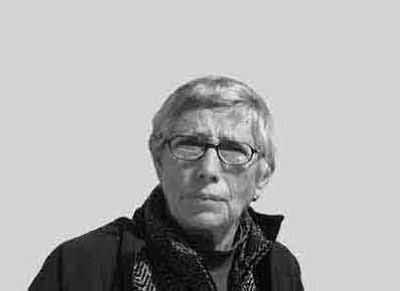
Michael Jansen
The author, a well-respected observer of Middle East affairs, has three books on the Arab-Israeli conflict.
- Last updated: October 22, 2026 | 16:34


Repeated attacks by government-backed Israeli settlers on Palestinians picking olives in the West Bank have been reported in Western media which normally ignores violence by Israeli extremists but focuses on Palestinian resistance to occupation. The United Nations Office for the Coordination of Humanitarian Affairs said that nearly 200 settler attacks linked to the West Bank olive harvest, which began this month, had caused casualties or property damage since January.
The latest attacks have attracted attention because European diplomats and foreign press have been present and suffered injuries. Israel has severely limited the harvest this year by barring Palestinians from trees located in the area Israel controls which consists of 60 per cent of the West Bank where most of Palestine’s agricultural land is located. Settlers have also assaulted Palestinian farmers elsewhere.
A week ago, masked settlers targeted Palestinians harvesting olives near Abu Falah, northeast of Ramallah. Washington Post photojournalist Heidi Levine and European visitors were assaulted. Despite wearing press identification, Levine was knocked down, suffered a severe hand injury and was hospitalised. She said: “Luckily I had my flak jacket and helmet, otherwise I probably wouldn’t even be here, because they just kept kicking me and kicking me.”
The next day, masked Israelis attacked diplomats from Belgium, France and Poland who were visiting olive groves at the ancient Christian village of Taybeh, which I visited. A Belgian consular vehicle was damaged, and Bernard Baudoux, French mayor of Aulnoye-Aymeries, who was wearing his red, white and blue sash of office, was assaulted when entering a vehicle with diplomatic plates.
Belgium’s deputy prime minister and minister of foreign affairs, Maxime Prévot, condemned the violence against Palestinians, foreign diplomats and journalists, and said his country would continue to push for European Union sanctions on settlers. The Guardian quoted him as saying, “Harvesting olives, reporting the news or carrying out diplomatic duties should never put anyone at risk of attack. This violence cannot be separated from Israel’s illegal settlement policy … the occupation of the Palestinian territory must end.”
Israeli rights group Yesh Din reported, “Since Sept. 27, settlers have mounted more than 170 attacks.” They killed at least four people, injured more than 100 and damaged thousands of trees, according to the Palestinian authorities.
Israeli Prime Minister Benjamin Netanyahu’s office – rather than him personally – responded on X/Twitter, by saying, “Any violence against diplomats is unacceptable.” However, it demanded “compelling evidence” and argued that video reportage did not establish the sequence of events. He said Israel “unequivocally condemns violence against anyone – Jews, Arabs, Christians or journalists. Those responsible will be held accountable.” But tried to evade blame by suggesting the violence in Abu Falah began when “some 200 Arabs and far-left activists confronted approximately 40 Israeli youths.”
Since Israel’s right-wing government took office in December 2022, settler assaults, arson and threats of violence have entirely depopulated 59 Palestinian communities, displacing more than 5,500.
US Secretary of State Marco Rubio responded, weakly, by saying, “We’re very disturbed by those images and what we’re seeing,” Rubio said. “We’ve asked the Israelis and continue to ask them to crack down on that stuff.” Neither sanctions nor lodging a complaint withz the UN Security Council was mentioned. Of a total of 89 vetoes cast by the US since 1945, 53 per cent have been cast to block resolutions critical of Israel.
UN experts, Israeli rights organisations, and independent organisations, including Human Rights Watch and Amnesty International, have warned US protection has fostered the belief that Israel can do whatever it likes. The frequency and severity of attacks continue to escalate with 1,500 Palestinians displaced during the first ten weeks of 2026 alone, and eight slain by settlers.
Israeli forces and settlers demolish West Bank Palestinian homes and structures which do not have impossible-to-obtain building permits or are located in military zones. The majority take place in the area which is under full Israeli administrative and military control but also occur in areas administered by the Palestinian Authority. Settlers enjoy almost complete immunity from prosecution, with some 96 per cent of incidents never resulting in formal charges being filed.
This has prompted protests by the Israeli Committee Against House Demolitions (ICAHD), founded by my friend Jeff Halper. The ICAHD has also rebuilt hundreds of homes in East Jerusalem and the West Bank, and alerted activists from civil disobedience groups to try to block bulldozers from destroying homes. In January 2005, the group called for a campaign of Boycott, Divestment and Sanctions (BDS) until the Israeli occupation ends. On Aug. 22, 2008, 46 international human rights activists (including Halper as the only Israeli) set sail from Cyprus on two boats – Free Gaza and SS Liberty – to challenge and break Israel’s naval blockade of the Gaza Strip. The ships reached Gaza port the next day, the first international vessels in decades. Halper spent three days in Gaza but was arrested when crossing back into Israel via the Erez terminal and briefly detained for violating a law prohibiting Israelis from entering the Hamas-ruled Gaza Strip. ICAHD also supported the 2010 “Jewish Boat to Gaza” which was detained by the Israeli navy and its eight Jewish or Israeli crew were arrested and interrogated, and its foreign members were deported.
Photo: TNS