Words of resistance
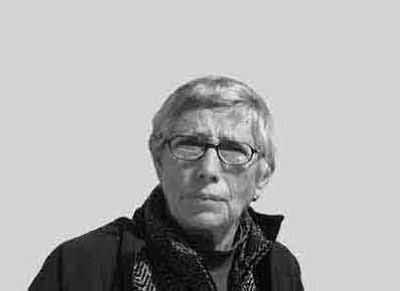
Michael Jansen
The author, a well-respected observer of Middle East affairs, has three books on the Arab-Israeli conflict.
- Last updated: October 15, 2026 | 16:50


Ali Abu Yasin, a Palestinian playwright from Gaza, has won the prestigious literary award “Writer of Courage 2026” conferred by the English PEN literary group. The 62-year-old carried on writing despite Israel’s genocidal offensive devastation of the narrow coastal strip. “This prize is great not only for me, but for Gaza, Palestine, and all the Palestinian people,” stated Abu Yasin. His most recent play, “50 Minutes,” was performed in Gaza and tells the story of genocide and mourning. Veteran and neophyte actors rehearsed in a makeshift tent in a car park.
“The Cage,” performed in June 2019, features a girl who has been paralysed by a bomb and refuses to speak to the media after becoming a celebrated figure. The girl’s anger is expressed in silence while a world makes false promises of safety to Palestinians.
Abu Yasin was nominated by British academic and cultural critic Jacqueline Rose, who won the 2026 PEN Pinter Prize established to honour the late Nobel Literature Prize-winning playwright Harold Pinter. He was an outspoken critic of Israeli policy and a prominent supporter of Palestinian nationhood.
After the Gaza war was launched in October 2023, Abu Yasin quit writing plays and began describing life under the unremitting Israeli onslaught which has continued after the October 2025 ceasefire. “I was near death four, five times. I saw people around me die. We lived by chance, and those who died, died by chance,” Abu Yasin told Al Jazeera. “My son was trapped under rubble; my house was bombed. So, during those two years, I was trying just to provide some safety to my family. To protect them from famine. And to document what was happening, so the world can hear my voice before I die.” He added, “In Gaza, we have simple dreams. We want to live in peace and to live in freedom. We want the sky and the seas to be open. We just want some freedom.”
Abu Yasin has six children and 16 grandchildren, all of whom are in Gaza except for his actor son Amjad Abu Yasin who lives in France.
Since the Hamas attack killed 1,139 on Oct. 7, 2023, Israel has occupied 70 per cent of Gaza and slain more than 74,000 of the 2.1 million Palestinians in the strip while 90 per cent of the survivors have been repeatedly displaced. They have been forced to live in tent encampments after their homes and neighbourhoods were levelled.
“There was no theatre; it was impossible to have a theatre because Gaza was being destroyed,” Abu Yasin told Al-Jazeera. With the sound of gunfire in the background, he works with actors who rehearse in a tent pitched among the displaced. A piece of cloth can become a curtain and a narrow street or small square a stage. Here, Palestinian artists are reinventing theatre with whatever is at hand after war has destroyed venues, scattered performers and erased built stages. Theatrical performances have not ceased but have become a place where children can relax and a means for writers and actors to tell stories that describe life amid homelessness and rubble.
Since the Gaza Theatre Days building built in 1995 and Al-Mishal Cultural Centre were severely damaged or destroyed, theatre has moved into displacement camps, tents, streets, and schools-become-shelters.
Abu Yasin has been involved in cultural activism for more than two decades. In 2004, he began working with Said Al-Mishal Theatre, a centre for Palestinian culture in Gaza City which was flattened in 2018 by Israeli bombs. Leading international playwrights and directors dubbed this attack as an “obliteration of this symbol of Palestinian culture and identity” in a letter to The Guardian newspaper. In 2008, Abu Yasin began writing Gaza Monologues, a series illustrating both the joy and pain of life in Gaza. They have been translated from Arabic into other languages.
While not all of Gaza’s multiple cultural centres have been destroyed, all have sustained major damage or been rendered inoperable, depriving Palestinians of cultural outlets.
A few weeks ago, Abu Yasin departed Gaza for France. “I didn’t actually leave the war. The war lives in me, Gaza lives in me,” he said. After years of enduring Gaza’s humanitarian crisis, he continues to save water and minimise waste. As the award ceremony takes place during his trip to France, he was able to attend in person at the British Library in London although there were initially doubts he might not be admitted to Britain. “For many years, writers living in Gaza have been among those with the most limited freedom of movement in the world. We recognise this and the direct impact it has on their freedom of expression,” an English PEN spokesperson told Al Jazeera.
Photo: X