Poetic resistance
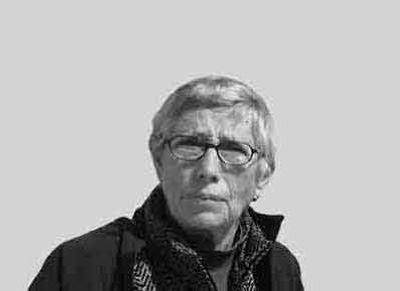
Michael Jansen
The author, a well-respected observer of Middle East affairs, has three books on the Arab-Israeli conflict.
- Last updated: October 8, 2026 | 19:01


At the end of last month, celebrations of the life and works of Palestine’s national poet Mahmoud Darwish were organised by Paris’s Pompidou Centre and the Arab World Institute. He wrote the Palestinian Declaration of Independence issued in Algiers in November 1988 and won multiple regional and international awards for his poetry and other writings published in Arabic, while he spoke English, French and Hebrew. In his poetry, Darwish wrote of dispossession and exile caused by the loss of Palestine.
Darwish was born in March 1941 in the Western Galilee village of Al-Birwa. During Israel’s 1948 war of conquest, his family fled to Lebanon, where they stayed temporarily in Jezzine and Damour. A year later, they returned to Israel and settled in Deir al-Asad. Darwish attended high school in Kafr Yasif before eventually moving to Haifa. Although Israel’s Citizenship Law of 1952 was conferred upon Palestinian Arabs who remained within Israel’s borders after the 1949 Armistice Agreements, Darwish and his family were only granted residency status.
As early as age 17, Darwish wrote and recited poetry about the suffering of Palestinian refugees driven from their homes in the 1948 Nakba (Catastrophe), and he spoke of the inevitability of their return. On May 1, 1965, Darwish read his poem “Bitaqat huwiyya” [“Identity Card”] to a crowd in a Nazareth cinema house. There was a massive response. Within days, the words of the poem had gripped Palestine and the Arab world.
Write down!
I am an Arab
And my identity card number is fifty thousand
I have eight children
And the ninth will come after a summer
Will you be angry?
Write down!
I am an Arab
Employed with fellow workers at a quarry
I have eight children
I get them bread
Garments and books from the rocks...
I do not supplicate charity at your doors
Nor do I belittle myself at the footsteps of your chamber
So will you be angry?
Write down!
I am an Arab
I have a name without a title
Patient in a country
Where people are enraged
My roots
Were entrenched before the birth of time
And before the opening of the eras
Before the pines, and the olive trees
And before the grass grew
My father ... descends from the family of the plough
Not from a privileged class
And my grandfather ... was a farmer
Neither well-bred, nor well-born!
Teaches me the pride of the sun
Before teaching me how to read
And my house is like a watchman’s hut
Made of branches and cane
Are you satisfied with my status?
I have a name without a title!
Write down!
I am an Arab
You have stolen the orchards of my ancestors
And the land which I cultivated
Along with my children
And you left nothing for us
Except for these rocks ...
So will the State take them
As it has been said?!
Therefore!
Write down on the top of the first page:
I do not hate people
Nor do I encroach
But if I become hungry
The usurper’s flesh will be my food
Beware ...
Beware ...
Of my hunger
And my anger!
Translation published by New Democracy, November 2008.
During the early 1960s, Darwish met and fell in love with an Israeli teenage dancer named Tamar Ben-Ami at a Communist Party event. Their relationship – which lasted five years – inspired some of the most celebrated Arabic love poetry of the twentieth century. Their bond was shattered after Israel’s occupation of East Jerusalem and the West Bank during the June 1967 war, which confined the lovers to warring camps.
When Darwish joined the Palestine Liberation Organisation (PLO) in 1973, he was banned from entering Israel and settled in Beirut, where he edited the monthly Shu’un Filistiniyya (Palestinian Affairs) magazine and worked as a director in the PLO’s Research Centre. He was elected to the PLO’s executive committee in 1987 but resigned in 1993 in opposition to the Oslo Accords, which failed to resolve the Israeli-Palestinian conflict. He observed, “All I saw in the agreement was an Israeli solution to Israeli problems and that the PLO had to perform its role in solving Israel’s security problems,” by confronting Palestinian resistance to occupation. After leaving the PLO, Israel permitted him to live in occupied Ramallah in the West Bank. During his final visit to Israel in July 2007, he castigated factional feuding between Fatah and Hamas as a “suicide attempt in the streets.”
Darwish died on Aug. 9, 2008, at the age of 67, three days after heart surgery at Memorial Hermann Hospital in Houston, Texas. While suffering for years from serious heart problems, he did not require urgent surgery. After a life of poetic resistance, his death was a tragedy in waiting for himself, Palestine and the world.
Photo: X