Smit Machchhar: Global hero of the moment
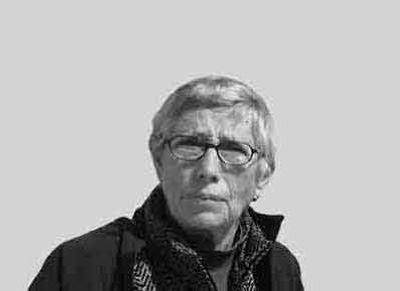
Michael Jansen
The author, a well-respected observer of Middle East affairs, has three books on the Arab-Israeli conflict.
- Last updated: October 5, 2026 | 09:11


“All the world loves a hero,” the saying does. At a time they are in short supply, the global hero of the moment is pilot Smit Machchhar. He was promptly dubbed a “hero” by Prime Minister Narendra Modi and India took pride in his courageous action. Nevertheless, today’s celebrity will fade tomorrow.
He was repeatedly struck with an axe when resisting the attempt by his radicalised Omani co-pilot to crash the plane while flying from Dubai to Tel Aviv in Israel. An Indian national, Machchhar managed to open the cockpit door to enable passengers, including relief pilots, to overpower the copilot and halt the dangerous descent of the Boeing 737. He saved the lives of 182 passengers by enabling relief pilots on board to stabilise the flight before making an emergency landing in Saudi Arabia. The plane has since been flown to Abu Dhabi and he has contacted his wife and two children, aged seven and two.
Machchhar is from Mumbai, India’s financial capital where his parents live. He had never left India before flying to New Zealand where he trained for 18 months in 2008 and 2009. He had originally planned to go into his family textile business before attending an aviation seminar at 19 years of age. “That’s where the aviation bug, in a way, bit me,” he said.
He had never left India before he took his first commercial flight during his pilot training when he was taught to expect all sorts of scenarios but not to anticipate this sort of crisis.
Macshhar has worked for flydubai for about four years after being employed for 11 years with Indian low-cost carrier SpiceJet where he served as a senior commander and was responsible for training and mentoring young pilots. He counted more than 9,750 flying hours with SpiceJet. During his career, he has diverted flights for medical emergencies and delayed departures over seemingly minor technical issues.
“Delay is not my problem,” he stated. “As long as you’re walking out of the aircraft is what I want.”
He also spoke about separating aviation from his personal life. “When I get out of the cockpit or the aircraft, I don’t want the other guy to know that I’m a pilot,” he said. “I don’t want to discuss aviation. When I wear the uniform, then no nonsense and just do your job, finish the job. When you walk out of the cockpit, that’s it. Stop thinking about that. Someone else needs you now. The kids are there. They want to play with you.”
Before travelling to New Zealand for training, he had flown only a couple of times as a passenger, since train tickets cost far less that air tickets.
His first commercial flight was between Bengaluru (Bangalore) in southern India and New Delhi while he was still a probation trainee and accompanied by senior examiners. “That was scary. Not because of the flying part, but the responsibility,” Machchhar said. Looking back, he said, “relaxing would have been the best option.” Stressing, he added, “is not going to help, at least in this industry.”
While employed by SpiceJet, the airline to introduce the 737 Max to India, he was among earliest pilots to train on the aircraft. After the second of two fatal Max crashes in 2018 and 2019, the airline had grounded its fleet. Nevertheless, he was assigned to fly one of the planes, without passengers, from Mumbai to Ahmedabad. When he left home that day, his father asked whether he was flying the Max. Machchhar told him it was the older version of the 737. There had been occasions, he stated, when “even I was unsure” whether he would have wanted his parents on the plane. He has flown the Max since it returned to service.
Among the most challenging flights of his career was a recent approach to Mykonos in Greece, where windshear forced him into the escape manoeuvre that pilots practise in the simulator every six months. He later picked Mykonos airport as his favourite.
He recalled a morning flight on which, shortly after take-off, the cabin crew reported that a woman was having labour pains far too early in her pregnancy. He and his first officer treated it as a diversion, cleared the cockpit and checked the weather at nearby airfields. A few minutes later, the crew called to say a baby had been born. Paramedics met the plane on landing, and mother and child were both fine. Asked to sum up being a pilot in one word, he said: “Blessed.”