How US military funding propelled China's robot dogs
- Last updated: August 20, 2026 | 09:23


Michael Martina, Reuters
China’s Unitree Robotics – among the world’s biggest producers of humanoid and quadruped robots – based designs for its most successful robot dogs on innovations funded by the US military, according to a former US defence technology official and three top researchers involved in the project.
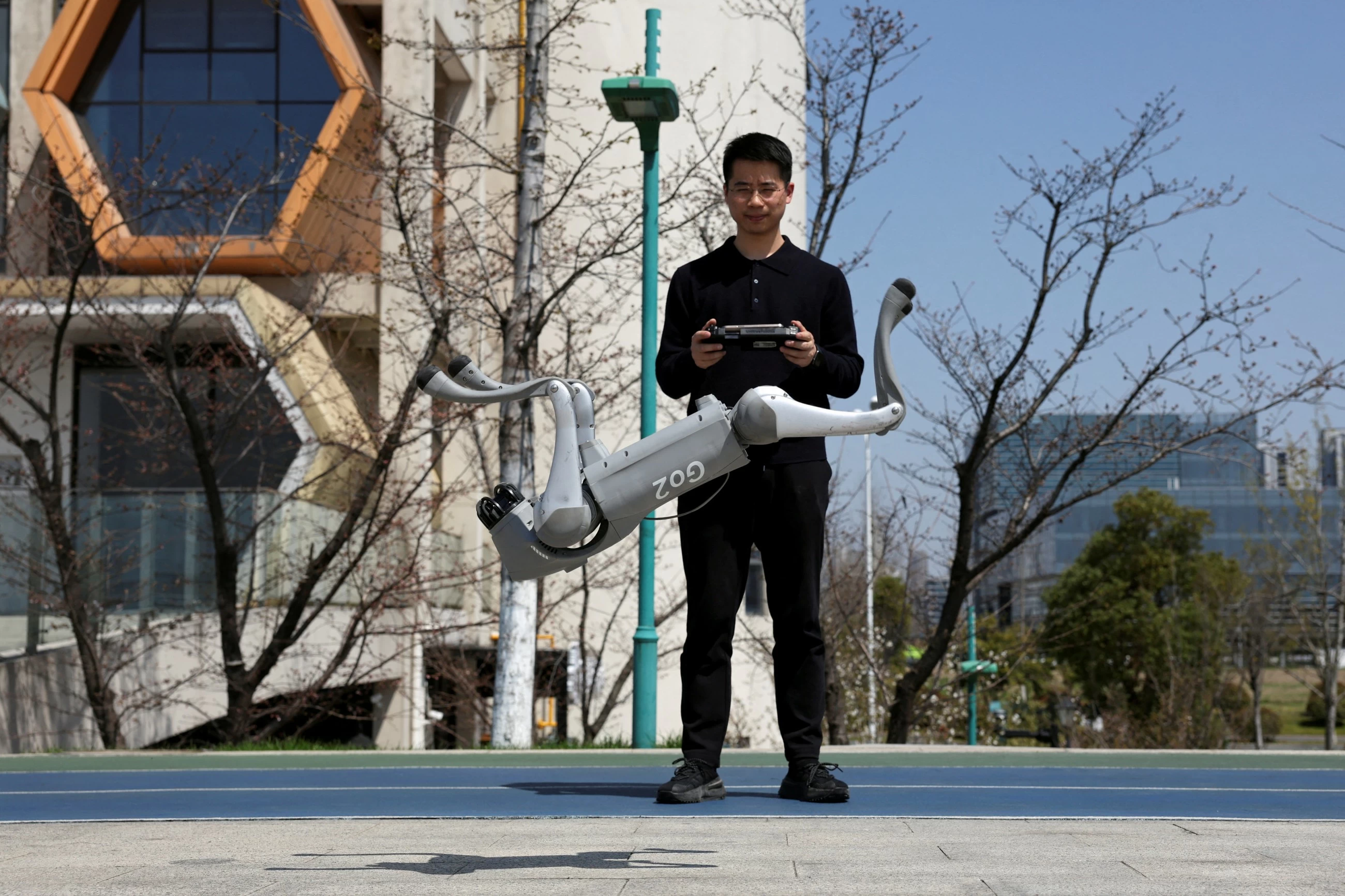
Unitree’s $1,600 Go2 model, launched in 2023, helped the company rapidly dominate the global quadruped robot market – its Shanghai IPO has drawn frenzied demand. Another Unitree robot has been shown on Chinese state television, armed and accompanying People’s Liberation Army (PLA) troops on an exercise.
These robots draw on breakthroughs in quadruped movement financed by the US DEVCOM Army Research Laboratory (ARL) and other military programs, the researchers and the former official told Reuters. The Army-funded project turned into, “basically, the first Unitree robot that had any kind of scale,” said Gavin Kenneally, a former University of Pennsylvania researcher involved in the programme.
Ben Katz, who worked at Massachusetts Institute of Technology’s Biomimetic Robotics Lab, among a consortium of universities financed by the military programmes, said the dimensions of Unitree’s popular Go series were “to the millimeter” almost identical to a groundbreaking robot he helped develop called Mini Cheetah. Reuters is the first media outlet to detail connections between Unitree designs and the Army programme.
The episode underscores broader problems with the United States’ ability to compete with China’s state-directed manufacturing sector in high-tech strategic industries, including those critical to national security. Backed by subsidies, clusters of component factories, and a tolerance for heavy losses, Chinese companies have seized market share across industries such as solar panels, drones, EVs and quantum communications, many of which were first developed in the US with government or military backing.
Kenneally commercialised the US breakthroughs through his company Ghost Robotics, which supplies US special forces with advanced, ruggedised robots. But compared to Unitree, its production is small, and costly. In June, the Pentagon added Unitree to a list of Chinese military companies, calling it a “contributor to the Chinese defense industrial base.” That designation falls short of a sanction but limits the US military’s future use of Unitree’s technology. Unitree has said its robots are for civilian use.
Unitree, China’s State Council and China’s defence ministry did not respond to requests for comment. Unitree did nothing underhanded in using the US Army research. The program’s findings were published openly to stimulate progress in the field, a common practice.
ARL spokesperson Amanda Ligon said the research “strengthened the broader US robotics ecosystem” and informed subsequent work across government and the private sector. ARL referred questions about Unitree’s commercialization of the technology to the Pentagon, which declined to comment.
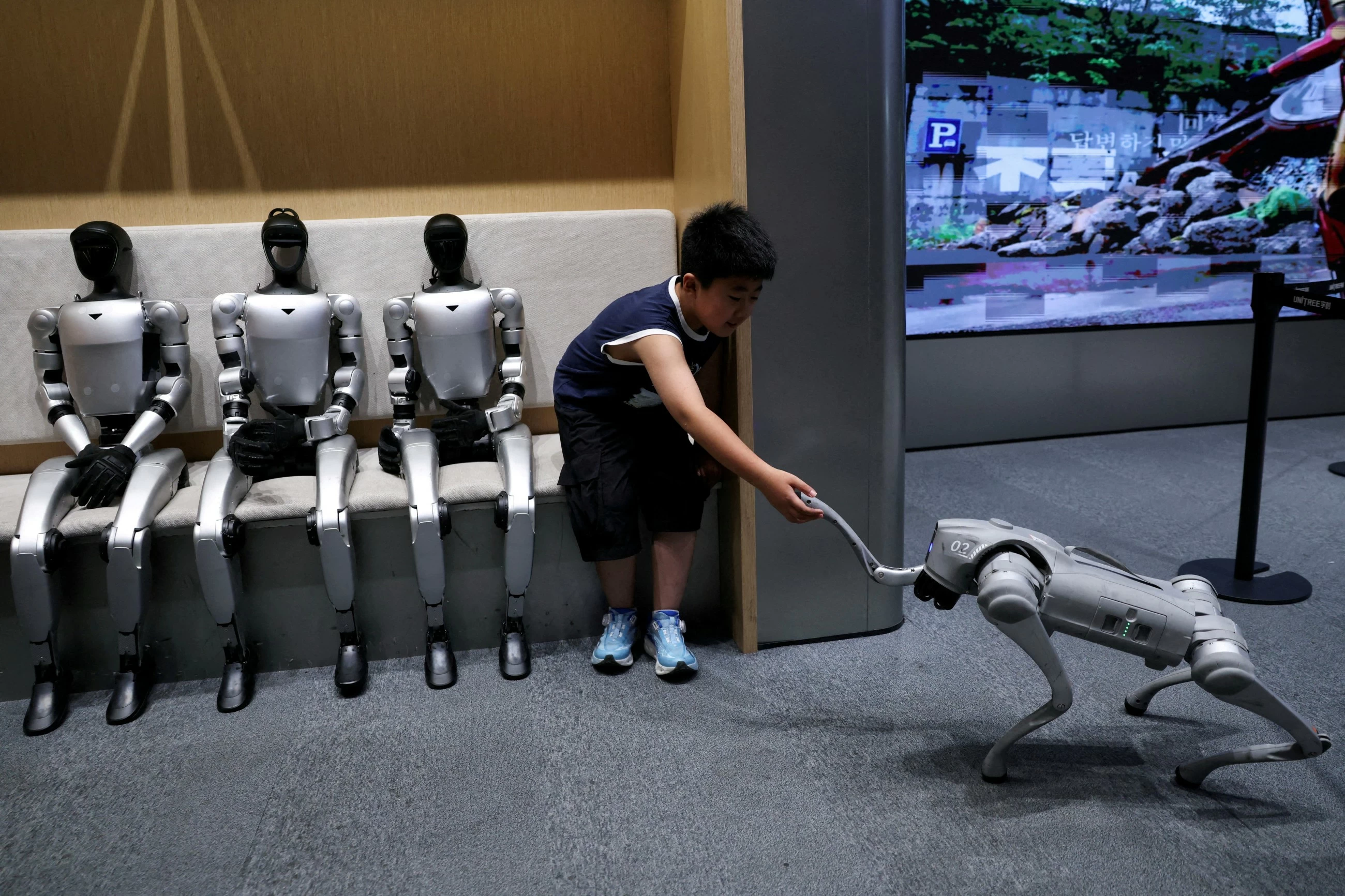
Unitree sold more than 5,500 humanoids and 18,000 quadrupeds last year, company filings show, and it’s now valued at about $9 billion ahead of its stock market debut on Wednesday. By contrast, no US company has mass-produced such robots, including Elon Musk’s Tesla, which has displayed prototypes of its Optimus humanoid for years. On a January earnings call, Musk called China “incredibly good” at scaling production.
Boston Dynamics, the US company whose 2019 canine, Spot, used different technology, recently argued in a Congressional hearing that China’s low pricing would drive US firms out of the market. None of the US robotics researchers who spoke with Reuters advocated for keeping such government-financed research secret. Instead, they said, US policymakers should focus on enabling companies to quickly commercialise such advances to compete with China. ARL also said publication was important to scientific and technological advancement.
The US excels in innovation and software development but needs to ensure the capital, industrial base, highly skilled workforce and parts supply chains to scale-up breakthroughs, said Vijay Kumar, dean at Penn Engineering. For now, US authorities often protect companies with trade restrictions on innovative Chinese products. In July, the Federal Communications Commission banned imports of future models of foreign-made humanoid and quadruped robots, including those from Unitree. China has threatened to retaliate to the FCC ban.
China’s Washington embassy said in a statement its companies are making new technologies affordable and accessible internationally. It accused the US of abusing administrative power, and of “market distortion and unilateral bullying.”
Most of the experts who spoke to Reuters supported the U.S. ban but said the policy is not enough to build an industry to catch up with China. “This isn’t just a competition between US and Chinese robotics companies,” said Kenneally, the Ghost Robotics founder. “It’s between private US companies and China’s coordinated national strategy.”