Implications of India’s freedom struggle
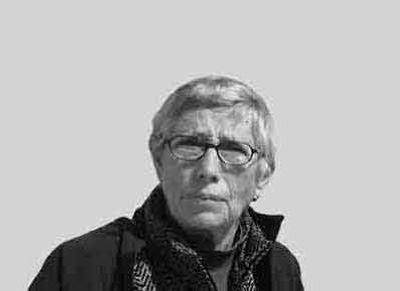
Michael Jansen
The author, a well-respected observer of Middle East affairs, has three books on the Arab-Israeli conflict.
- Last updated: August 17, 2026 | 09:06


India celebrated its 80th Independence Day last Saturday. India gained independence from Britain on August 15th, 1947, after nearly 200 years of British rule. Freedom was won through decades of mass protests, peaceful civil disobedience, and political negotiations led by Mahatma Gandhi, Jawaharlal Nehru, the Indian National Congress, and included other freedom fighters.
Among the 20th-century decolonisation movements, India was the first major Asian colony to secure independence after World War II, initiating other freedom movements across the British empire, the largest in history. In the 1920s, Britain ruled around 35.5 million square kilometres of territory amounting to nearly 24 percent of the earth’s total land area and governed 412 to 450 million people.
To punish its colonies for demanding independence, Britain followed its traditional strategy of divide-and-rule. Britain encouraged Muslims led by Muhammad Ali Jinnah and others to opt for partition. Pakistan proclaimed independence on August 14th, the day before India. During riots and massacres, partition claimed the lives of one to two million while 14-15 million people were displaced.
India became a sovereign democratic republic on January 26, 1950, when its Constitution took effect. It is the world’s largest democracy with nearly a billion eligible voters who cast ballots in multi-phase national elections.
Despite partition, today India has the third-largest Muslim population globally, with 200 million, or 10.9 to 14.2 per cent of its total population. Indonesia hosts the largest and Pakistan the second largest.
After independence, India played a major role on the world stage as the leader of the Non-Aligned Movement, founded in in 1961 during the Cold War between the West and the Soviet Union. The movement promoted national independence, peace, and human rights without joining military alliances like NATO.
India’s Jawaharlal and his daughter Indira Gandhi were top figures in this movement until she was assassinated in 1984. Her successors concentrated on domestic problems rather than foreign policy. After the collapse of the Soviet Union in 1991, the Non-Aligned Movement lost its clout. While it has 120 members, mostly from the Global South, it promotes political cooperation within and outside the United Nations.
India was not among the first countries to declare independence from Britain. The United States secured independence in 1776, Canada in 1867, Ireland in 1922, and others achieved self-governance or independence before India. The human cost of independence in these countries did not approach the death toll in India. An estimated 25,000 to 25,500 American colonists died during the Revolutionary War. Canadians did not join the US fight for independence, but fewer than 20 men were killed defending against the 1775 US invasion of Canada’s Quebec province. Over eight centuries of struggle in Ireland, around 2,300, including 750-900 civilians, died while millions emigrated due to repression and the potato famine, which killed at least a million. During the 1916 Easter Rising, seen by the Irish as a key event in their heroic struggle, about 485 people died, including some 260 civilians who were caught in crossfire or killed by British artillery rounds.
Global independence struggles have drawn a new modern map and expanded the membership of the United Nations (UN) from 51 countries when the organisation was founded in 1945 to 193 today with Palestine, a non-member observer state, awaiting full membership as the 194th. This has been denied by the veto of the US. In May 2024, the UN General Assembly adopted a resolution supporting Palestine’s full membership but nine states voted against it: the US, Israel, Argentina, the Czech Republic, Hungary, Micronesia, Nauru, Palau, and Papua New Guinea. The US was the sole negative member of the five permanent members of the Security Council — the US, Britain, France, Russia, and China. Israel applied for UN membership on May 15th, 1948, the day after declaring independence, but the application did not pass the Security Council. Israel reapplied in May 1949 after a fresh recommendation from the Council and was admitted by a General Assembly vote of 37 to 12 with 9 abstentions. The dozen which voted against were Arab League members, Egypt, Iraq, Lebanon, Saudi Arabia, Syria, and Yemen plus Afghanistan, Burma (Myanmar), Ethiopia, India, Iran, and Pakistan.
August 15th not only marks political events but also a major religious observance in Cyprus, Greece, Russia, and countries where the Christian Orthodox faith predominates it is designated the name day of women called “Mary,” “Marya” and “Mariam.” By tradition, this date marks the death during sleep of Jesus’ mother, the Virgin Mary and her journey to heaven. In the Orthodox tradition it is regarded as the “Summer Easter”. In the Catholic Church, it is commemorated as the Solemnity of the Assumption. In Lutheran and some Anglican churches, the day is regarded as the Feast of St. Mary.