Value for money vs. value of sport
- Last updated: August 1, 2026 | 09:05


FIFA wants to create a commercial subsidiary to attract private investors, who it says will remain minority stakeholders, but who help increase the kitty bag of national federations. UEFA, which is the governing body of European national football federations had loudly and clearly rejected the plan. FIFA President Gianni Infantino describes the plan as the “golden opportunity to turbocharge the development of the game globally.”
UEFA does not agree. It is unambiguous in its opposition to the idea of bringing in private investors in the form of a commercial subsidiary. UEFA said, “The World Cup cannot be treated as an investment product...No part of it should ever be surrendered to private investors. The World Cup is not for sale.” The UEFA and other national football federations are livid with FIFA for not consulting them before the idea was mooted formally in public. There is the feeling that the idea was being nursed stealthily, and there was an attempt to force it on them.
It is indeed the case that sport is big business, and it rakes in billions of dollars in direct and in indirect ways, through sale of tickets from club matters to big league contests and finally the World Cup. Then there are the endorsements and sponsorships of individual stars, and the clubs themselves go on a commercial binge through merchandising T-shirts, souvenirs and other knick-knacks. But it will be argued that this bit of commercial hype is a straightforward deak between the spectators and the star players.
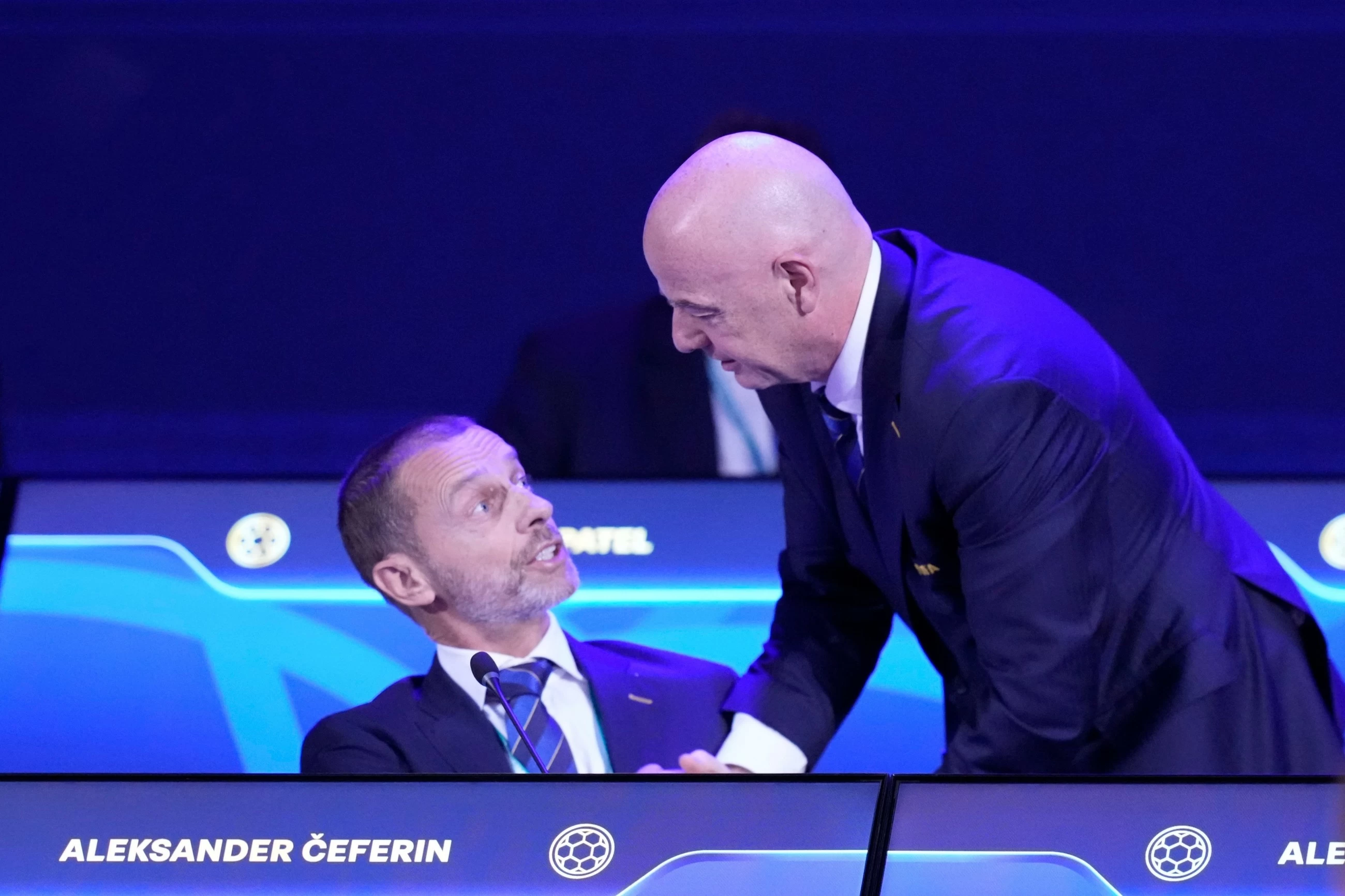
Infantino wants to take the commercialization gambit to a higher level. What UEFA and others seem to fear is that once the oruse-strings of the game into the hands of ruthless financiers, then they – the players, the coaches, the clubs and the local supporters – would be excluded gradually but surely. The UEFA wants the game to remain the bonding factor among players, clubs and spectators.
There is also the fact that as the economy changes and its bases change, then it is inevitable that the game and the players would have to change, while taking a hit as well. There is no doubt that FIFA and Infantino had dealt with the issue in an arrogant manner, and the UEFA and other national football federations are rightly miffed with FIFA and its managers. But it has to be recognized that change will come, and there is no escape route. What Infantino and his colleagues in the FIFA could have managed the issue in a more dignified manner. But that is about the way the issue has been broached, in an unnecessarily secretive mode. A radical change in the financial structure of the game needed an open and frank discussion among all the stakeholders. But this is a very different matter from the issue at stake – how to finance the game, which is indeed the life-breath of the whole system.
What is needed is a cool-headed analysis of the game at the present moment, and how it will need financial support in the future. These are important and complex matters, which need to be dscussed. And the financial challenges might even require something like the commercial subsidiary that Infantino had mooted. An investment company for football would mean that players and the clubs could invest in the company so that it will grow. There can be innovative ways of keeping the investment company in good health because the financial stakes would be professional hands. The dividends might fluctuate with change in fashion. And that would put the stars on the block as it were. The market volatility cannot be avoided/ Infantino’s idea of a commercial subsidiary seems a sound plan. FIFA will have to get in experts to come and lecture them in the intricacies and compulsions of managing finances of the game to the players and the clubs.