Over ‘60% of US citizens’ have a critical view of Israel
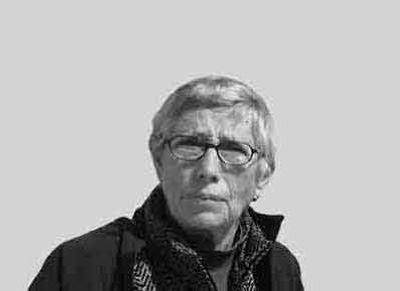
Michael Jansen
The author, a well-respected observer of Middle East affairs, has three books on the Arab-Israeli conflict.
- Last updated: July 19, 2026 | 18:30


US President Donald Trump last week told Israeli Prime Minister Binyamin Netanyahu he should begin withdrawing Israeli troops from Syria and southern Lebanon. "They don't want you there. You should redeploy," Trump told Netanyahu in a phone call, according to a US official.
Israel claims its troops must remain in these areas, dubbed "security zones," as long as Lebanon's Hizbollah militia is a threat. Netanyahu regards this deployment as being existential although heavily armed regional hegemon Israel does not risk defeat and extinction. The deployment is existential only for him personally as he has portrayed himself as the guardian of Israel's security. This has kept him in office despite trials for corruption, bribery, and breach of trust.
The conversation took place before Netanyahu decided to cancel his trip to the US where he planned to attend the funeral of Senator Lindsey Graham, a strong supporter of Israel, which has been postponed until the end of the month. However, Netanyahu had sought to combine this visit with an appointment with Trump in the White House which did not materialise. No date was fixed and no agenda was arranged as is normal for a summit between national leaders.
Trump has reportedly been displeased by Netanyahu's opposition to the US-Iran Memorandum of Understanding that ended the US-Israel war on Iran, launched on February 28th. Although this was a joint US-Israel offensive, Trump did not consult Netanyahu when halting the war. Netanyahu wanted to carry on as this war overshadowed his failure to predict, pre-empt, and prevent the October 7th, 2023, attack on southern Israel during which Hamas slew 1,200 Israelis and captured 251.
Netanyahu's popularity has flagged as Israel prepares for a Knesset election on October 27th. He is trailing his main challenger, former military chief Gadi Eisenkot, who is preferred by 43 per cent of voters against 34 per cent for the prime minister. Part of Netanyahu's trouble comes from his 18 years and nearly 300 days in office since 1996, making him the longest serving leader in this position. He has accomplished this feat by weaving between right and centre parties and ignoring the moderate left. In his early coalition governments, he sought to include centrist and even left-of-centre parties.
Following the 2009 elections, Netanyahu could have built a right-wing coalition, but he chose to include partners from the opposition. After the 2015 elections, however, he formed a right-wing coalition and built a strong alliance with ultra-orthodox Haredi religious and hard-right parties. During the 2020 elections which were held after multiple rounds of inconclusive votes, Netanyahu joined with a centrist party to form a balanced coalition which he soon terminated. After the 2022 elections, he built the most right-wing coalition in Israel’s political history.
However, in October 2023 following the Hamas attack on Israel, he formed a national unity government which continues in office despite factional differences and defections. During its final session, the Knesset adopted contested legislation proposed by ultra-Orthodox parties which not only wanted their agendas to be advanced but also demanded continuation of the war, trying to handcuff Netanyahu.
He not only relies on coalition partners, but also the disaffected Israeli public, and Trump to stay in office. If his Likud bloc and its affiliates cannot form a new coalition after the coming election, Israel could face fresh turmoil, and Netanyahu could be in back in court where he could face up to 10 years in prison or fines for bribery, and up to three years for fraud and breach of trust if his appeal to the Supreme Court fails. To ask for a presidential pardon, he would need to admit guilt which he has so far refused to do. He is caught in a “Catch 22” situation from which he could escape only via a political deal that would further tarnish his already tarnished image.
By putting pressure on Netanyahu over Lebanon and Syria, Trump has responded to US domestic public opinion which, according to a recent Pew poll, shows that around 60 per cent of US citizens have an unfavourable view of Israel. While a majority of Republicans continue to back Israel, 80 per cent of Democrats and younger adults do not. Trump has also promoted the US as a mediator in negotiations involving Israel, Lebanon, and Syria with the objective of becoming the president who solved the "Middle East problem." This was created when Israelis conquered 78 per cent of Palestine in 1948-1949 and followed it up by seizing the remaining 22 per cent in 1967.
For several years, Trump has unsuccessfully courted the Norwegian Nobel Committee with the aim of winning the longed-for peace prize after he claimed he had resolved several international disputes and crises. However, at the end of February, Trump showed he was not a peacemaker when he and Netanyahu launched their war on Iran with the objective of bringing down the anti-US-anti-Israel regime by forcing it to surrender, installing a friendly government, and securing favourable terms for the purchase of Iranian oil. Iran did not capitulate as expected. The assassination of its supreme leader Ayatollah Ali Khamenei at the launch of the war left the hardline Islamic Revolutionary Guard in charge with the blessing of his wounded son Mujtaba.
The war prompted Iran to take charge of and close the Strait of Hormuz, through which 20 per cent of global supplies are exported. The Strait has given Iran international political and economic leverage. During the ceasefire in the war, Iran has negotiated with the US for its demands to be included in the temporary Memorandum of Understanding until a peace treaty has been concluded. Meanwhile the war continues with the US bombing critical Iranian infrastructure and counter- strikes Tehran claims are targeting US bases in Bahrain, Kuwait, and Jordan.