Although wounded, Iran has ‘won’ the war

Michael Jansen
The author, a well-respected observer of Middle East affairs, has three books on the Arab-Israeli conflict.
- Last updated: June 29, 2026 | 09:27


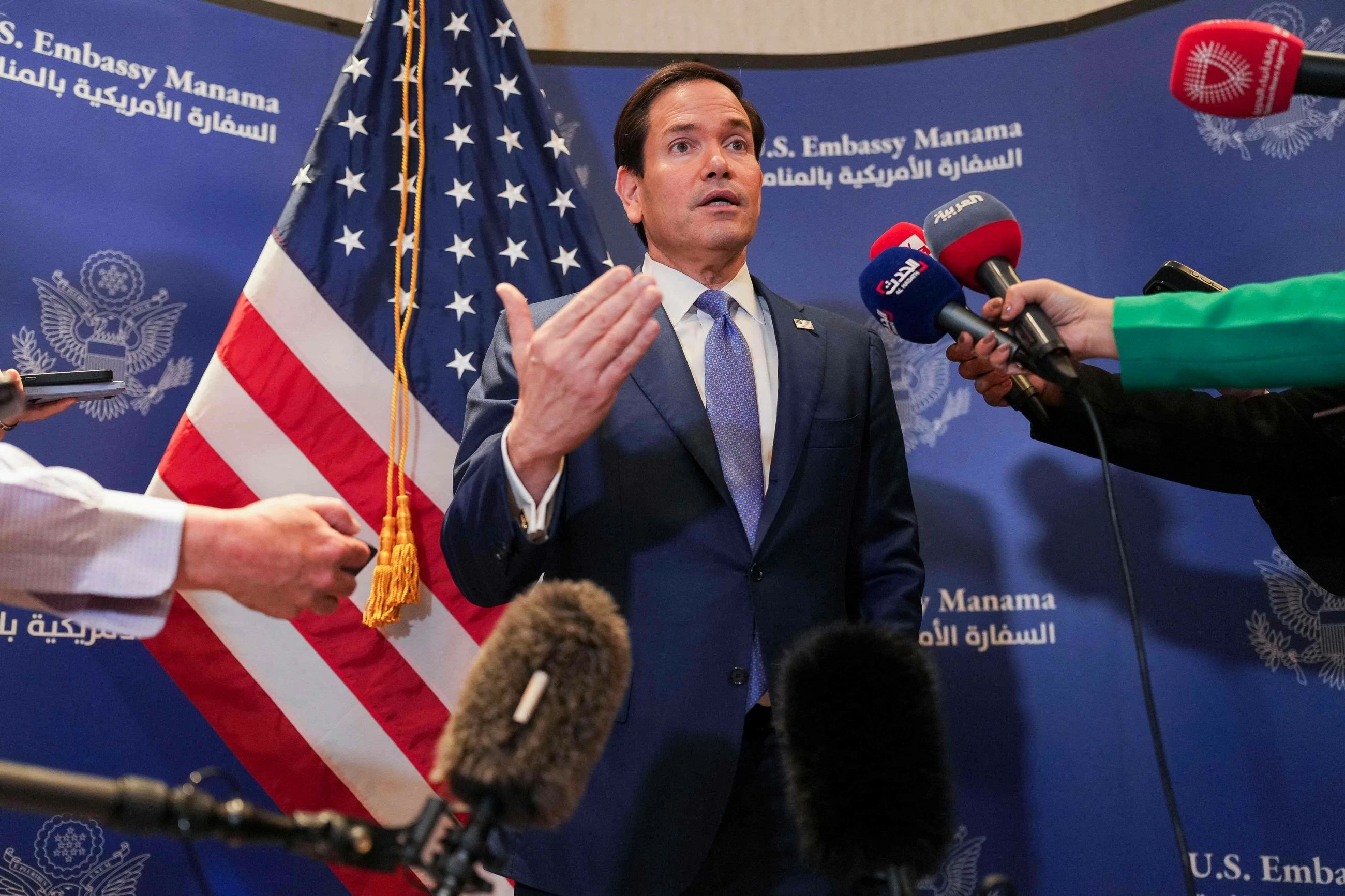
The joint statement by Gulf foreign ministers and US Secretary of State Marco Rubio at the end of his tour of the region revealed a dramatic shift in the Trump administration’s policy on Gaza. “No one will be forced to leave Gaza, and those who wish to leave will be free to return,” the foreign ministers declared in an official statement.
On February 4th, 2025, at the outset of his second term in office, Donald Trump proposed a US takeover of the Gaza Strip, the forced relocation of its 2.2 million Palestinian citizens and transformation of the coastal strip into resorts for the wealthy. His proposal mirrored demands made by Israeli far-right factions who call for ethnically cleansing Palestinians and opening their homeland up to Israeli and foreign colonisation.
Washington had little choice but to submit to Arab pressure on Gaza. Trump administration policies on a range of issues have weakened US standing at home and abroad. On Friday June 26th, 58 per cent of US poll resppondents said they disapproved of his policies while only 37 per cent approved. This prompted New York Times commentator Nate Cohn to observe that, “No president’s approval rating has been under 38 per cent for more than a few days in the last 17 years, according to our average. If there has been a floor during this partisan era of politics, Trump’s ratings today have fallen to it.”
Despite low popular ratings, Trump has attempted to turn commemorations of the country’s 250th birth anniversary into celebrations of himself and politicised events by making campaign speeches. As he has invited Republican loyalists to join him on the podium and excluded Democrats, critics say these gatherings do not represent the “American people.” He increasingly acts as a monarch rather than an elected executive whose authority is shared with Congress which, according to the distribution of powers, is meant to “advise and consent.”
Trump does not believe he is answerable to the people. He has two and a half more years to serve of his second term in office – which should be his last. However, all legislators in the House of Representatives and one-third of Senators face re-election in November’s mid-term election. Since his antics undermine Republican lawmakers who are now candidates, several brave souls have criticised Trump who has, in retaliation, threatened them.
Trump’s high off-and-on tariffs have created economic confusion at home and abroad, raised prices and shaken stock markets. Trump’s decision to attack Iran at the end of February has unsettled the Gulf and prompted Iran to block the Strait of Hormuz, a chokepoint for roughly 20 per cent of the world’s oil. The flow of oil, natural gas, and fertilisers was disrupted and worldwide consumers were harmed. Trump has alienated NATO by dismissing its role as a stabilising international force and angered Europe by pressing Denmark to cede Greenland to the US and threatened to punish both Denmark and the European Union.
He has been trumped by the war he and Binyamin Netanyahu waged on Iran and had to sue for a ceasefire and accept the Islamabad-mediated peace talks to conclude the war which did not achieve the duo’s objectives. They did not oust the Iranian regime although they assassinated supreme leader Ayatollah Ali Khamenei at the outset. He has been succeeded by his son Mujtaba who is backed by the hardline Republican Guard Corps (IRGC) which has been hit but not knocked out.
Tehran’s arsenal of ballistic missiles and drones survived, and Iran has retaliated by hitting Arab neighbours which had warned against the war. Since the US could not defend them from Iranian attacks, Gulf countries have discussed increasing arms purchases, forming a regional alliance for protection, and renewing relations with Iran. If implemented this policy could leave Trump’s US out in the cold while he remains in the White House.
Although wounded, Iran has “won” the war and gained political stature and economic benefits by surviving an onslaught by the US, the global hyperpower, and Israel, the regional hegemon. Iran gains from the Islamabad-brokered Memorandum of Understanding (MOU) which ushered in the ceasefire and prepared the way for negotiations to conclude a final deal within 60 days — or more. The MOU waives all sanctions on Iranian oil sales, lifts the US blockade of Iranian ports, and establishes a process for Iran to start recovering billions of dollars in frozen assets, which Tehran claims amount to $100 billion. Iran could also gain access to a proposed $300 billion fund that could ease the economic crisis in the country which prompted mass protests and led to a heavy-handed crackdown early this year.
Tehran’s access to funding could depend on whether Iran permits inspections of its nuclear facilities by the International Atomic Energy Agency (IAEA) which was denied entry to the country after the US and Israel bombed these sites in June last year and March this year. IAEA Director General Rafael Grossi said the MOU “specifically indicates that (the sites) will be supervised by the IAEA. In order to supervise, we need to inspect. There is no other way.” He revealed that agency experts have already been engaged in technical work with the Iranian authorities and hoped IAEA inspectors would return to Iran “soon.” He pointed out that contradictory public statements by the US and Iran involved “political positioning” rather than realities.