Century of wonder
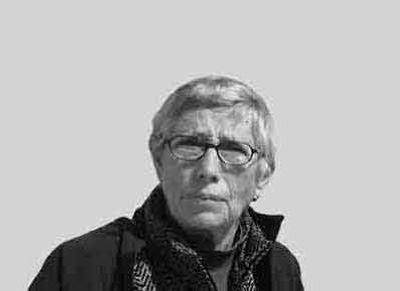
Michael Jansen
The author, a well-respected observer of Middle East affairs, has three books on the Arab-Israeli conflict.
- Last updated: May 14, 2026 | 19:40


Naturalist, filmmaker, and environmental campaigner, twice knighted Sir David Attenborough celebrated his 100th birthday a week ago with his family and at a concert honouring him at the Royal Albert Hall where music from some of his films was played.
His extraordinary career began while he was still a boy roaming the English countryside where he found rocks, flora and fauna which intrigued and amazed him. He could strike a stone which split and opened into a fossil of a coiled shell no one had seen for 150 million years. He also found the skin of a snake that had shed, fossil ammonites, a twisted piece of metal from an incendiary bomb that had been dropped near his home and a piece of amber two-and-a-quarter inches long given to him in 1938 by a German Jewish refugee who stayed with his family for several weeks during the Second World War. Sixty years later, the amber would be the subject of “The Amber Time Machine”, an episode of his series Natural World. Among his first pets was a black fire salamander with bright yellow spots.
He took his bachelor’s degree in natural sciences at Cambridge University and served two years in the military before securing a job in educational publishing. Bored, he looked for a new job. He was rejected for a post at BBC radio but was hired on probation by BBC television. After three months of training, he was offered six months probationary employment before securing a full-time job. While working as a producer, he suggested a series of television films depicting rare animals in their natural habitat before being captured and taken to London’s zoo. He left this post in the early sixties to divide his time between studying anthropology and filming. In 1965, he joined BBC 2 where he had scope to make programmes no one else had done and began transmitting Wimbledon tennis championships in colour, becoming the first channel in Europe to make the switch from black and white. He left the BBC in the 1970s and filmed series on tribal art.
Attenborough’s longstanding connection with natural history programmes began when he produced and presented the three-part series Animal Patterns with the naturalist Julian Huxley, focusing on animals at London Zoo. While making this programme, Attenborough met curator of the zoo’s reptile house Jack Lester, and they decided to make a series about an animal-collecting expedition. Zoo Quest was broadcast in 1954 with Attenborough as presenter after Lester fell ill. “Zoo Quest” became a hit, and Attenborough went on to film in Australia. In 1957, he formed his own BBC department, the Travel and Exploration Unit, which enabled him to continue to produce Zoo Quest as well as other documentaries, notably the Travellers’ Tales and Adventure series.
During the early 1960s, Attenborough resigned from the BBC to study for a postgraduate degree in social anthropology at the London School of Economics without halting filming. Before finishing his degree, he returned to the BBC in 1965 as controller on condition he could continue with pet projects. A major work was a 79-part series filmed over 20 years. Called “Life on Earth,” the highly successful series covered evolution from the emergence of fish and reptiles and ended with mammalian monkeys, apes and humans. In 1990, The Trials of Life examined animal behaviour through the different stages of their lives.
Attenborough was a prime mover of the 2021 United Nations Climate Change Conference. Addressing the opening session, he stated that humans were “the greatest problem solvers to have ever existed on Earth.” However, he observed, “In my lifetime I’ve witnessed a terrible decline. In yours, you could and should witness a wonderful recovery.”
Throughout his career he has opened up the world to girls and boys, women and men, by teaching them about their natural environment, plants, animals and people of vastly different ages, races, religions, and stations in life.
More than 50 species and types of plants, animals, microorganisms, and ancient life-forms have been named after Attenborough, including a species of wasp named in honour of his 100th birthday. Commenting on humans who are the most powerful species, he said films which show the responsibility we have toward “the rest of the natural world, then I think all of us cameramen, scientists, directors, producers and presenters would be very happy.”
Describing himself as a “boring, left-wing liberal,” he has battled climate change deniers and called for population control, sustainable consumption, and women’s rights.
In 1950, Attenborough married Jane Elizabeth Ebsworth Oriel who partnered him in his career before dying in 1997. Their son Robert is a senior lecturer in bioanthropology for the School of Archaeology and Anthropology at the Australian National University in Canberra. Their daughter Susan was headmistress of a primary school. Attenborough lives in Southwest London, near Richmond Park.
Photo: TNS