Iran war – Trump has put US and regional security at risk
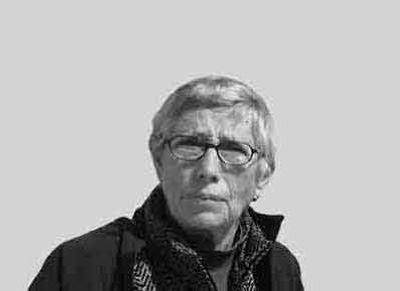
Michael Jansen
The author, a well-respected observer of Middle East affairs, has three books on the Arab-Israeli conflict.
- Last updated: March 8, 2026 | 19:36


This is Trump's war. A war to feed his hungry ego and polish his image. He has demanded “unconditional surrender” from an Iran which is far from capitulating. Tehran claims 6,000 years of history and is proud of its distinctive culture and resistance to external challenges. A classified report by the US National Intelligence Council found that a large-scale assault on Iran would be unlikely to oust the military and clerical establishment.
Trump is an armchair warrior deploying in the safety of the Oval Office in the White House 10,200 kilometres as-the-crow-flies from the theatre of battle. Trump did not rule out deploying US troops in Iran: “Every president says, ‘There will be no boots on the ground.’ I don’t say it.” While no US troops have entered Iranian territory so far, at least half a dozen have been killed by Iranian strikes on US forces based in Kuwait. Nevertheless, Trump is ramping up his air war against an Iran which was weakened by the 1980-88 war with Iraq and years of US-led Western sanctions. These factors convinced Trump that Iran would surrender quickly but he was mistaken. The war has entered its second week and could continue as the Iranian regime is fighting for survival.
Trump has provided multiple, shifting justifications for the war. Trump promised to rescue the Iranian people from the regime after he had assembled an armada in the Arabian Sea after Iran's January crackdown on protesters which killed thousands. This was promptly forgotten when he falsely claimed that Tehran poses an imminent threat to the continental US. He said Iran could develop ballistic missiles capable of reaching the US, but experts have argued Iran is years away from creating such weaponry.
Iran's current arsenal consists of short and medium range missiles rather than long range intercontinental ballistic missiles. Trump said the US sought to make a deal with Iran over its nuclear programme. Instead, in June, he bombed its nuclear sites and said he had “obliterated” them. Trump claimed Iran has "rejected every opportunity to renounce their nuclear (weapons) ambitions." He is wrong: Iran’s supreme leader Ayatollah Ali Khamenei repeatedly declared that it has no intention of making nuclear weapons. The US killed him at the start of the war.
Omani-mediated negotiations on Iran's nuclear programme were inching forward when Trump and Israeli Prime Minister Binyamin Netanyahu bombed and halted talks. Trump did not seek essential Congressional approval for the war in violation of US law. Despite June's US strikes on Iran's nuclear sites at Nantaz, Fordow and Isfahan, US envoy Steve Witkoff lied a week before the war by saying Iran is "probably a week away from having industrial grade bomb making material." However, the International Atomic Energy Agency declared that Iran had made no attempt to restore its nuclear facilities after the bombing.
Trump claimed he had joined Netanyahu in this campaign because the US would be blamed for giving a greenlight to Israel and targeted by Iran and its allies even if the Israelis were on their own. However, Trump should have insisted that there should be no war and pressed Netanyahu to drop the idea instead of bombs. The two men already have strained relations over Netanyahu's deadly and destructive Gaza war and other policies. As his approval rating is low, Netanyahu is in no position to turn down Trump.
This war has cancelled Israel's traditional claim to "victimhood" and undermined Israel's global standing at a time Netanyahu’s Likud bloc faces an election before the end of October. He counts on being a war leader to deliver the vote. Trump has put his own standing and the security of the US and its regional allies at risk by prosecuting a war only 25 per cent of US citizens support. Social media is awash with criticism and condemnation of the war.
The Israeli-US war on Iran has morphed into a global conflict with longstanding US NATO allies refusing to join or allow their bases to be used by the US for offensive operations. Portugal agreed to permit use by the US of its Lajes base in the Azores to strike Iran, but with conditions. Spain and France angered Trump by announcing their opposition to the war. Spanish Prime Minister Pedro Sánchez and his French counterpart Emmanuel Macron argued that the war is illegal according to international law as the US faces no threat from Iran. Trump railed at Sanchez for refusing to allow him to use joint US-Spanish military bases for mounting attacks on Iran and threatened Spain with trade sanctions. Trump is viewed by 80 per cent of the French as a "threat to world peace," according to a state-conducted poll.
After a drone launched from Lebanon by Iran's ally Hizbollah targeted the British base at Akrotiri in Cyprus, Britain, France, and Italy dispatched military assets to the island.
Instead of earning kudos for taking on Iran’s regime, the US and Israel have faced criticism. Last week global media focused on the February 28th strike on Shajarah Tayyebeh girls primary school in the southern town of Minab which killed 168 and injured 95, the majority 6-12-year-old pupils and several staff. Three bombs struck the school during an attack on a nearby Islamic Revolutionary Guard Corps naval base. The Iranian authorities had issued instructions for all schools to be evacuated but Minab may not have received the warning in time. Israel denied it was responsible and as the US was in charge of the southern sector in the war, Washington was blamed.
During planning for the war, Trump did not factor in Iran's determination to resist and respond to attacks. Iran's Islamic Revolutionary Guard Corps (IRGC) is almost 200,000 strong and the Basij paramilitary force has several hundred thousand trained fighters. The regular armed forces number around 400,000. If defeated, the IRGC could follow the example of Iraq’s army which collapsed after the 2003 US invasion, but demobilised members mounted an insurgency.
The IRGC could fight on and deny any US-sponsored government the means to control the country. Libya is a bad example of regime change. It has remained fractured and unstable after leader Muammar Gaddafi was overthrown by the US in 2011. Regime change is a bad bet unless a smooth transition is provided by armed forces and a credible successor present in the country.
Trump has no experience of war. He obtained four army deferments while at university and secured a fifth and final deferment by obtaining a doctor's letter claiming he had "bone spurs" on both heels, calcifications that can cause pain and make it difficult to walk. Trump later claimed the condition was temporary and did not prevent him from engaging in sports.