Champion of rights
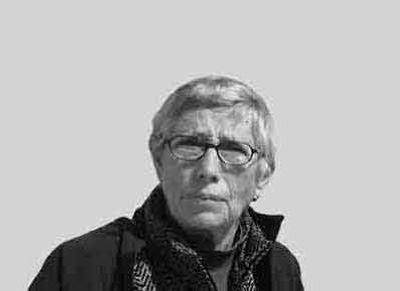
Michael Jansen
The author, a well-respected observer of Middle East affairs, has three books on the Arab-Israeli conflict.
- Last updated: February 26, 2026 | 14:15


US House of Represen- tative speaker Mike Johnson has rejected a request for the late human rights activist
Jesse Jackson to lie in state at the Capitol which hosts the legislature. Jackson died last week at 84 after a decades-long career battling racism against blacks, browns, Arabs, and Asians. This honour involves dis- playing the deceased in the casket in the Capitol’s Rotunda where the public can visit and offer respects. Among those honoured previously were black rights campaigner Rosa Parks in 2005 and white evangeli- cal preacher Billy Graham in 2018.
Jackson will lie in state at the headquarters of his Rainbow PUSH movement in Chicago and formal church services will be held in his home state of South Carolina and in Washington, DC.
Born into a poor sharecropping family in segregated South Caro- lina, Jackson graduated from the predominately black North Car- olina Agricultural and Technical College, studied at the Chicago Theological Seminary and was ordained as a Baptist minister.
His career in activism began in the 1960s when he served as a
close aide of the Reverend Martin Luther King. Inspired by India’s Mahatma Gandhi, King founded a non-violent resistance movement to achieve equality for black citizens. The movement has transformed the US from a segregated to a largely integrated society.
This effort, dubbed People Unit- ed to Save Humanity (PUSH), was launched in 1963 when Jackson organised citizens of Birmingham,
Alabama, one of the country’s most racist cities, to march on govern- ment buildings, boycott local mer- chants, and stage sit-ins at restau- rants and cafes. A Baptist minister, Jackson also preached instructive sermons to his congregations. He told them: “The race does not go to the fast or to the strong but to those who hold out.” And he warned, “If you pickle your brains with liquor, you CAN’T hold out. If you shoot cocaine in your membrane, you CAN’T hold out. If you put dope
in your veins, rather than hope in your brains, you CAN’T hold out.” To a throng of 25,000 which had
marched on Washington in August 1963, King gave his moving “I have a dream” speech calling for an end to legalised racism in the US and called for political and economic opportunities for all. His address took place during the presidency of progressive Democrat John Ken- nedy who generated optimism on the US and international scenes. This ended with his assassination on Nov.23 of that year and ush- ered in decades of struggle against powerful forces defending the status quo. They failed. Kenne- dy’s successor southerner Lyndon Johnson secured Congressional adoption of the 1964 Civil Rights Act, the 1965 Voting Rights Act, and the 1968 Fair Housing Act.
He inaugurated “Great Society” programmes aimed at ending racial injustice and poverty, despite tough southern opposition. In 1964, King became the youngest person until then to receive the Nobel Peace Prize. He was assassinated in 1968 by a white man and Jackson became his successor.
An opponent of the Vietnam war and South Africa’s apartheid, Jackson connected the US rights movement to the internation-
al scene. However, he could be inconsistent. He partnered the US Jewish community in the struggle for rights and was initially a strong supporter of Israel. He argued it was clear after the World War II Holocaust that the Jewish people needed a homeland. He praised Israel as a democracy and a pro- gressive power on the world stage. Jackson reconsidered his position and during 1979 travelled to Leba- non for a well publicised meeting with Palestine Liberation Organisa- tion (PLO) chairman Yasser Arafat. Jackson’s objective was to mount a challenge to the US government’s policy of refusing to engage with the PLO.
At the Democrat party’s 1984 national convention, Jackson declared, “My constituency is the desperate, the damned, the disin-
herited, and the disrespected and the despised,” in which he includ- ed Arab Americans who were firm backers of Palestinian rights. He took this stand at a time US sup- port for Israel was unconditional and anyone who dared question this was in hot water or ostracised.
During his eighty-four presiden- tial campaign, Jackson courted the US-Arab community, focused on the region and called for the first time for Palestinian self-determi- nation. Jackson became the highest profile mainstream politician to bring the Arab American commu- nity into the political arena and to put Palestine on the agenda. Execu- tive director of the Arab American Institute Maya Berry observed, “I don’t think there’s a way to tell the Arab Americans’ political empow- erment story without understand- ing the path that Reverend Jackson created for us.” Due to Jackson’s decent showing in the eighty-four primaries, US-Arab activist, Texan
Ruth Ann Skaff, was subsequent- ly appointed to the Democratic National Committee, the party’s executive board. Jackson summed up his approach by stating, “Never look down on anyone unless you’re helping them up.”
The first black president, Barack Obama stated that his wife Mi- chelle “got her first glimpse of political organizing at the Jack- sons’ kitchen table when she was a teenager. And in his two historic runs for president, he laid the foundation for my own campaign to the highest office of the land ... We stood on his shoulders.”
Democrat presidential candidate Kamala Harris said he “gave a voice to people who were removed from power and politics. He let
us know our voices mattered. He instilled in us that we were some- body. And he widened the path for generations to follow in his foot- steps and lead.”