‘I was always interested in enjoying life than being pretty’
- Last updated: January 18, 2026 | 20:04


Patrick Smith, The Independent
Brendan Gleeson can’t stop talking. Materialising on my laptop screen, the Oscar-nominated star of The Banshees of Inisherin and Harry Potter sails through twinkly-eyed anecdotes and impassioned detours about parenting, the Northern Ireland peace process, and toxic masculinity. He apologises for “going on a bit”, then immediately goes on a bit more. It’s great.
Far from the grouchy or mean men he's often inhabited, Gleeson is gentle and gregarious. We’re discussing H is for Hawk, Philippa Lowthorpe’s sensitive adaptation of Helen Macdonald’s bestselling memoir, in which Gleeson’s patriarch dies early but hovers over every frame. It’s led us on to the difference between the Irish approach to death and that of the English. This takes the Dubliner back to the funeral of a friend — Anthony Minghella, who directed Gleeson in Cold Mountain five years before he died in 2008.
“At an Irish funeral, if the man or the woman has had a life, all you hear is people laughing and telling stories,” Gleeson explains, his Gaelic burr mild yet brooking no interruption. “It's all about what a life they’ve had, how they embraced the life.” But that really wasn’t the vibe when the director of The English Patient was laid to rest, Gleeson says. “I remember going to his funeral and being absolutely stunned by the lack of...” He trails off, recalibrates. “I’d be telling funny stories about Anthony, about things on set, and how, you know, he said he’d do Beckett with me and I’m still waiting.”
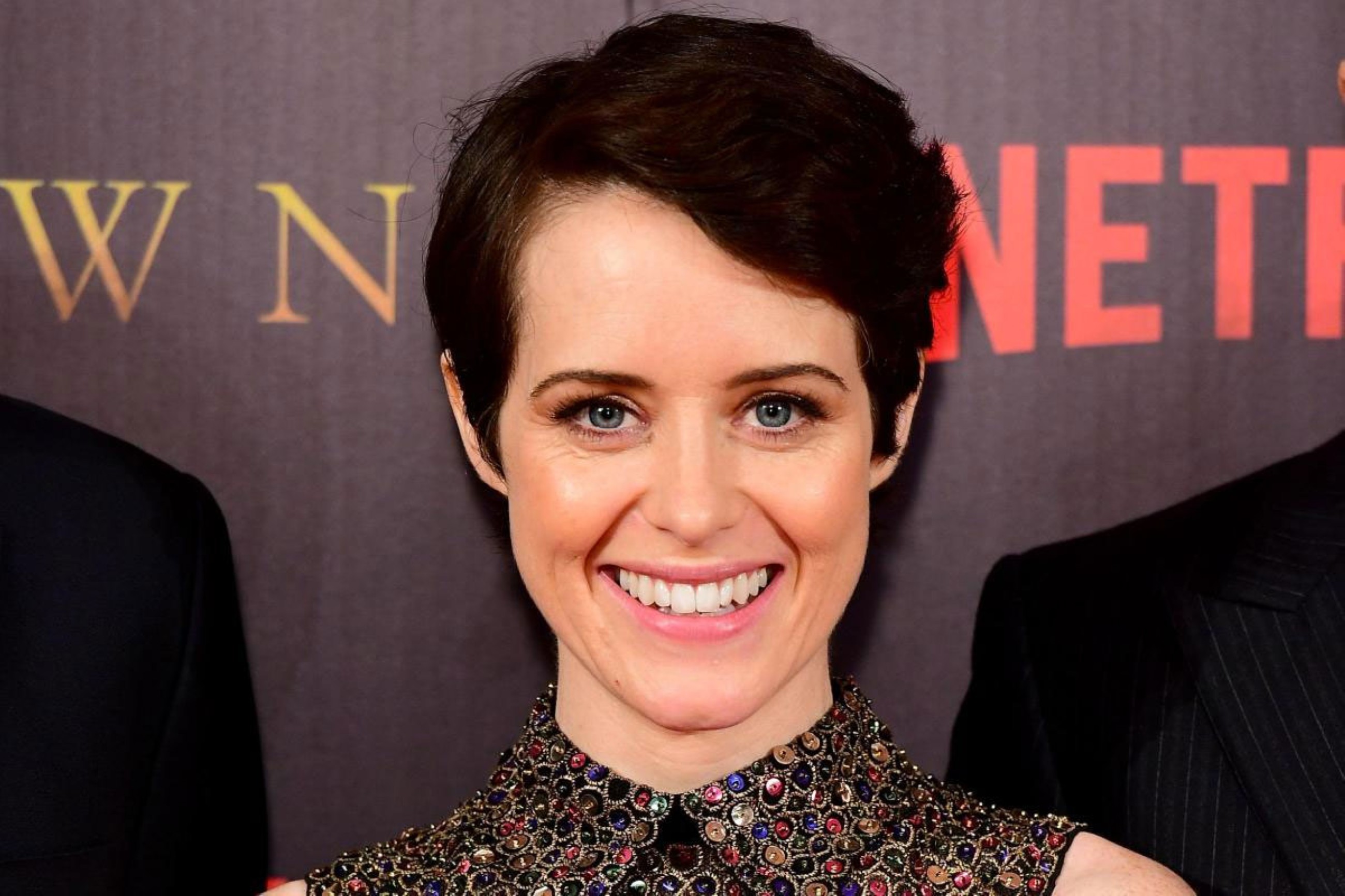
Instead, the 70-year-old continues, “it was all dignity. It was all ceremony. It was all very beautiful in its own way, and full of emotion.” In Ireland, by contrast, “there is always conversation, and far more immediate engagement with the person that was there, and you can feel them there, like even in the wake. It’s an incredible, communal embrace of death, in a way that doesn’t happen in Britain.” In H is for Hawk, Claire Foy’s Helen faces her father’s death by training a goshawk called Mabel. The story is set in Cambridge and the Brecklands on the Norfolk-Suffolk border, and the dad in question is the celebrated real-life photojournalist Alisdair Macdonald. A frequent chronicler of The Beatles’ live shows, he was also responsible for the famous shot of Princess Diana and Prince Charles kissing on the balcony of Buckingham Palace.
What drew Gleeson to the role was the chance to play a good man. “I had become very tired of the trope of the toxic father becoming absolutely relentless in the scripts I was reading,” he says. “And I got very bored with it first, and then I got very sort of irritated by it, and then I began to feel that there was a dearth of role models for young men with regard to fatherhood, being perpetuated in script after script after script.” Young men are already insecure about society’s expectations, he argues. “So I thought the opportunity to play a good father was incredibly valuable.”
It’s Alisdair who encourages Helen’s love of nature, introducing her to birding on their expeditions together. After his death, she becomes consumed by her devotion to Mabel — who is not just any bird, but a predator with a froideur yet to thaw. Keeping Mabel on her wrist at all times, even as a don at Cambridge, Helen cuts an eccentric figure as her life unravels and her house falls into squalor.
Foy underwent extensive training to handle the birds, and her scenes carry real authenticity – it’s clear that she’s taking it seriously, juggling what one reviewer called “an Apache gunship-like killing machine strapped to her arm” with a wonderfully raw performance. “She’s unbelievable,” Gleeson says. “She has such depth; you can feel a kind of huge intensity in terms of what she’s experiencing.”
Just as Foy commits fully to the physical demands, so Gleeson imbues his scenes with a dignity that keeps any mawkish sentiment at arm’s length. He made a deliberate choice to play Alisdair with a Scottish accent, rather than the London one the real Macdonald would have had. “I don’t look like him anyway,” he says.