Christmas, the origin of a world celebration
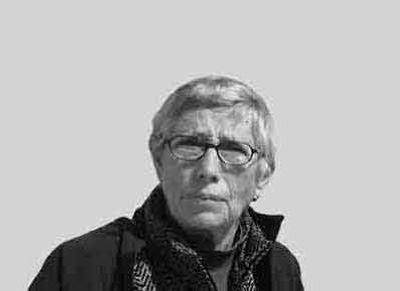
Michael Jansen
The author, a well-respected observer of Middle East affairs, has three books on the Arab-Israeli conflict.
- Last updated: December 21, 2025 | 19:55


Christmas is now celebrated on December 25th in more than 90 countries around the world. The festival has its origins in pagan festivals marking the northern hemisphere's winter solstice on December 21st, when the sun began to shine for a longer time following the shortest and darkest day of the year. This was seen by ancient peoples as a triumph of light over darkness and a promise of good crops in the coming year.
The Roman feast of Saturnalia contributed generously to Christmas. This celebrated the god Saturn, a multifaceted god who represented time, birth and death, abundance, wealth, agriculture, and regular renewal and liberation.
Saturn's mythological reign was seen as a Golden Age of abundance and peace. Displays of evergreens, feasting and gift giving were contributed by this festival. As no date for Jesus' birth was given in the New Testament, by adopting and adapting Saturnalia, Christians attracted and converted pagans to their new faith. Now Christmas is celebrated by billions of Christians and non-Christians around the world.
Before their conversion to Christianity, the Germanic peoples and English celebrated a midwinter event called Yule. This honoured the Northern European Norse god, Odin, the god of warfare and the dead, who is regarded as the founder of the German people, and had a history of more than 1,000 years. The Germans brought many traditions to Christmas, including seasonal menus and markets, the decorated tree, the wreath, the Christmas Angel and the idea of Saint Nicholas filling shoes — now stockings — with treats.
Fruitcake – which has become a staple treat at Christmas – has its origins in Rome where soldiers consumed a rich cake called "Satura," for the god Saturn during Saturnalia. These cakes were made from barley, nuts, raisins, and pomegranates and became a seasonal staple in the 16th century after global trade made sugar available.
The traditional rendering of Jesus life holds he was born in Bethlehem, known as the city of King David, to parents who lived in Nazareth but were compelled by Rome, then occupying Palestine, to be taxed in their native place. When heavily pregnant Mary and Joseph arrived in Bethlehem there was no room in any of the inns, so Jesus, heralded as a saviour, was born in a stable and laid in a manger. The word was spread by shepherds. When the news reached the Roman satrap Herod he saw the baby as a threat and ordered the killing of all newborn boys, prompting Mary and Joseph to flee with their infant to Egypt.
As Christmas spread around the world, its adherents added secular traditions to church services, transforming the event into a holiday season stretching from mid-December until January 7th when Orthodox Christians celebrate Jesus’ birth. Santa Claus is a legendary figure who, according to tradition, delivers gifts during the late evening and overnight hours on Christmas Eve. He is based on 4th century Christian bishop Nicholas or Saint Nicholas, who was known for generosity and gift giving. While Santa’s gifts are said to be made by elves in his workshop, his airborne sleigh is meant to be pulled by eight reindeer.
Santa's image as a portly, white bearded man dressed in red originated in the US during the 19th century with Dutch settlers bringing the legend of Sinterklaas ("Saint Nicholas") to the colony of New Amsterdam which became New York City.
The wide range of global cultures bring their own traditions to the season although all have punishments and rewards for naughty and good children around the world. In Venezuela, many people skate to Christmas eve mass while in Germany some hang a pickle on their Christmas tree for good luck. In Norway households hide their brooms to prevent witches from stealing them. Finns visit cemeteries to light candles on the graves of relatives.
Christmas meals vary widely. While in the US and some European countries, turkey is a popular dish, in Japan fried chicken is eaten on Christmas eve and in Greenland whale blubber and local specialities are consumed.
Elements of the Western style Christmas have been adopted by many countries where Christians are a minority or form a tiny community. In China, where only 1 per cent of the population is Christian, Western Christmas trees are displayed in main cities and traditions are observed on Christmas day, which is a holiday.
In Brazil, carved Nativity scenes of Jesus in a manger with his parents are popular, fireworks light the sky on Christmas eve and families have barbecues. Christmas was banned in Cuba from 1969 until 1998 when the ban was lifted after the Pope visited the island.
In Egypt, where 15 per cent of the population is mainly Orthodox Christian, the feast is celebrated on January 7th as is the case in Russia and other Orthodox countries. Christmas is widely observed in Israeli-occupied Palestine by the shrinking Christian community (1 per cent down from 20 per cent) and Muslims who take pride in Jesus's birth in their land.