Oman brings its halwa heritage to SIBF 2026
- Last updated: November 14, 2026 | 18:49


Gulf Today, Staff Reporter
Three hours of stirring, a generous helping of ghee and a fragrant blend of saffron, cardamom and rose water.
Add a recipe passed down through generations, and you have Omani halwa, a traditional sweet bringing centuries of culinary heritage to the 45th Sharjah International Book Fair (SIBF 2026).
As Guest of Honour at this year's fair, Oman is stirring up the past and sweetening the present with live demonstrations of the traditional delicacy, giving visitors a taste of its rich culture and a close-up look at the patience and skill behind every batch.
Among the artisans demonstrating the craft is Mohammed Al Amri, whose family has been making Omani halwa for generations through the Rashid Saeed Al Amri factory, which traces its history back more than 200 years.
Al Amri is preparing black Omani halwa, a variety made with brown sugar, in a process that requires almost three hours of continuous attention.
It begins with water, starch and brown sugar, stirred over heat for approximately two and a half hours until the mixture thickens. A wooden paddle known as a bustan keeps the ingredients moving and prevents them from sticking to the pot.
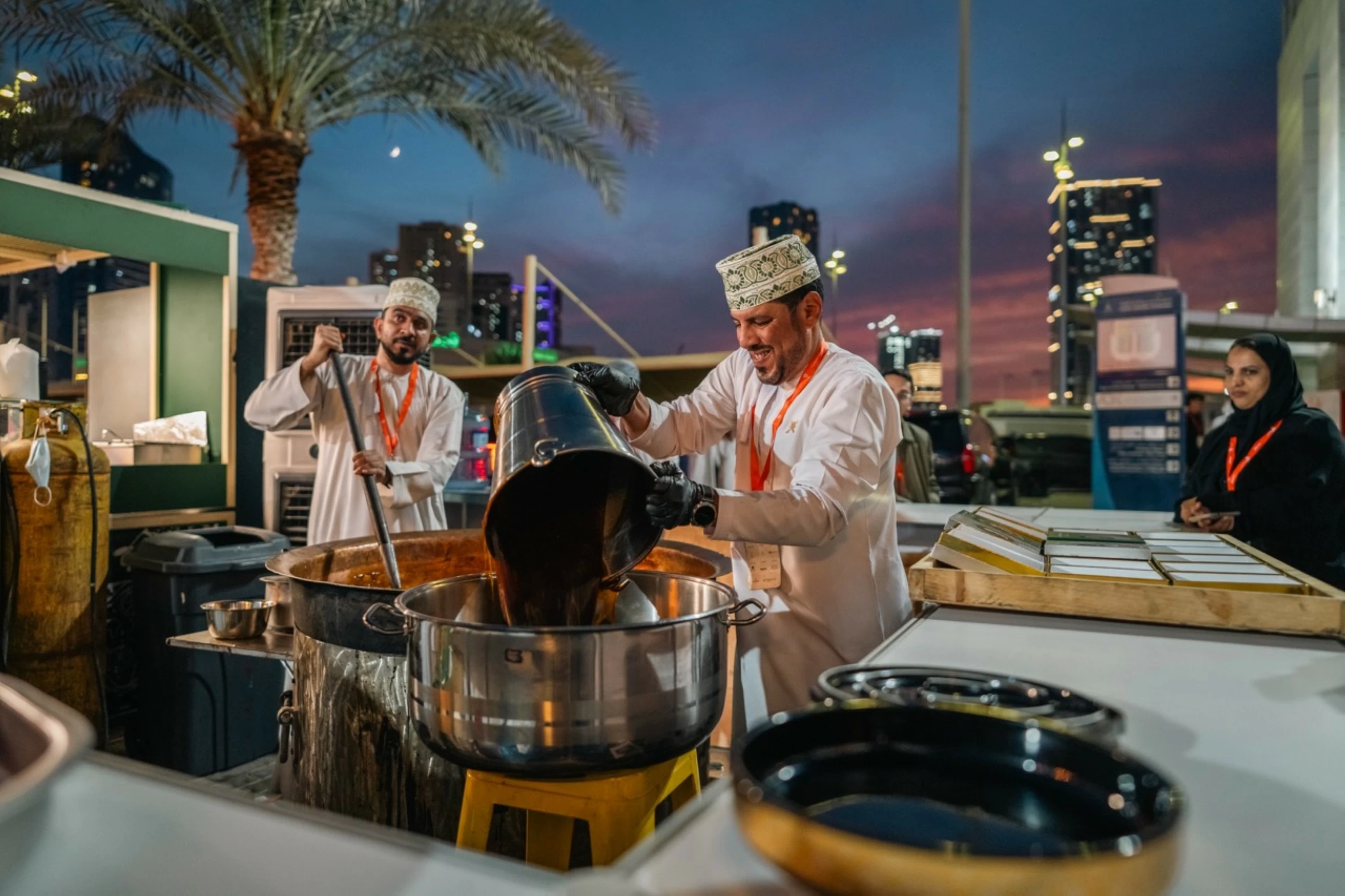
Next comes the ghee, added gradually over about 20 minutes, followed by saffron, cardamom and rose water. Cashews, walnuts and sesame seeds provide the finishing touches before the halwa is poured into serving containers.
Knowing when to add each ingredient and when the mixture has reached the right consistency takes years of practice.
Al Amri learnt the craft through a family tradition passed down from his grandfather, who practised it in the 1950s, to his father in the late 1980s and eventually to his own generation.
He said the sweet can be enjoyed warm, although its flavours become more fully blended as it cools.
Although gas burners have largely replaced traditional wood fires, the preparation still depends on the halwa maker's experience and careful judgement.
Omani halwa comes in several varieties, including white, yellow and black, with regional variations found in Nizwa, Barka, Nakhal, Al Hamra and Sohar. Contemporary recipes have also introduced flavours such as dates, honey, frankincense and camel milk.
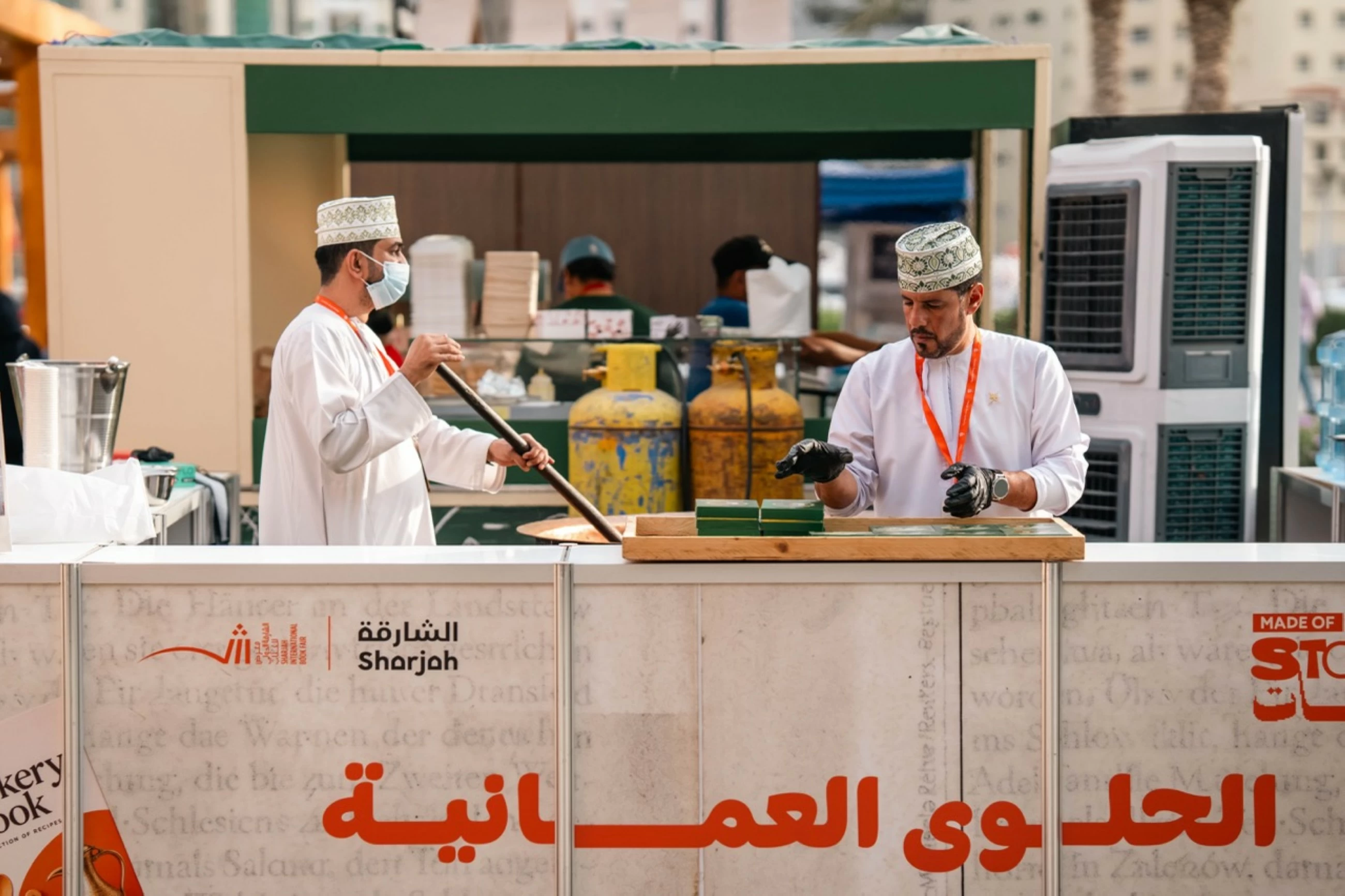
Traditionally served alongside Omani coffee, halwa is a familiar offering at weddings, religious celebrations and family gatherings. At SIBF 2026, visitors can discover the craftsmanship behind a sweet that has welcomed guests in Omani homes for generations.
Organised by the Sharjah Book Authority, the 45th Sharjah International Book Fair (SIBF 2026) runs from November 4 to 15 at Expo Centre Sharjah under the theme “Made of Stories,” with the Sultanate of Oman as Guest of Honour.
The fair brings together 3,212 publishers and exhibitors from 126 countries, showcasing more than 1.7 million titles.
Its programme features 1,500 cultural, creative and artistic events, with 106 guests from 25 countries.
-