Iran holds 'very good' talks with Makkah pact nations on region's security
- Last updated: October 27, 2026 | 11:32


Senior officials from Saudi Arabia, Turkey and Pakistan held talks with Iran on Monday in an attempt to stop the Middle East war from reigniting, with Tehran saying the discussions were "very good".
Officials from the three Makkah pact countries flew to Iran as part of efforts to "de-escalate between the parties to the current crisis", a Saudi foreign ministry statement said.
The talks, which included heavyweight Saudi Defence Minister Prince Khalid Bin Salman, followed warnings by the United States, Iran and Israel that hostilities could restart in the eight-month war.
It was the first joint visit to Tehran by Pakistan, Saudi Arabia and Turkey since they formed a defence alliance in Makkah, the holy city in western Saudi Arabia, in August.
The delegations met Iranian President Massoud Pezeshkian and Foreign Minister Abbas Araghchi. The meeting ended without concrete announcements, with the various parties saying they "agreed to continue discussions" according to Iranian state media.
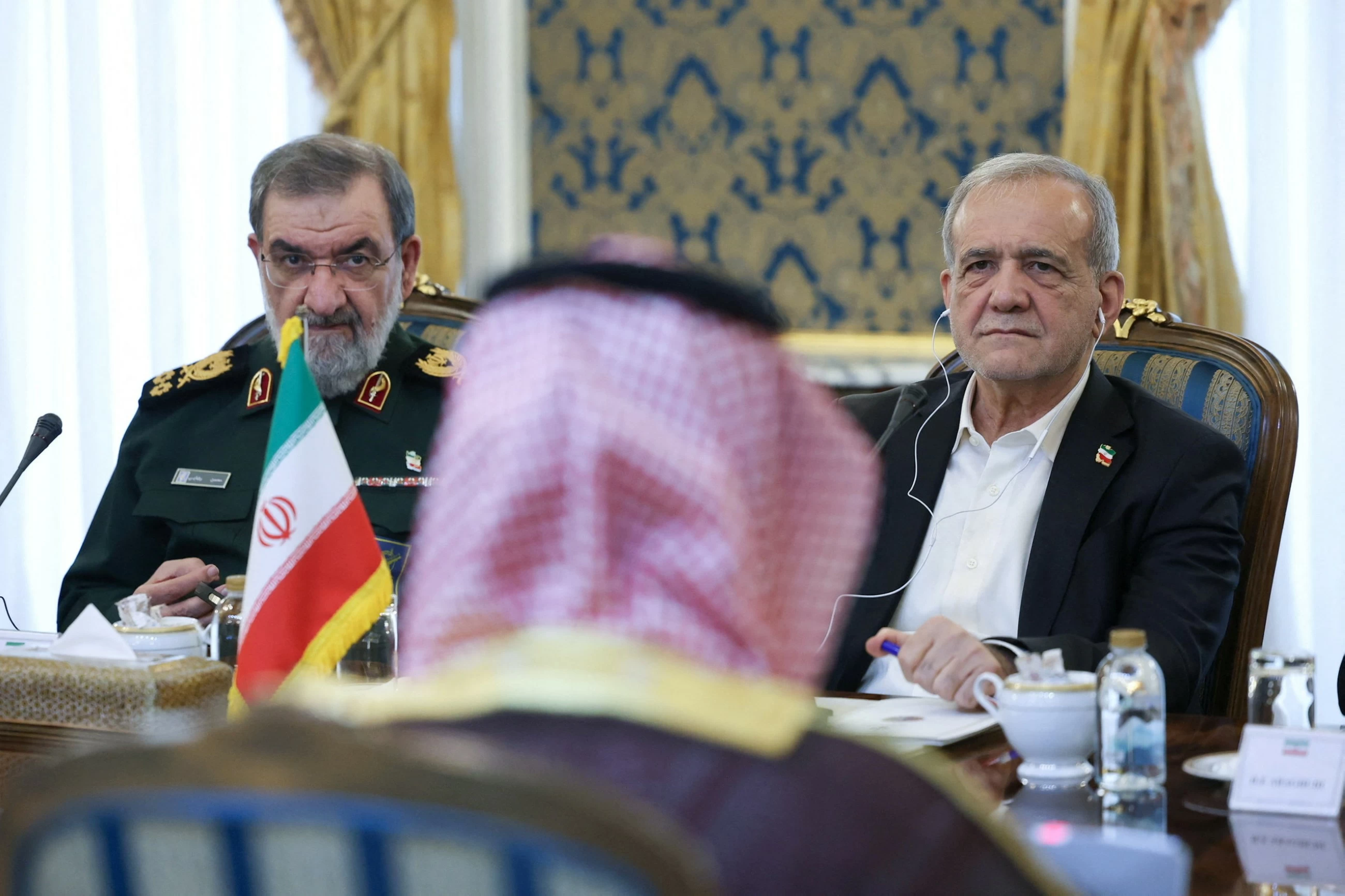
But Iran's security chief Mohsen Rezaei said the discussions in the capital Tehran were "very good", according to state television.
"I feel that a new atmosphere is emerging in the region... I sensed a very positive atmosphere in the discussions among the gentlemen," said the head of Iran's Supreme National Security Council.
He said they agreed that security in the region "should be achieved by the countries themselves, and that we must prevent any kind of foreign intervention", saying emphasis was put on the Israeli occupation of southern Lebanon, southern Syria, Gaza and the West Bank.
Prince Khalid, Pakistan's powerful army chief General Asim Munir and Turkish intelligence chief Ibrahim Kalin met Rezaei.
Regional tensions have risen ahead of Israel's pivotal elections on Tuesday and next week's US midterms, where US President Donald Trump's Republicans are battling to keep control of both chambers of the US Congress.
As the talks in Tehran began, United Nations Secretary General Antonio Guterres said it was "essential to stop any escalation" in the Middle East.
"The risk to have the combination of an overwhelming military attack on Iran, and an overwhelming military attack by Iran on the countries of the Gulf, needs to be avoided at all costs," he told a press conference in Cairo.
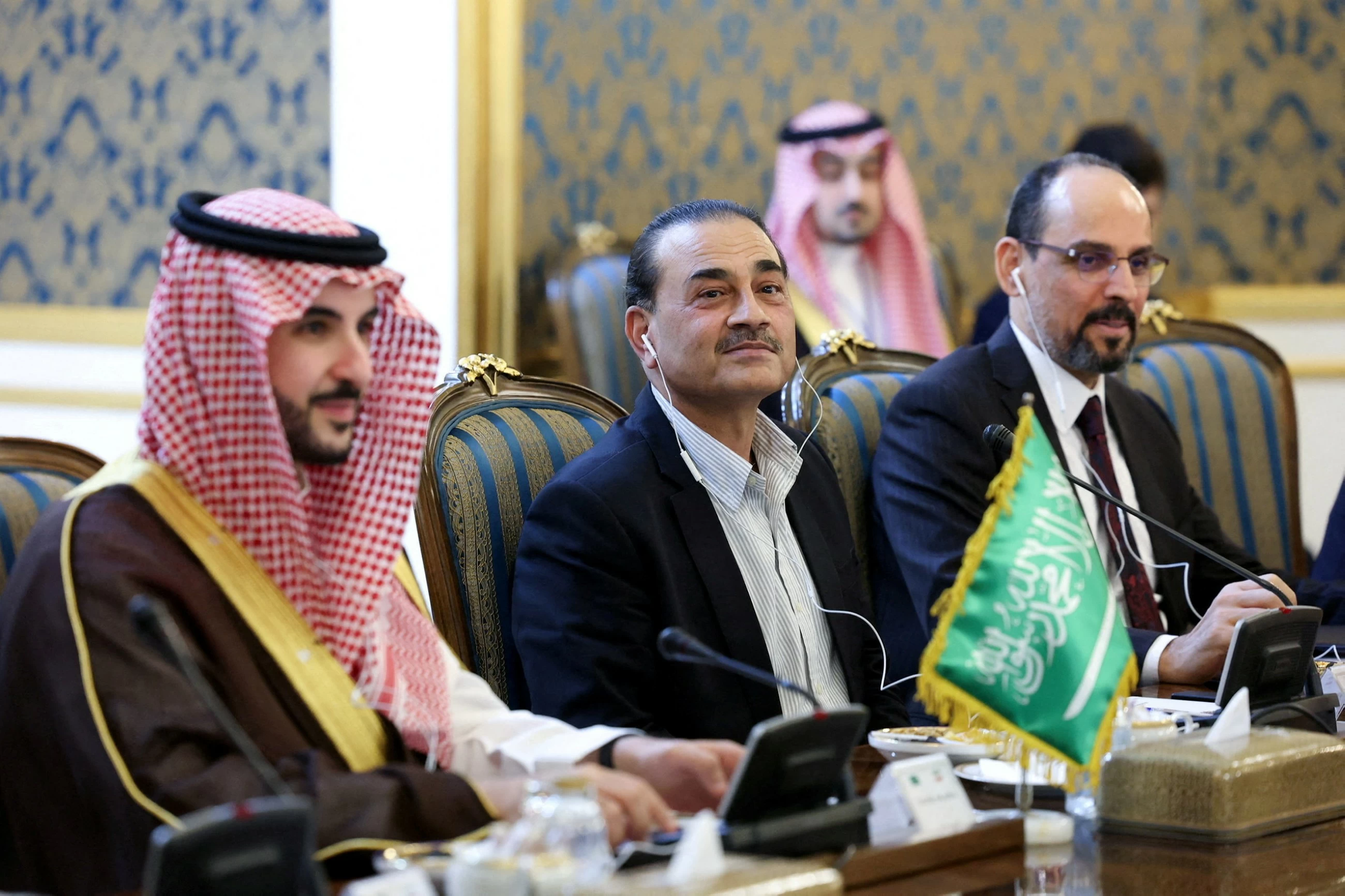
Hesham Alghannam, a Saudi security analyst and researcher, posted on X, that "this historic meeting in Tehran may be the last chance before escalation spirals out of control".
'Powerful signal'
Fresh explosions rattled Riyadh overnight, which has suffered weeks of attacks from the Iran-backed Houthis, after the group claimed a new attack on the Saudi capital's international airport on Sunday.
The Saudi-led coalition in Yemen later reported intercepting three Houthi-launched drones over southern Saudi Arabia and the Riyadh region.
Responding to the weeks of attacks, Egypt's parliament approved President Abdel Fattah Al Sisi's request to approve defensive military support for Saudi Arabia "if requested". It was not clear exactly what support was on offer.
US-Iran mediation efforts have been led by Qatar and Pakistan. A Qatari delegation visited Tehran on Sunday, Iran's foreign ministry spokesman Esmaeil Baqaei said.
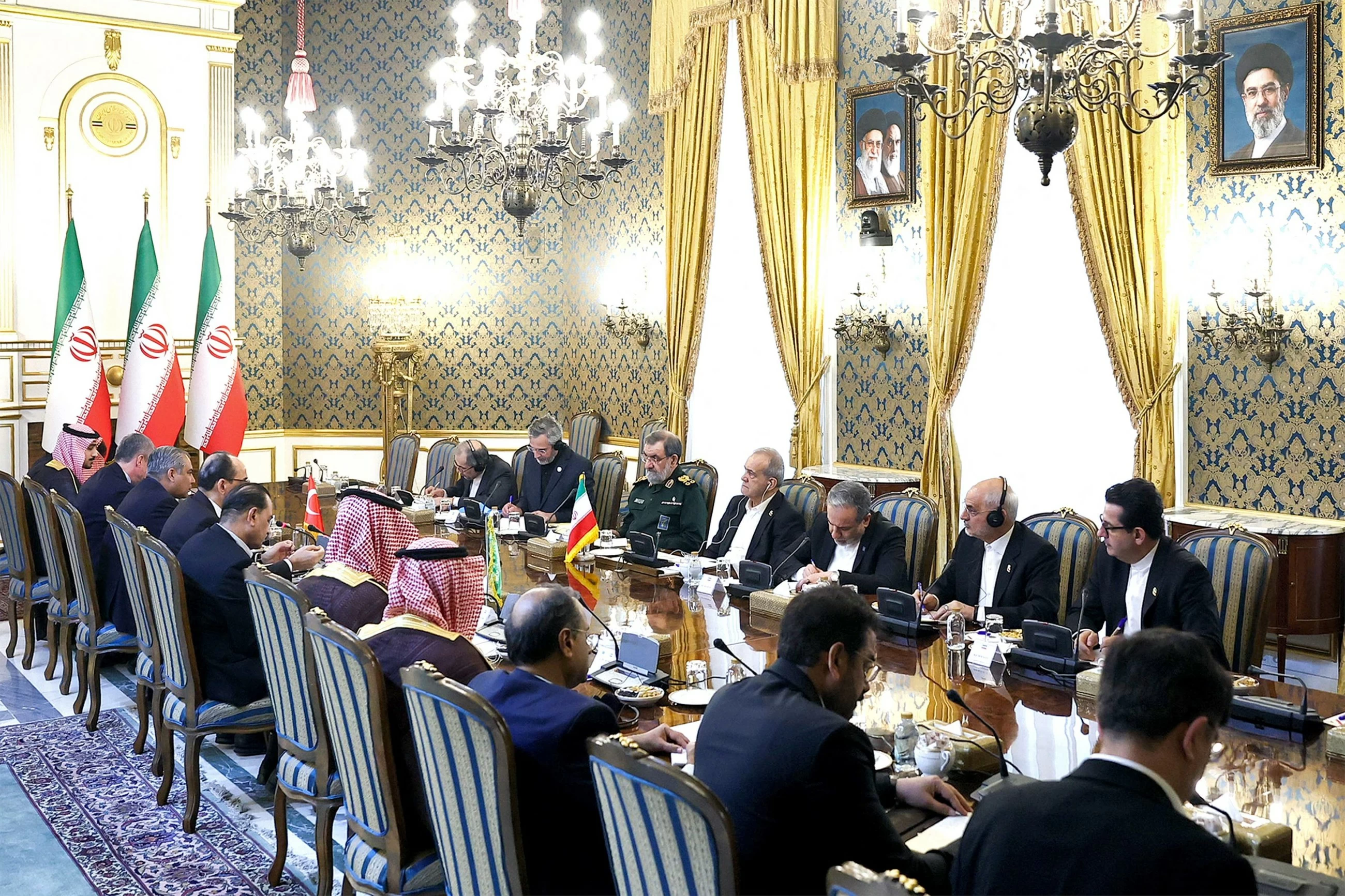
Andreas Krieg of the London-based risk consultancy MENA analytica said Prince Khalid's presence in Tehran was "hugely significant", calling him the "strategic mastermind of Saudi Arabia".
'Don't test us'
Recent comments have heightened speculation about renewed conflict.
US President Donald Trump said on Friday that Washington "may do another little Epic Fury", referring to the US-Israeli campaign against Iran that began on February 28.
On Sunday, Prime Minister Benjamin Netanyahu warned that Iran may try to disrupt the Israeli elections, where he is in a neck-and-neck race to stay in power.
"We have intelligence signs that our enemies, Iran and its proxies, could challenge us with attacks in order to disrupt the elections," Netanyahu, who faces an election on Tuesday, said in a video released by his office.
The remarks came as Israel's Channel 12, citing unnamed sources, reported a confrontation between Netanyahu and army chief Eyal Zamir over an unspecified new directive in the war with Iran, which the premier denied.
Agence France-Presse