Workers' remittances from GCC countries hit record $161b, world's highest
- Last updated: October 4, 2026 | 15:19


Gulf Cooperation Council (GCC) countries collectively recorded the world’s highest value of outward workers’ remittances in 2025, totalling approximately $161 billion, representing growth of 13.6 per cent compared with 2024 and an increase of approximately $19 billion, according to the report "Outward Workers’ Remittances from the Gulf Cooperation Council Countries, 2025”, issued by the Statistical Centre for the Cooperation Council for the Arab Countries of the Gulf (GCC-Stat).
The report noted that total workers’ remittances from GCC countries rose for the second consecutive year, following the decline recorded in 2023, reaching their highest level in 2025. This rise comes amid the continued attraction of expatriate workers, alongside the expansion of economic activities associated with infrastructure projects, services, industry and non-oil sectors.
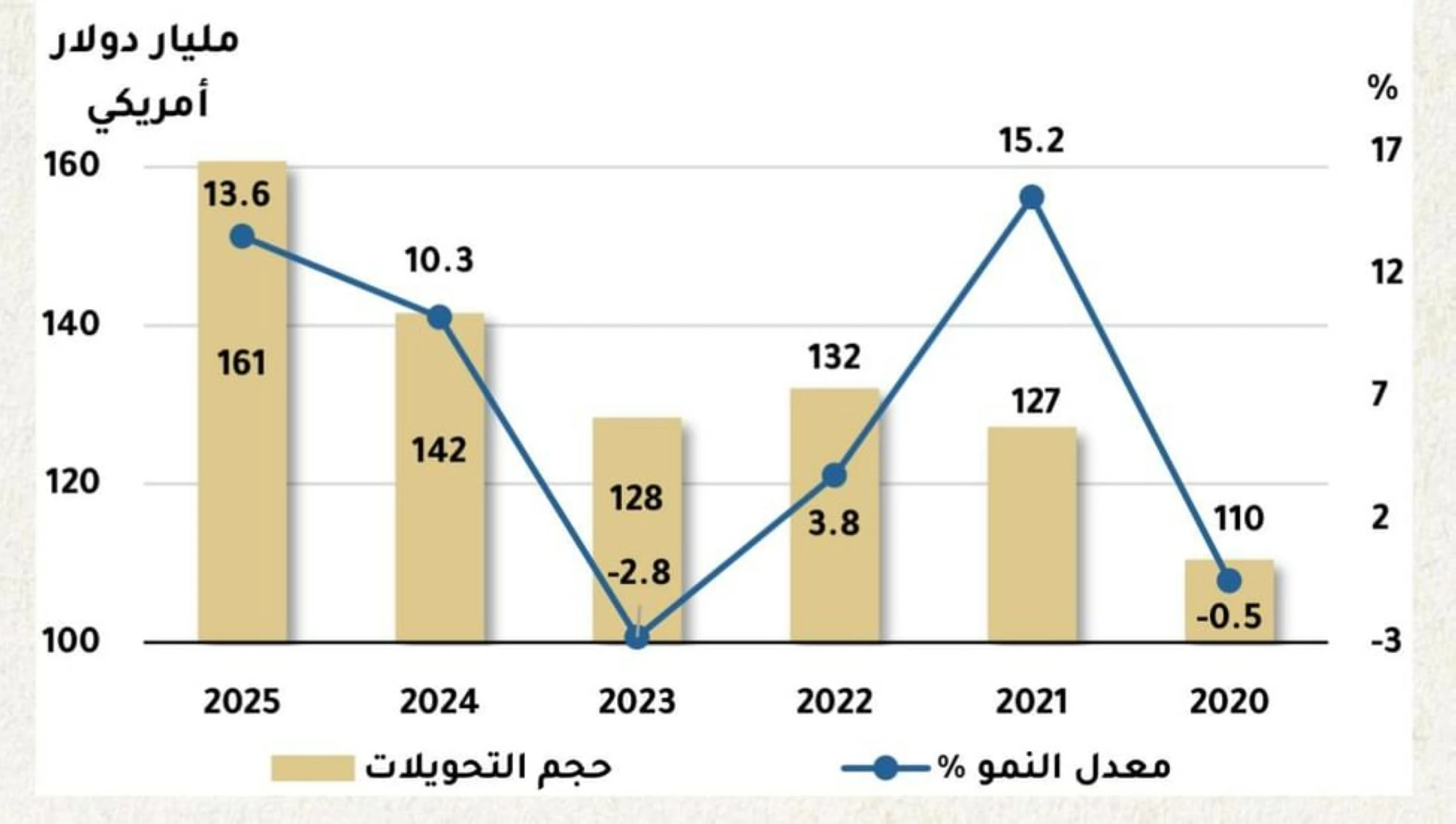
Workers’ remittances as a percentage of the gross domestic product (GDP) of GCC countries stood at approximately 6.6 per cent in 2025, compared with approximately 6 per cent in 2024, 5.7 per cent in 2023 and 5.6 per cent in 2022. The report noted that this ratio reflects the relative weight of workers’ remittances in relation to the size of GCC economies and does not, in itself, indicate an improvement or deterioration in economic performance.
The global standing of GCC countries is evident when their total outward remittances are compared with the remittance values recorded by a number of major economies individually. Outward workers’ remittances from the United States of America amounted to approximately $107 billion, Switzerland approximately $43 billion, Germany approximately $27 billion and France approximately $21 billion, according to the data presented in the report.
The significance of these remittances extends beyond their direct financial value, as they help support household income, consumption, and economic and social stability in recipient countries. They also reflect the GCC’s regional economic weight, its role in global financial flows and its connection to the global economy.
WAM