New Zealand’s Ambassador visits Meliha Dairy Farm to explore sustainability and circular economy initiatives
- Last updated: September 24, 2026 | 17:42


Mahmoud Ads, Staff Reporter
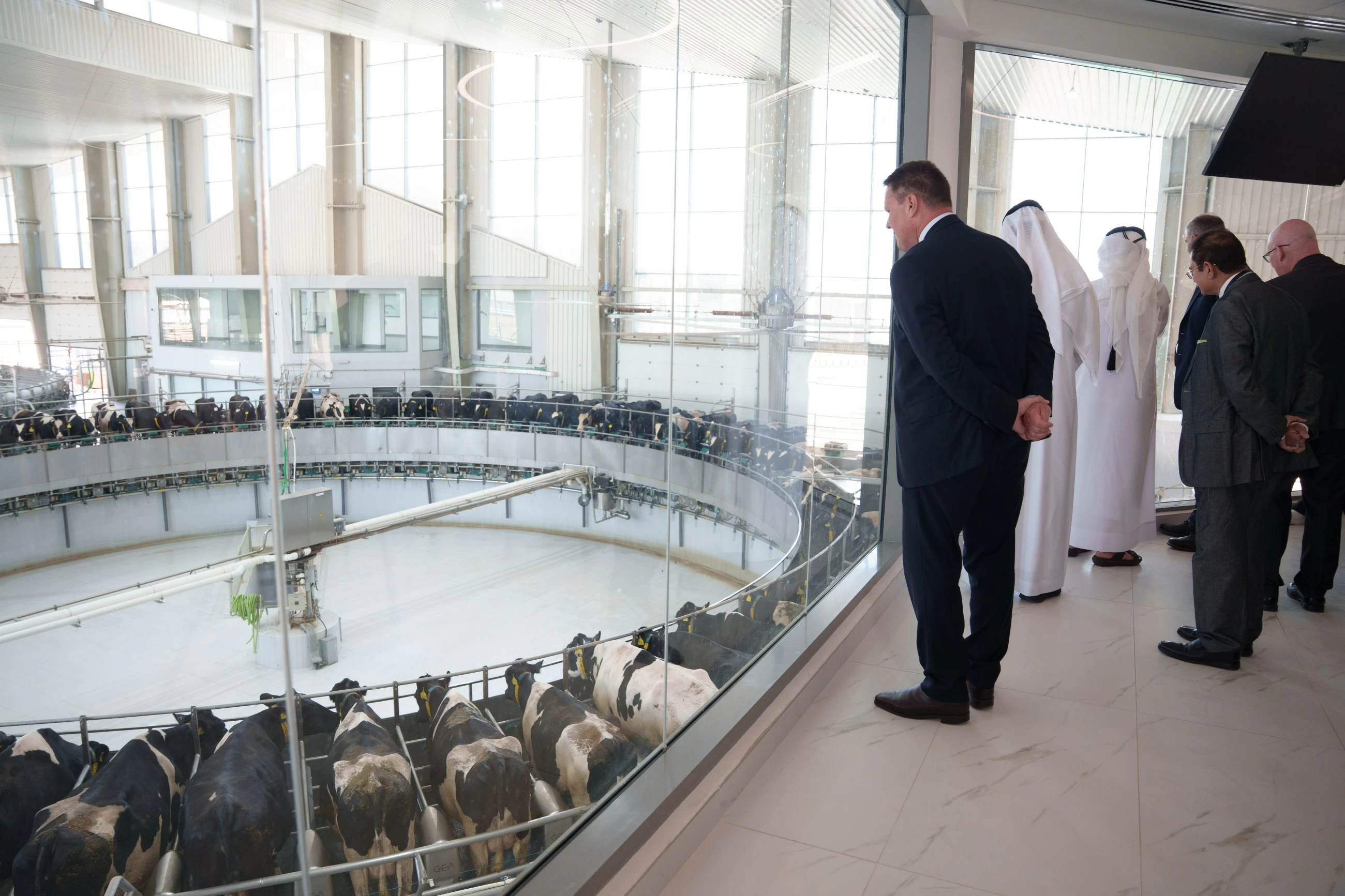
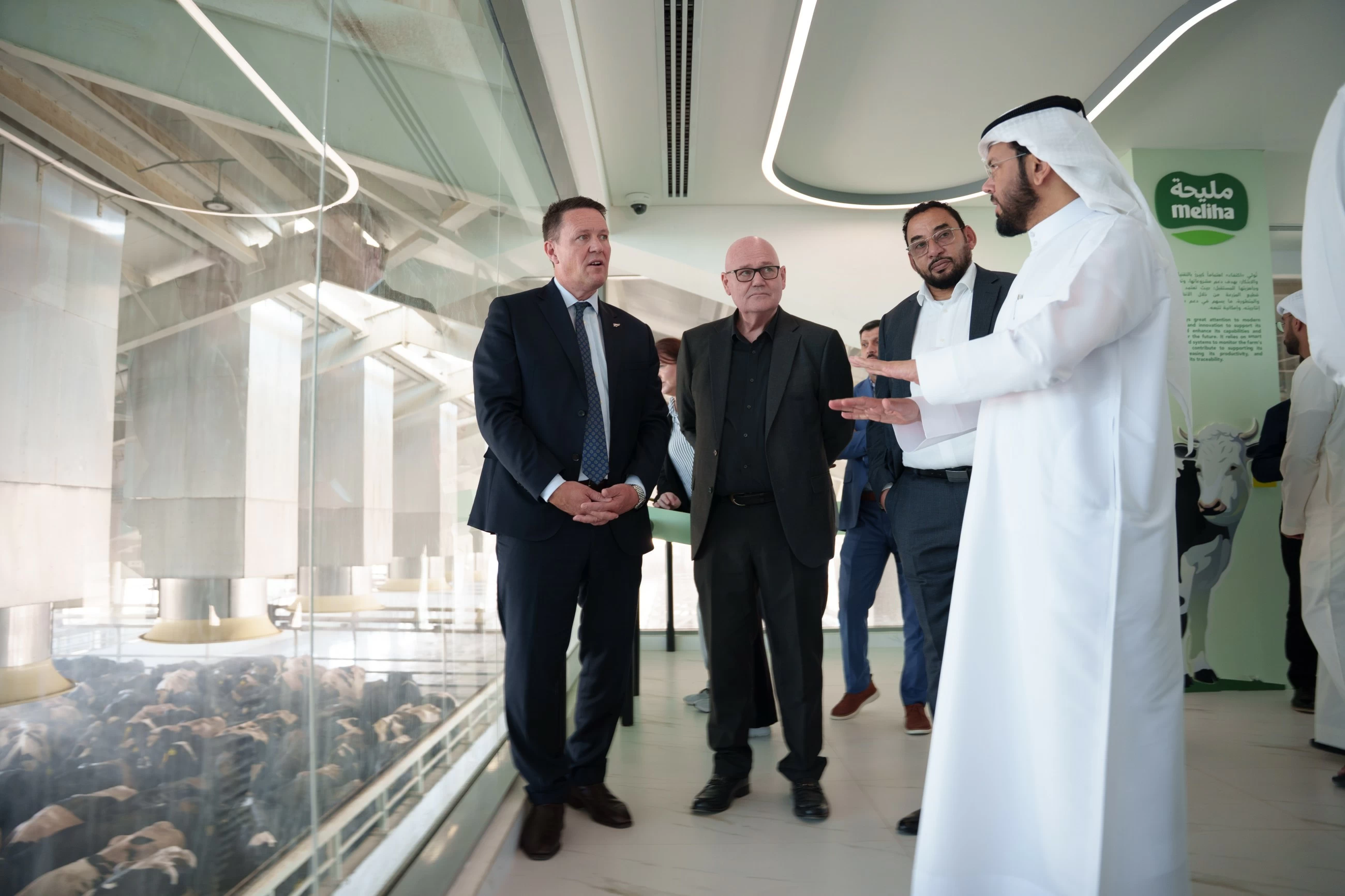
New Zealand’s Ambassador to the UAE, Richard Kay, along with his delegation, visited Meliha Dairy Farm in Sharjah to gain insights into the farm’s dairy production operations and its innovative sustainable agriculture and circular economy practices.
During their visit, the delegation toured the farm's facilities and received an overview of its cattle-rearing techniques, organic milk production processes, and waste management efforts, including composting organic waste with a capacity of 24 tonnes per day. Ambassador Kay was greeted by Dr. Eng. Khalifa Musabeh Al Teneiji, Chairman of the Department of Agriculture and Livestock and CEO of Ektifa.
This visit served as an opportunity to explore prominent food and agricultural projects in Sharjah and discuss possible avenues for knowledge exchange and cooperation in the dairy and sustainable agriculture sectors.
Throughout the visit, the delegation was introduced to the farm’s daily operations and its implementation of modern practices in organic dairy production. They also learned about the farm’s sustainability efforts, particularly its initiative to convert organic waste into a valuable resource for agriculture.
During the conference, Dr. Khalifa Musabah Al Tunaiji, Chairman of the Department of Agriculture and Livestock and CEO of the Production Establishment (EKTIFA), unveiled important information about the new facility. He confirmed that the plant is capable of producing 24 tonnes per day. The advanced technology implemented has proven successful in multiple countries and has significantly positive impacts, which is why it was adopted in Sharjah.
Dr. Al Tunaiji clarified that the outcome of the production is 100% organic compost, not enriched soil, and will not be available for commercial sale. When asked about commercial availability, he confirmed it will exclusively support Mleiha Dairy Farm.
He highlighted that the primary goal of this initiative is to achieve zero waste within the farm's operations. This technology is environmentally friendly with low carbon emissions, reflecting the farm’s dedication to sustainable practices and resource efficiency. The introduction of the manure-to-compost facility is considered a model for circular agriculture in the UAE, transforming farm waste into a valuable asset to enhance soil fertility, lessen dependence on chemical fertilizers, and align with the country's broader sustainability and food security objectives.
Meliha Dairy Farm runs a fully equipped facility dedicated to processing and transforming organic waste into compost using the In-Vessel method. Capable of handling 24 tonnes daily, this facility turns organic debris into nutrient-rich compost and fertile soil, beneficial for the farm's agricultural fields. This initiative exemplifies the principles of a circular economy, where organic waste becomes a valuable resource rather than merely discarded material. It ensures efficient resource utilization while promoting soil health and sustainable agricultural practices.
The farm utilizes HotRot, a specialized In-Vessel composting technology from New Zealand, developed in partnership with CHS. This technology converts organic waste into agricultural compost in roughly 14 days, effectively minimizing odors, pests, and liquid runoff associated with organic waste.
Meliha Dairy Farm has gained recognition from Guinness World Records as the world's largest farm for A2A2 cows. By integrating HotRot technology, the farm enhances its approach to managing organic waste and replenishing soil nutrients.
The use of this technology bolsters the farm’s commitment to creating a more sustainable and resource-efficient dairy production model, aligning with Sharjah's focus on resource sustainability and developing circular economy practices. Through integrating dairy production, organic waste management, and the beneficial reuse of compost in agriculture, Meliha Dairy Farm is crafting an integrated model that links food production with resource recovery and sustainable farming.
Additionally, the visit emphasized the potential for increased knowledge exchange and cooperation between the UAE and New Zealand in areas such as dairy production, agricultural innovation, waste management, and sustainable resource use.