Nepal flood survivors cling to zipline to cross treacherous river
Last updated: September 2, 2026 | 22:02
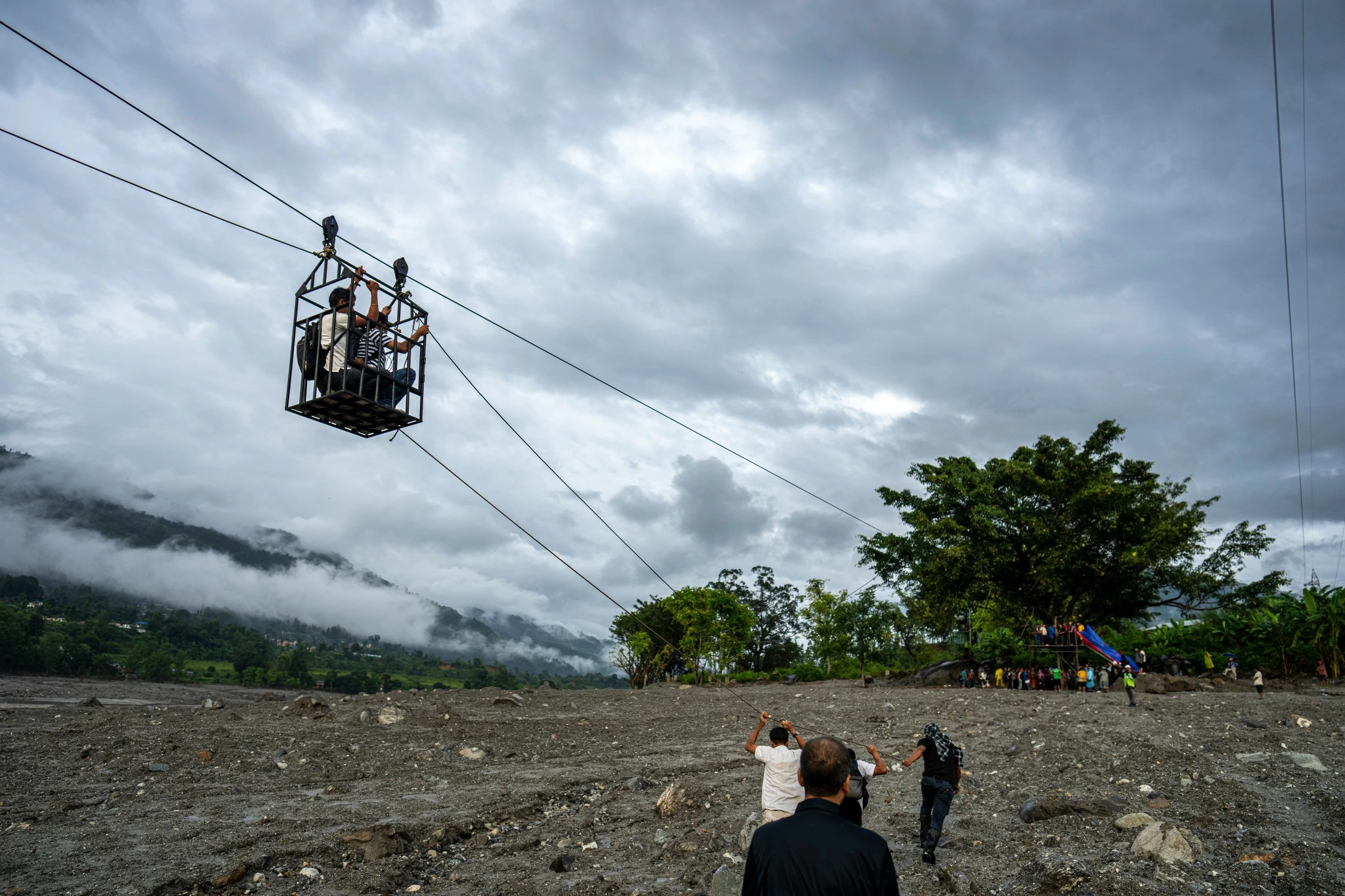
Residents pull the steel wire of a newly installed zipline to help people commute across the Trishuli River in the aftermath of flash floods at Bidur, Nepal, on Wednesday. AP
Residents commute across the Trishuli River on a newly installed zipline in the aftermath of flash floods. AP
High above the swollen Trishuli River, flood survivors gripped a makeshift cable as Nepali soldiers and residents pulled them to safety on Wednesday, a week after one of the country's worst disasters.
The Nepal army installed a roughly 250-metre (820-foot) temporary cable crossing in Bidur, offering a precarious lifeline across the river after devastating floods swept away roads and bridges.
Desperate people gathered on the riverbank, waiting for their turn to be hauled across.
Those needing urgent treatment, medicines, food and other essentials were ferried over the waters.
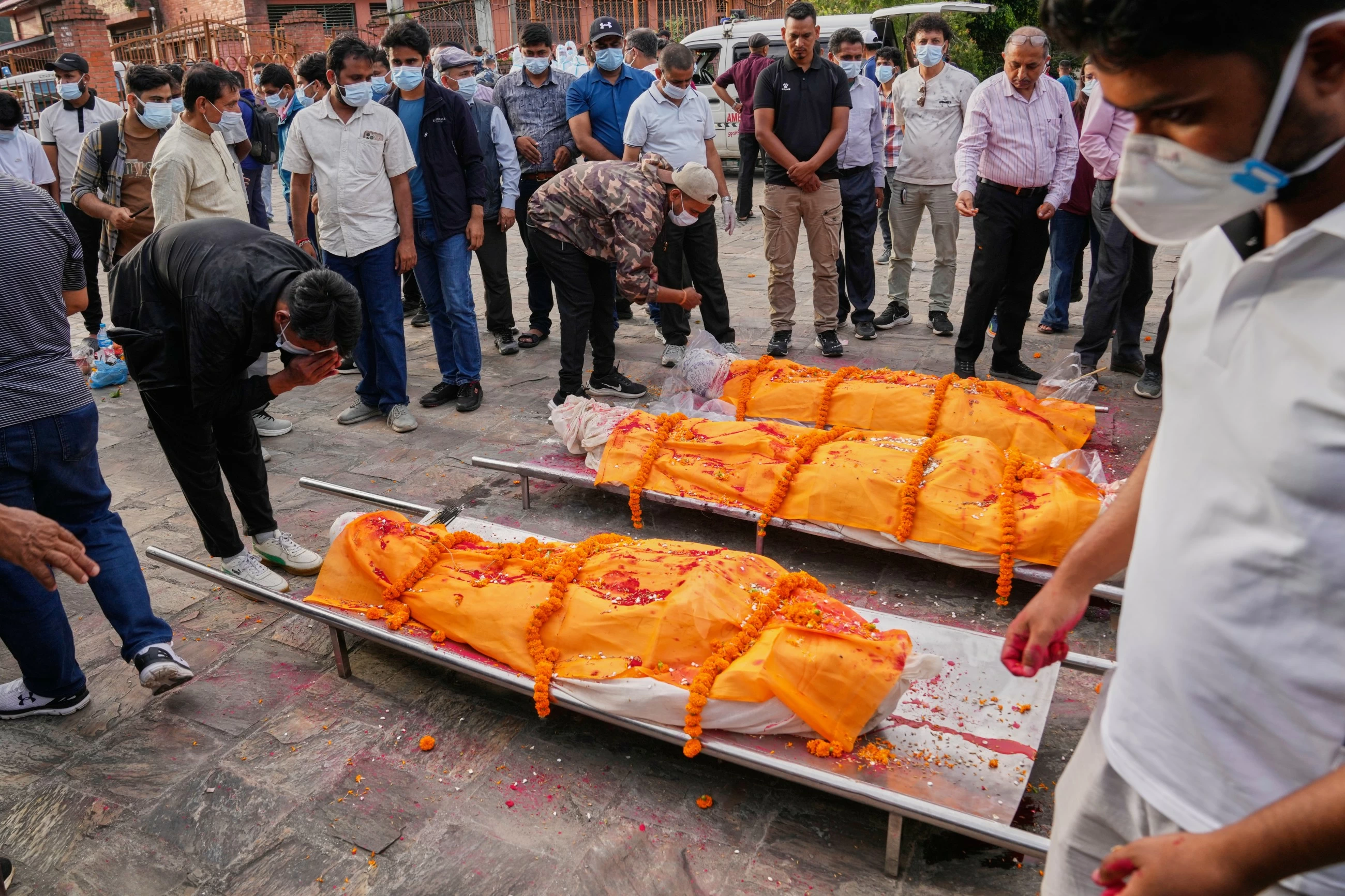
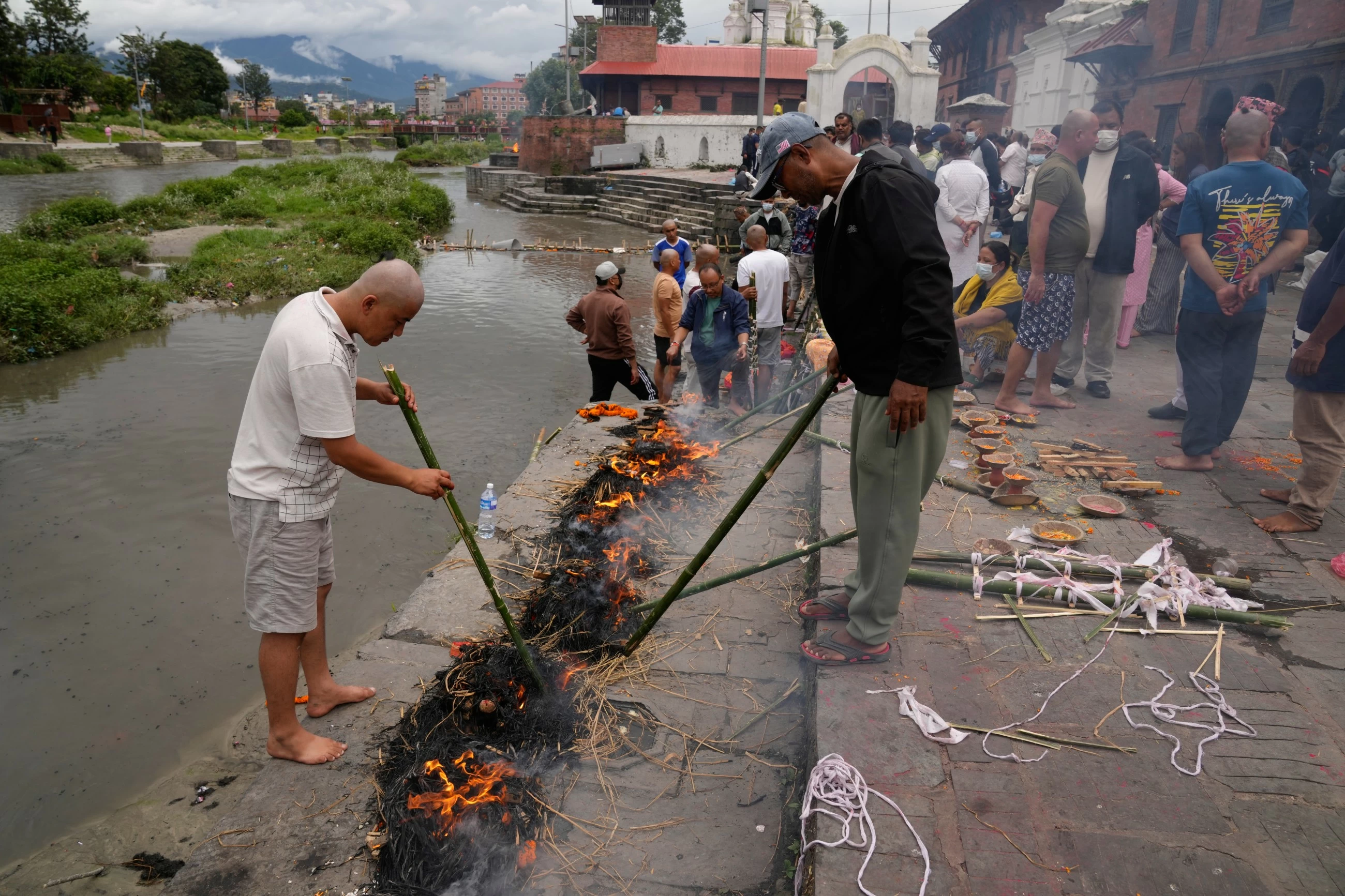
Relatives pay respects to victims of flash floods at a crematorium in Kathmandu. AP
"My home was taken by the floods, and my family is in a shelter," said Sujan, 44, a chef from Amsterdam who returned to Nepal after the disaster struck on Aug.26, giving only one name.
Unable to secure a helicopter, he came to the river crossing hoping to reach his wife, two children and elderly mother.
The catastrophic flooding has killed more than 1,200 people and left nearly 4,800 missing in Nepal and China's Tibet region.
Rescuers are still searching for survivors and victims, with helicopters flying food, temporary shelters and medicine to those left with almost nothing.
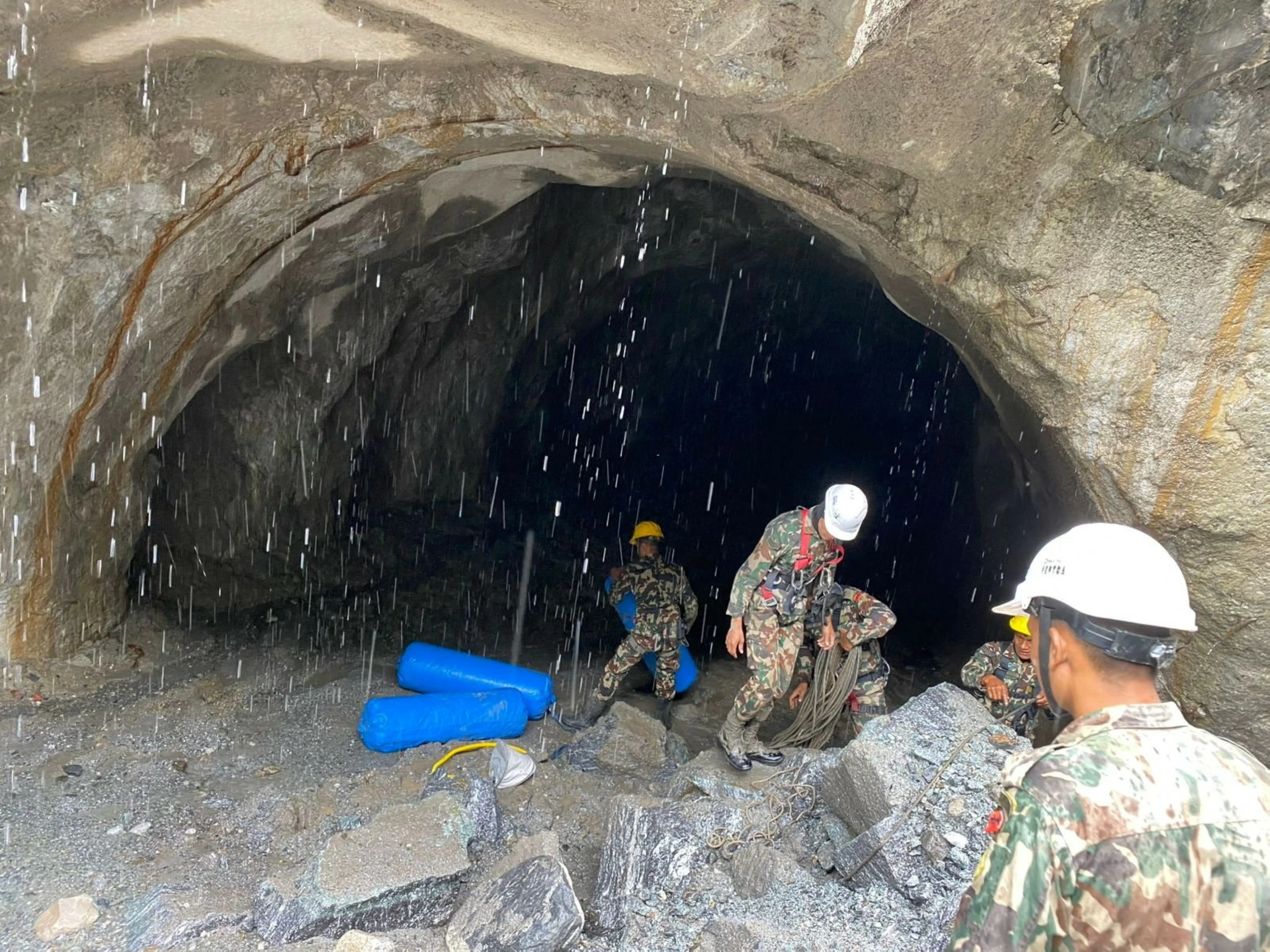
Soldiers work during a search and rescue operation at the entrance of a tunnel near the Hydropower Project sites, following deadly flash floods. Reuters
Devi Maji, 31, arrived at the zipline with her three-year-old son after becoming stranded in Trishuli.
"I want to get back to my village to see my husband and my other two children," said the daily wage worker.
Residents pull the steel wire of a newly installed zipline to help people commute across the Trishuli River. AP
For Bhishma Bhatta, 40, there was no time to wait. His mother Tulkumaari developed severe breathing difficulties overnight, and the family ran out of oxygen.
"We somehow managed to get her on the zipline... and take her to hospital," he said.
The army said the crossing was the first of five temporary cable links planned along the flood-hit Trishuli River.
DNA tests and symbolic funerals in Nepal
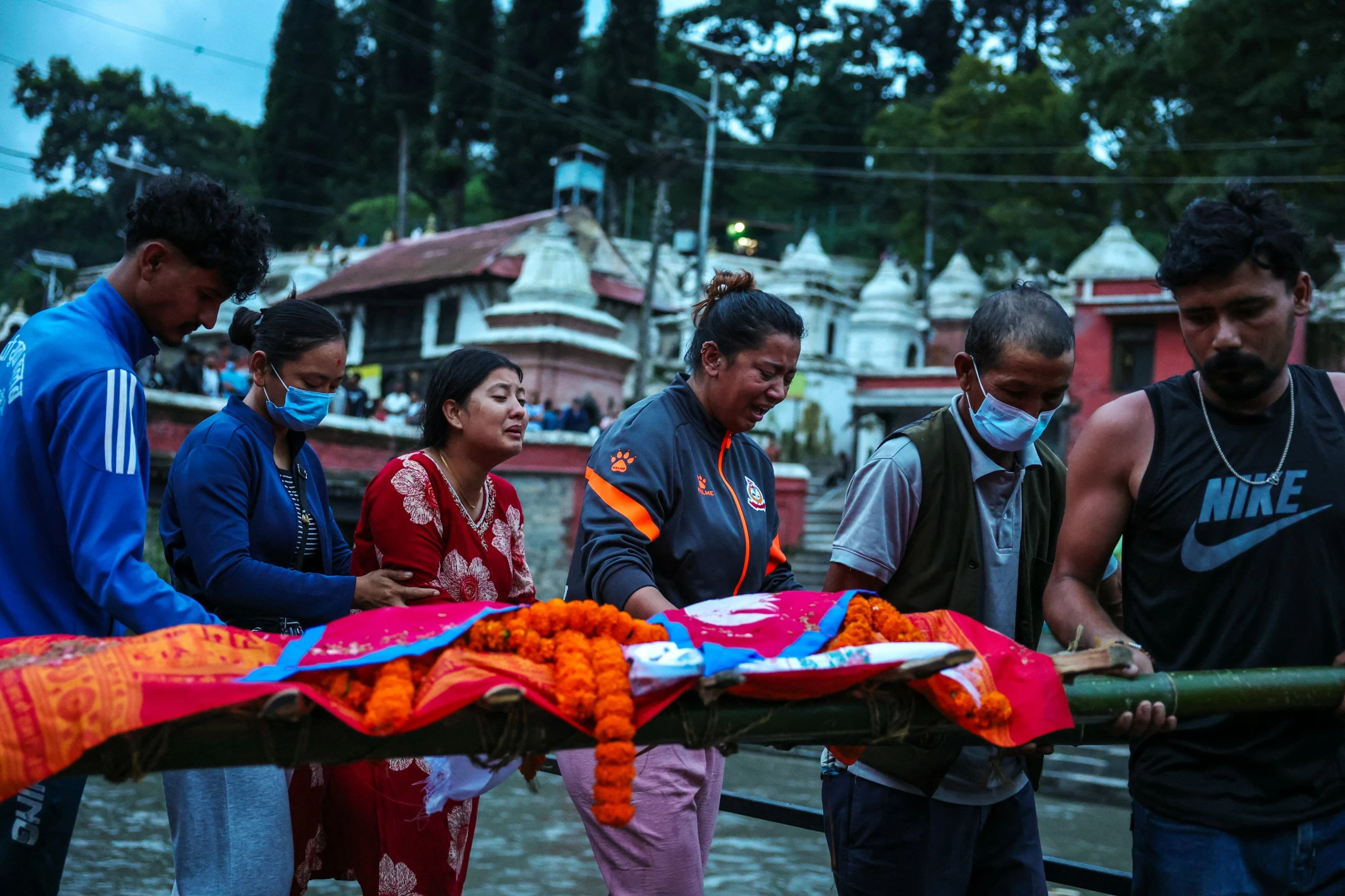
Nepali families held symbolic funerals on Wednesday for relatives missing since deadly flash floods swept away their villages and homes in the Himalayan region a week ago.
Relatives of Sabin Timalsina, 21, mourn during his cremation rituals using an effigy as his body remained missing. Reuters
Rescue teams have recovered more than 1,100 bodies, and nearly 4,500 people are missing, after the gigantic wave of freezing water, rocks and debris triggered by a glacial collapse roared down the China-Nepal border on August 26.
In Nepal's high-altitude Rasuwa district — the first and hardest hit — government official Dhruba Prasad Adhikari said people were confronting an "unimaginable disaster." "We have to face the reality: this flood is far bigger than anything we could have thought of," he told an AFP journalist, who reached the area after a more than 12-hour journey by treacherous mud-covered roads.
In the capital Kathmandu, hundreds queued to give DNA samples, seeking to identify their relatives among hundreds of bodies. With mortuaries overflowing, some of the bodies are already buried.
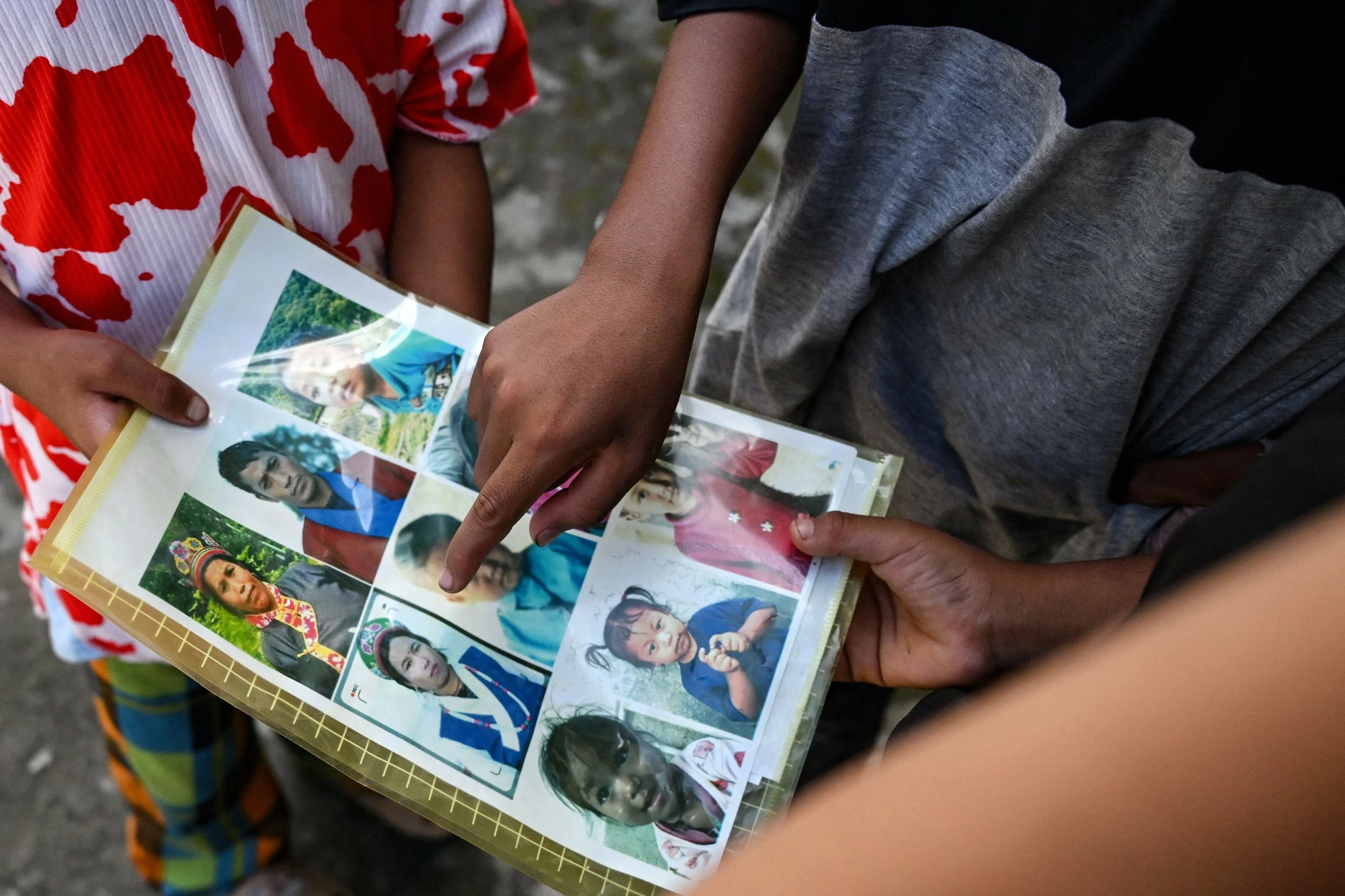
Relatives look at pictures of missing flash flood victims during a prayer meet inside a Buddhist monastery at Trishuli Bazar. AFP
Others had lost hope and were holding last-rite ceremonies, burning straw effigies in Hindu rituals. "We had to do this to set his soul free, so that he is at peace and happy wherever he is," said Dolma Newar Tamang, flanked by her sobbing son, at a funeral for her husband.
Nepali rescuers are still seeking survivors, including by digging through packed sludge that has entombed multiple tunnels of hydropower plants. So far, rescuers have recovered only bodies from tunnels, but teams were still digging, drilling and blasting through debris.
Foreign Minister Shisir Khanal said he still hoped some of the missing could be alive.
"Miracles do happen," he told AFP. "At this point, I do not want to completely give up hope."
'Global responsibility'
There is growing anger at the scale of destruction to hit Nepal, a largely rural nation of 30 million people. The country has contributed little to the greenhouse gas emissions driving global warming, but is among those suffering its consequences.
Prime Minister Balendra Shah warned the catastrophe was "a serious indication" of the risks the Himalayan nation faces.
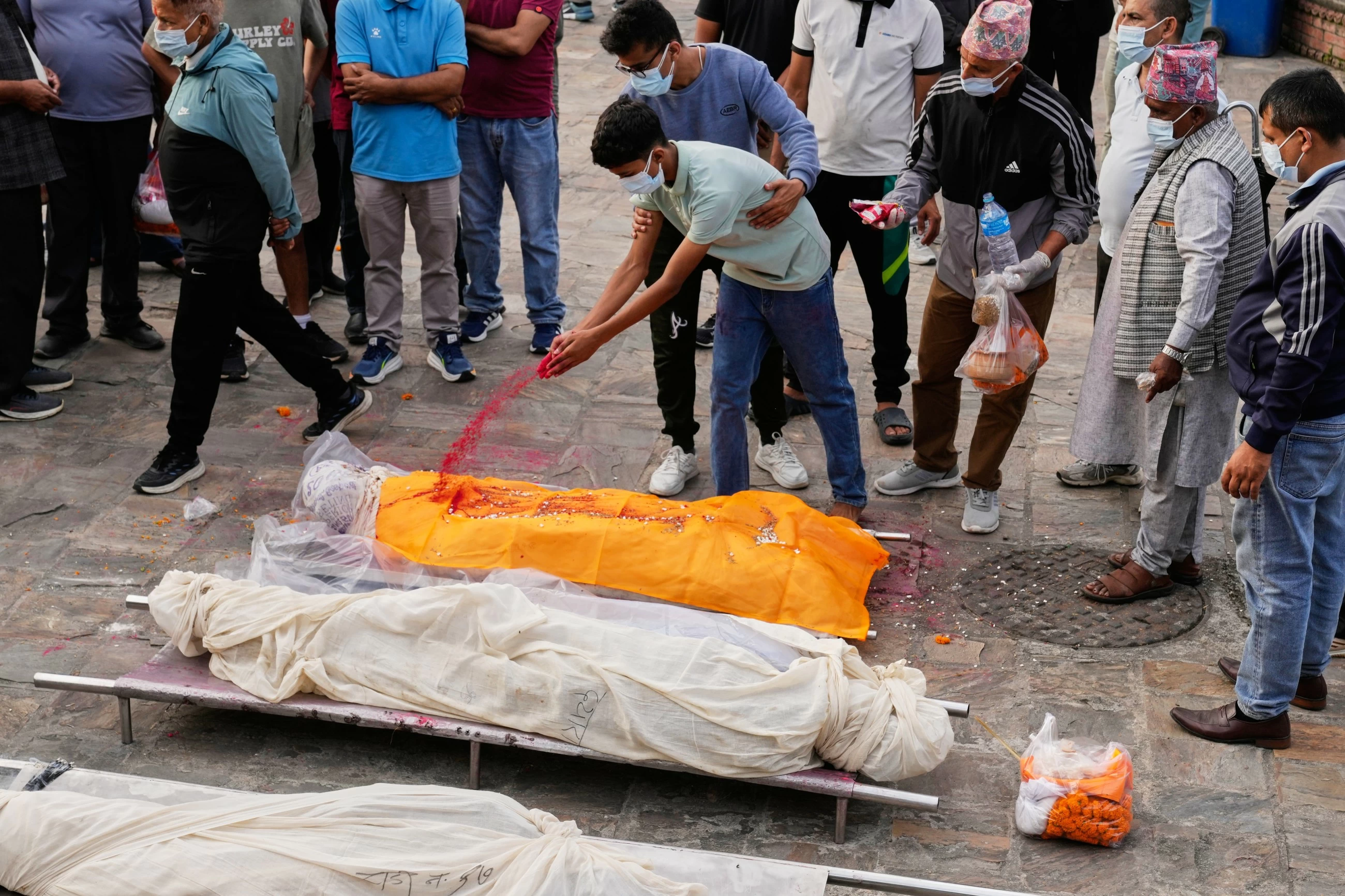
Men perform rituals during symbolic last rites for their relatives who remain missing and are presumed dead following flash floods in Kathmandu. AP
Scientists say the Himalayas, the world's highest mountain range, are warming rapidly as global temperatures rise, accelerating glacier melt.
Glaciers in the wider Himalayan and Hindu Kush ranges are a crucial water source for around 240 million people in the mountainous regions, as well as for another 1.65 billion people downstream.
"Climate change is a global contribution, and disaster response is also a global responsibility," Shah said in a social media post.
Nepal, which marks a year this month since deadly mass protests at rampant corruption and a woeful economy overthrew the then-government, has limited resources to respond to a disaster of this scale.
In a preliminary assessment, the United Nations estimated building damage alone at $158 million, warning that total losses — including damage to roads and bridges, agricultural land and humanitarian costs — would be far higher. Kathmandu has warned reconstruction could cost billions of dollars.
Shah, a 36-year-old former rapper, called the disaster a national "thunderbolt" in an emotional speech to parliament on Wednesday. "My heart chills when I hear the cries of flood victims," Shah said. "But we have no time to rest simply because our bodies are tired. Even with broken hearts, there is no time to sit and mourn together."
Mass burials
In an illustration of the scale of destruction, Chinese state media said road access to hard-hit Gyirong Port in Tibet had finally been restored on Wednesday after "days of round-the-clock repair work."
A relative performs last rites for a victim of flash floods at a crematorium in Kathmandu. AP
Nepal said 1,114 bodies had been recovered by Wednesday, while 3,916 people remained missing.
China's state media reported 16 dead and 546 missing. That takes the overall number of reported dead to 1,130, and 4,462 missing.
More than 800 foreigners from over 30 nations are among the missing: 583 in Nepal and 261 in China. They include tourists who came to trek in the Himalayas, as well as Hindu pilgrims seeking spiritual peace at Tibet's sacred Mount Kailash.
At least 17 bodies have also been pulled from rivers downstream in India.
In China, foreign journalists are restricted from reporting in Tibet, and Chinese authorities have a tight grip on information sources in the region. Tibetan advocacy groups in exile have questioned China's account of the disaster, but Beijing insists that the "release of information has been open, transparent and timely."