Hantavirus ship evacuation nears completion as 94 flown home
Last updated: May 11, 2026 | 11:58
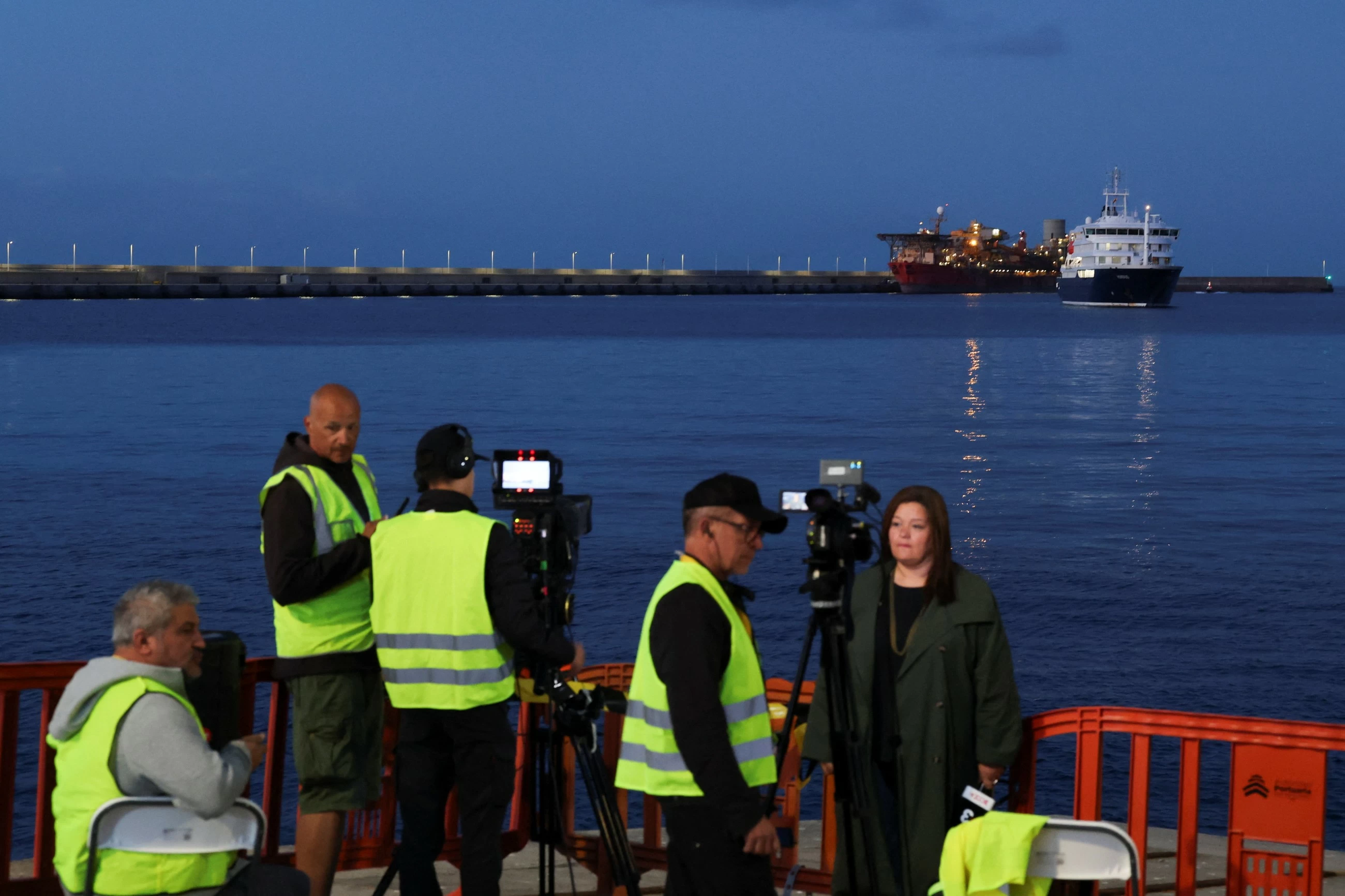
Workers in personal protective equipment (PPE) stand aboard a tanker next to the cruise ship MV Hondius, affected by a hantavirus outbreak, at the port of Granadilla de Abona, in Tenerife, Spain, on Monday. Reuters
British Nationals, repatriated after a prolonged stay on a cruise ship hit by a deadly hantavirus outbreak, arrive by coach at Arrowe Park Hospital in Wirral, north west England, on Sunday, where they are expected to stay for up to 72 hours. AFP
A complex day-long operation to repatriate occupants of a cruise ship struck by a deadly hantavirus outbreak neared completion late Sunday after 94 people of various nationalities were flown home from Spain's Canary Islands.
Three passengers from the MV Hondius -- a Dutch husband and wife and a German woman -- have died, while others have fallen sick with the rare disease, which usually spreads among rodents.
No vaccines or specific treatments exist for hantavirus, which is endemic in Argentina, where the ship departed in April.
But health officials have stressed that the risk for global public health is low and played down comparisons to the Covid-19 pandemic.
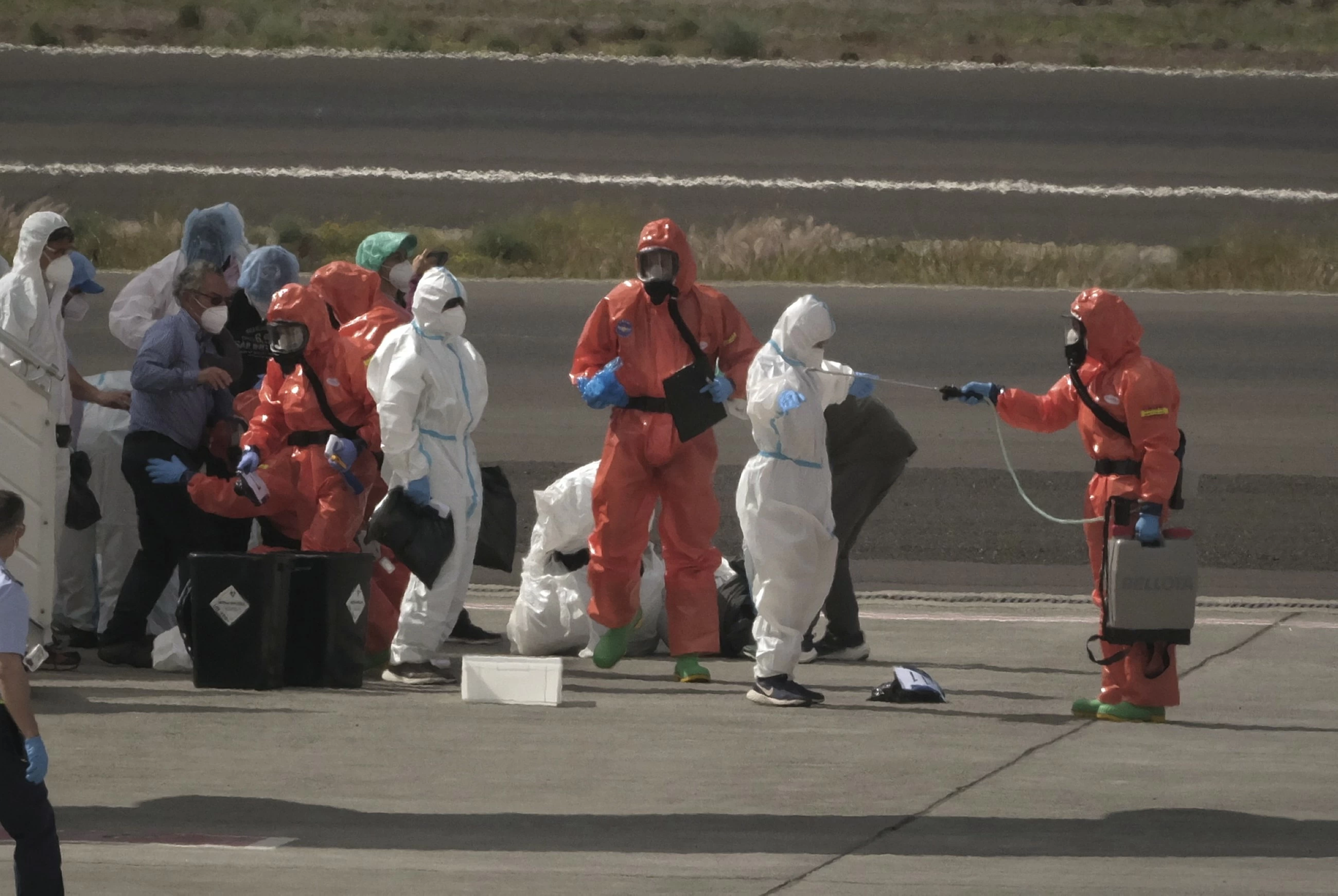
Passengers are sprayed with disinfectant by Spanish government officials before boarding a plane after disembarking from the hantavirus-stricken cruise ship MV Hondius at Tenerife airport in the Canary Islands, Spain, on Sunday. AP
The operation evacuated 94 people of 19 different nationalities on Sunday, Spanish Health Minister Monica Garcia announced on the island of Tenerife after what she called a "pretty intense" day.
Spanish officials said the evacuation of most of the ship's nearly 150 passengers and crew, which include 23 nationalities, would continue until the final repatriation flights to Australia and the Netherlands on Monday afternoon.
The ship will refuel in the morning and is expected to depart for the Netherlands with around 30 crew at 7:00 pm (1800 GMT) on Monday.
On Sunday, passengers wearing blue medical suits began disembarking the Dutch-flagged vessel onto smaller boats to reach the small industrial port of Granadilla on Tenerife, AFP journalists saw.
Members of the media work at the port of Granadilla de Abona following the arrival of the cruise ship MV Hondius, affected by a hantavirus outbreak, in Tenerife, Spain, on Monday. Reuters
The evacuees then boarded Spanish army buses and travelled to Tenerife South airport in a convoy, with a protective board separating the driver from the passengers. The evacuees changed into new protective equipment before boarding their repatriation flights.
"Everything is going well," French evacuee Roland Seitre told AFP just before taking off, saying "everyone was great" during the disembarkation.
International concern
The only hantavirus type that is transmissible between humans -- the Andes virus -- has been confirmed among those who have tested positive, fuelling international concern.
The WHO said Friday it had confirmed six cases out of eight suspected ones.
The MV Hondius left Ushuaia, Argentina on April 1 for a cruise across the Atlantic Ocean to Cape Verde, where three infected people had been evacuated to Europe earlier in the week.
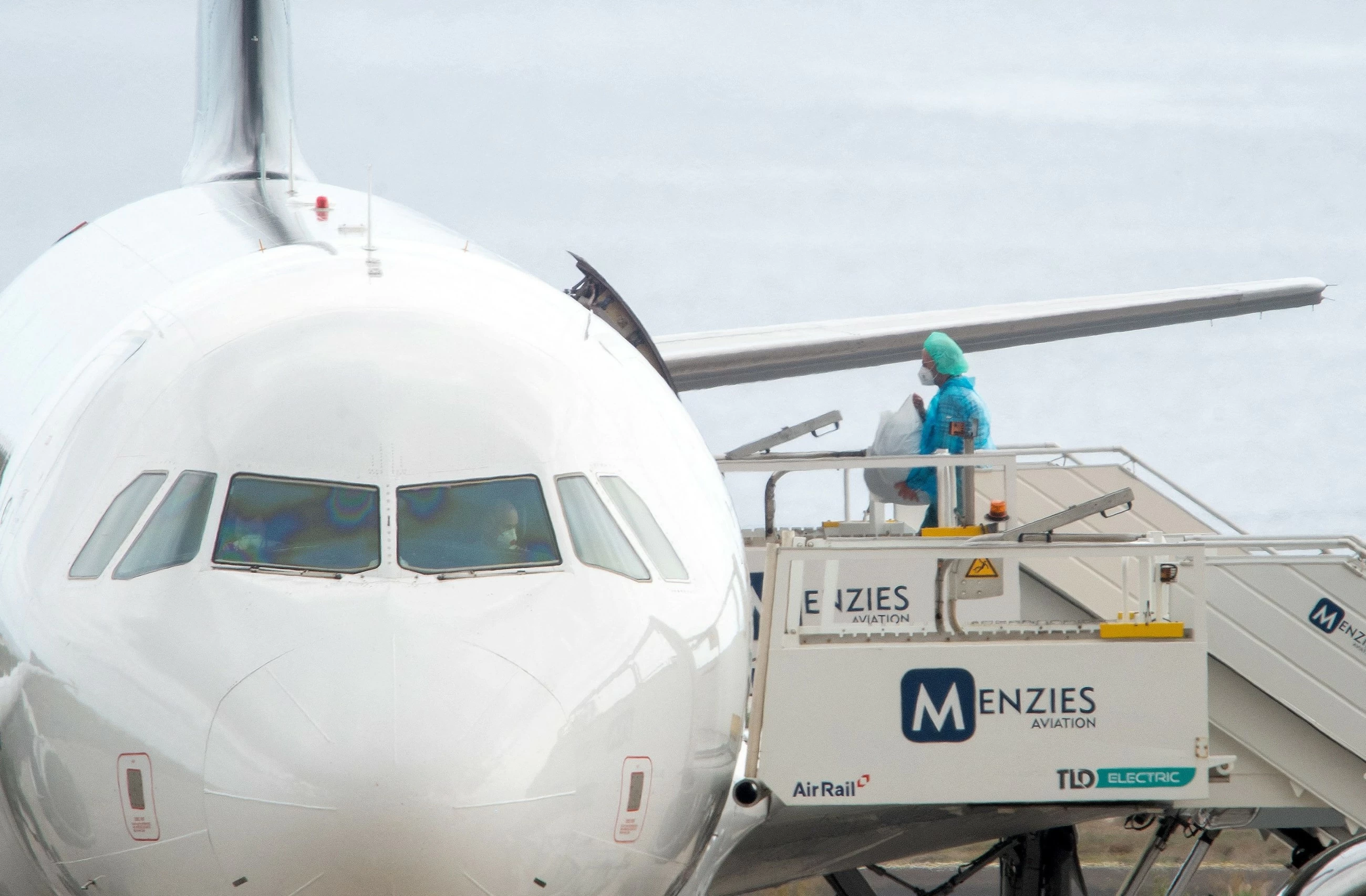
A British citizen boards a plane bound for the UK carrying passengers evacuated from the Dutch flagged hantavirus-stricken cruise ship MV Hondius at the Tenerife Sur-Reina Sofia airport on the island of Tenerife in Spain's Canary Islands on Sunday. AFP
The WHO believes the first infection occurred before the start of the expedition, followed by transmission between humans onboard the vessel.
But Argentine provincial health official Juan Petrina has said there was an "almost zero chance" the Dutch man linked to the outbreak contracted the disease in Ushuaia based on the virus's weeks-long incubation period, among other factors.
Health authorities in several countries have been tracking passengers who had already disembarked and anyone who may have come into contact with them.