VIDEO: Heavy rain, strong winds lash UAE; bad weather to continue till Saturday
- Last updated: March 25, 2026 | 14:57


Gulf Today, Staff Reporter
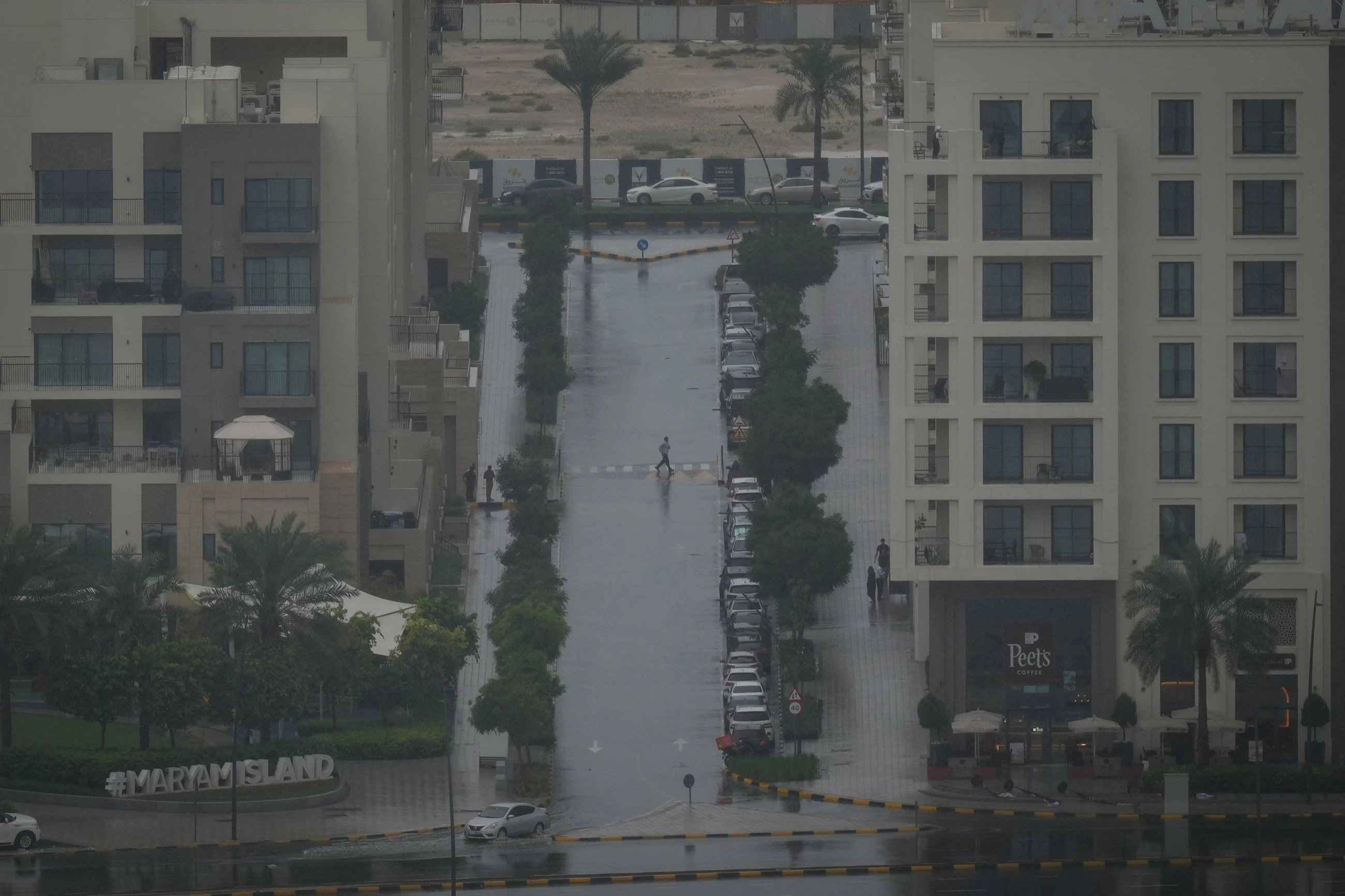
Heavy rain accompanied by strong winds buffeted various areas in the UAE on Wednesday. Roads were flooded, motorists and commuters were stranded, trees started swaying vigorously. In Sharjah, the skyline was virtually engulfed in a thick hazy cover, showing the extent of the turbulent weather’s impact. Even highrises nearby could not be seen as the downpour virtually blanketed them. Traffic crawled along a flooded Al Khan Road. The rain scuppered the plans of many residents.
Das Island in the Emirate of Abu Dhabi recorded the highest rainfall amounts of 47.9 mm, followed by Delma Island in Al Dhafra region with 39.7 mm, then Jebel Mebreh in Ras Al Khaimah with 33.3 mm, followed by Jebel Jais in Ras Al Khaimah which recorded 31.6 mm of rain, while Abu Dhabi Corniche ranked fifth with 28.3 mm.
In a report on its website at 6.02am on Wednesday morning, the National Centre of Meteorology said there was a chance of convective cloud formation associated with rainfall and fresh to strong winds at times causing blowing dust and sand, reducing horizontal visibility, with a speed reaching 55 km/hr over some areas from 6am until 11pm on Wednesday.
The NCM also said the UAE will experience unstable weather conditions until March 28, with successive waves of heavy rain, starting in the western regions and islands, before gradually extending to coastal areas, including Al Dhafra, Abu Dhabi, Dubai, Sharjah, Ajman, Umm Al Quwain, and Ras Al Khaimah, reaching the northern and eastern interior regions and Al Ain city, according to a statement by the National Centre of Meteorology (NCM) on Wednesday.
The astronomical observatory stated that satellite images and weather radar data indicate the formation of various clouds over the UAE, starting from the western regions during the early hours of Wednesday morning, then extending to Al Dhafra region in the morning hours, accompanied by cumulonimbus clouds which resulted in heavy rains.

The NCM expected the cloud movement to continue towards Abu Dhabi, then Dubai and the northern regions and Al Ain city, reaching the eastern regions and the Emirate of Fujairah.
It also predicted that during Thursday, the low-pressure system's impact would relatively decrease over the UAE, with chances of light to moderate rain, concentrated on the islands and some northern areas intermittently.
From Thursday evening until Friday, the NCM indicated that the country would experience the last wave of the weather condition, as the low-pressure system deepens in the atmosphere.
This wave, the NCM stated, will begin on Thursday evening over the western regions, gradually moving towards Al Dhafra and Abu Dhabi during late night and early Friday morning hours. Then it would extend on Friday daytime to the northern regions, Al Ain city, and the eastern regions, accompanied by heavy rais with lightning and thunder, and hail falling in limited areas, with cloud amounts gradually decreasing during the night.

On Saturday, cloud amounts will decrease over the UAE, with active to strong northwesterly winds at times, especially over the sea, accompanied by a drop in temperatures, the NCM reported. Winds will be southeasterly to northeasterly, later turning moderate to active northwesterly and intensifying at times, especially with cumulonimbus clouds, stirring dust and resulting in reduced horizontal visibility.
The waves are expected to be rough in the Arabian Gulf and the Sea of Oman, especially with the formation of cumulonimbus clouds.
The NCM also mentioned that Das Island in the Emirate of Abu Dhabi recorded the highest rainfall amounts of 47.9 mm, followed by Delma Island in Al Dhafra region with 39.7 mm, then Jebel Mebreh in Ras Al Khaimah with 33.3 mm, followed by Jebel Jais in Ras Al Khaimah which recorded 31.6 mm of rain, while Abu Dhabi Corniche ranked fifth with 28.3 mm.