Bodour starts drive to document rare Islamic coins in Milan
- Last updated: March 11, 2026 | 10:44


Sheikha Bodour Bint Sultan Al Qasimi, Chairperson of the Sharjah Book Authority (SBA) has launched a scientific initiative to document a rare collection of Islamic coins preserved at Sforzesco Castle in Milan.
The collection comprises 1,103 coins spanning multiple historical periods, led by the oldest known Arab-Islamic dinar dated 77 AH.
The project re-examines the economic and cultural transformations that shaped the identity of Islamic civilisation and underscores its enduring impact on human history.
The initiative is supported by the Sharjah Book Authority in collaboration with the Arabic Cultural Institute at the Catholic University of the Sacred Heart in Milan.
It aims to revive Islamic heritage in Italy and make it accessible to researchers and specialists.
Considered one of the rarest Islamic coin collections discovered outside the Arab world, the trove has drawn international scholarly attention as a unique reference for the evolution of Islamic monetary and administrative systems.
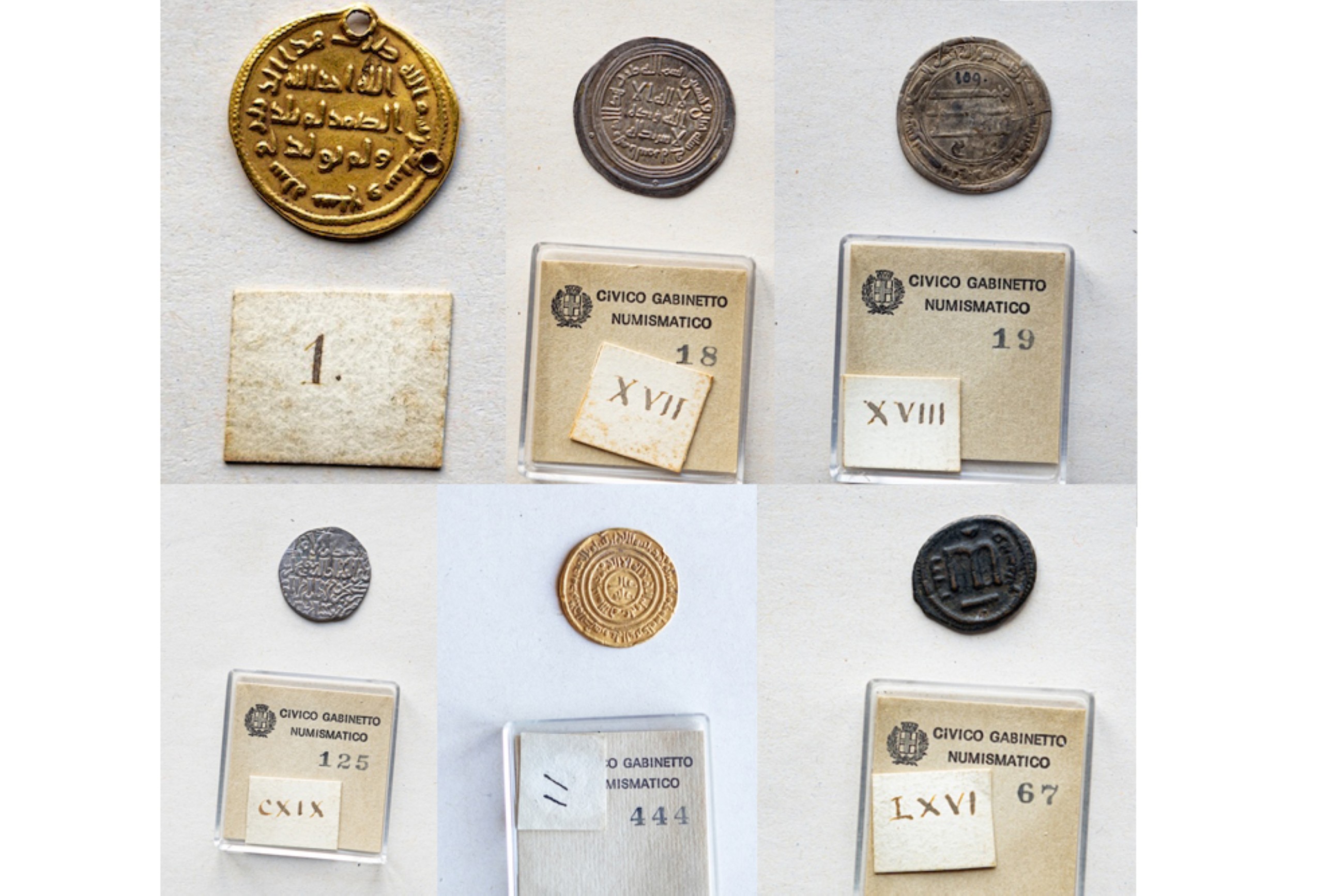
Despite its historical significance, the collection remained preserved for decades in a museum within the castle, largely outside academic research circles, and did not receive documentation and study proportionate to its importance. The collection includes coins originating from diverse Islamic regions across different historical periods.
It is considered one of the largest of its kind, compared with similar collections in Arab and European museums, making it a key scholarly foundation for documenting the history of monetary and administrative systems, alongside the economy and trade during the Islamic civilisation’s golden age. It also supports broader research into how the Islamic cultural legacy extended across cultures and continents.
Among the highlights is a dinar dated 77 AH, minted under Umayyad Caliph Abd Al-Malik Ibn Marwan, following the Arabisation of coinage in Damascus, then the capital of the Islamic Caliphate — an inflection point in the economic and cultural identity of the Umayyad state and Islamic civilisation.
Weighing one mithqal (4.25 grams) of pure gold, the dinar marked a decisive shift from Byzantine coinage to a currency bearing a distinct Arab identity, reflecting the maturation of Islamic economic life in that era. The collection demonstrates the diversity of minting centres and offers a lens for understanding trade routes, cultural diffusion and civilisational exchange across different Islamic periods.
The ACI in Milan is playing a central role in documenting and studying this cultural treasure, which remained largely unknown for decades, if not centuries. The institute commissioned Dr Roweida Al Nabarawy, a specialist in Islamic numismatics, to undertake the academic study and documentation of the collection, and to photograph each coin at high resolution.
The resulting publication is expected to bring this heritage to a wide academic and cultural audience, strengthening its value as a comprehensive reference for the study of Islamic coinage while presenting Islamic heritage to global audiences through an academic, methodical approach supported by visual narrative.
Commenting on the significance of the initiative, Ahmed Bin Rakkad Al Ameri, CEO of the Sharjah Book Authority, said: “This effort reflects the commitment of the SBA and the ACI to the vision of His Highness Dr Sheikh Sultan Bin Mohammed Al Qasimi, Supreme Council Member and Ruler of Sharjah, towards the pivotal role of Arab cultural institutions in reviving and transmitting civilisational legacy to new generations.”
For his part, Dr Wael Farouq, Director of the ACI at the Catholic University of the Sacred Heart in Milan, said: “As part of our work to realise the vision of His Highness Dr Sheikh Sultan Bin Mohammed Al Qasimi, Supreme Council Member and Ruler of Sharjah, to document Arab civilisational heritage and present it to new generations so they are more aware of their history and more connected to their roots, we observed that the vast majority of Italians are entirely unaware of this heritage held in their own libraries and museums. Only a handful of specialists in Italy have seen this rare collection of Arabic coins and recognise its importance.”
“I believe this verification and publishing project will help broaden awareness among Italians of the historical ties between Arabs and Italy, and of the Arabs’ historical contribution to the European Renaissance, which becomes clearer every day.”
Gulf Today, Staff Reporter