Parliament extends its own mandate for two years as Israel intensifies attacks on Lebanon
- Last updated: March 9, 2026 | 16:55


The Lebanese parliament extended its term by two years on Monday due to the US-Israel war with Iran that has pushed the region into an escalating conflict and Israel stepping up its attacks on Lebanon following renewed strikes with Hizbollah.
The Israeli military said on Monday it was targeting Hizbollah's financial arm, Al Qard Al Hasan, as its ground forces in Lebanon's south launched "focused raids” against what it called the group’s infrastructure.
Meanwhile, Human Rights Watch has accused Israeli forces of using white phosphorus incendiary shells in strikes on residential areas in a Lebanese village, a violation of international law.
Lebanon’s state news agency said 76 legislators voted in favour of the decision, 41 were against, and four abstained. Hizbollah’s 13-member bloc in parliament voted in favour of the extension.
The ongoing war with Israel that began last week has displaced over half a million people in Lebanon and made it difficult to hold a vote in large parts of the country. The parliamentary elections were scheduled for May.
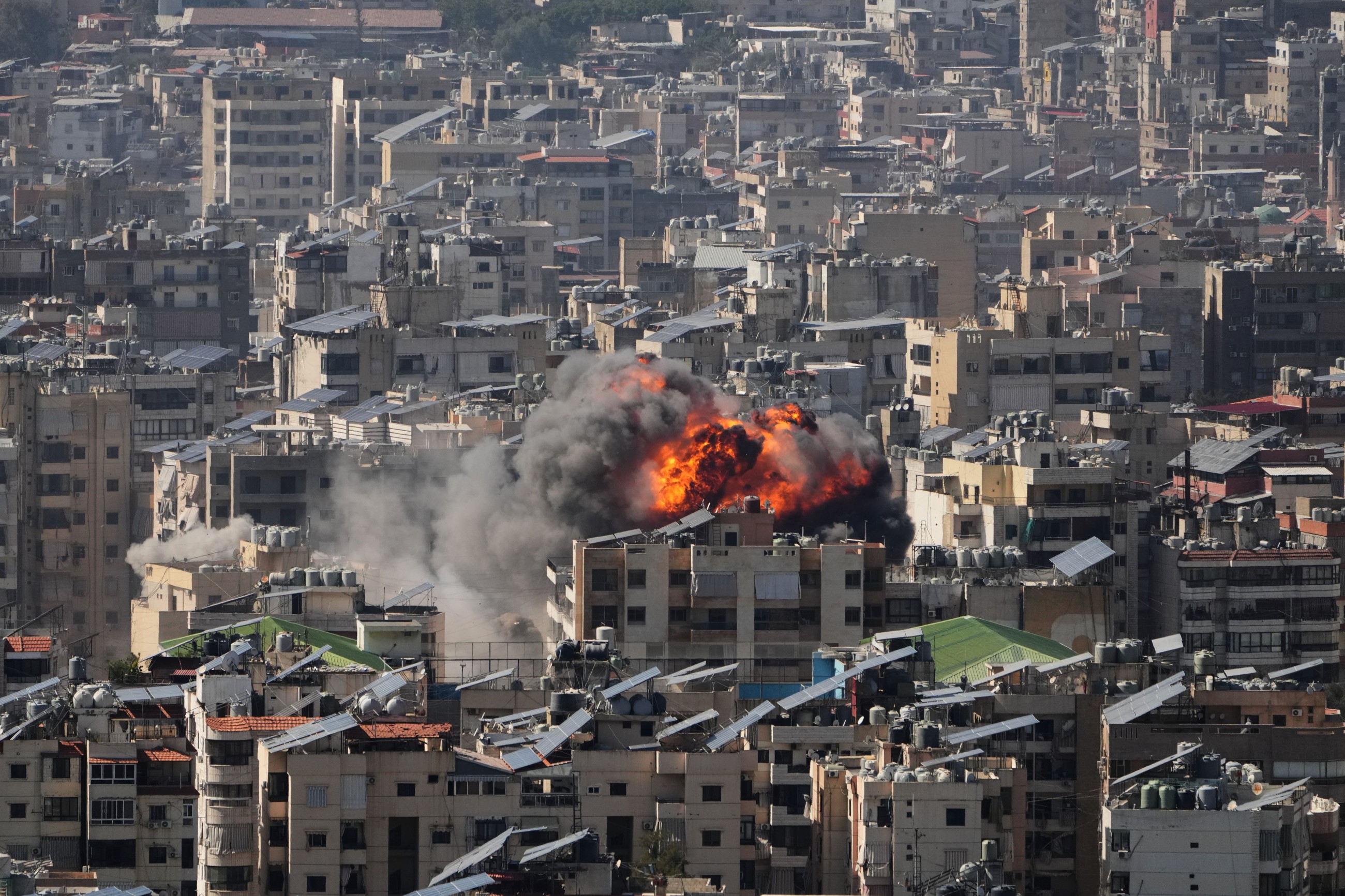
Residents of Beirut’s southern suburb, widely known as Dahiyeh, were ordered to evacuate before Israel launched strikes.
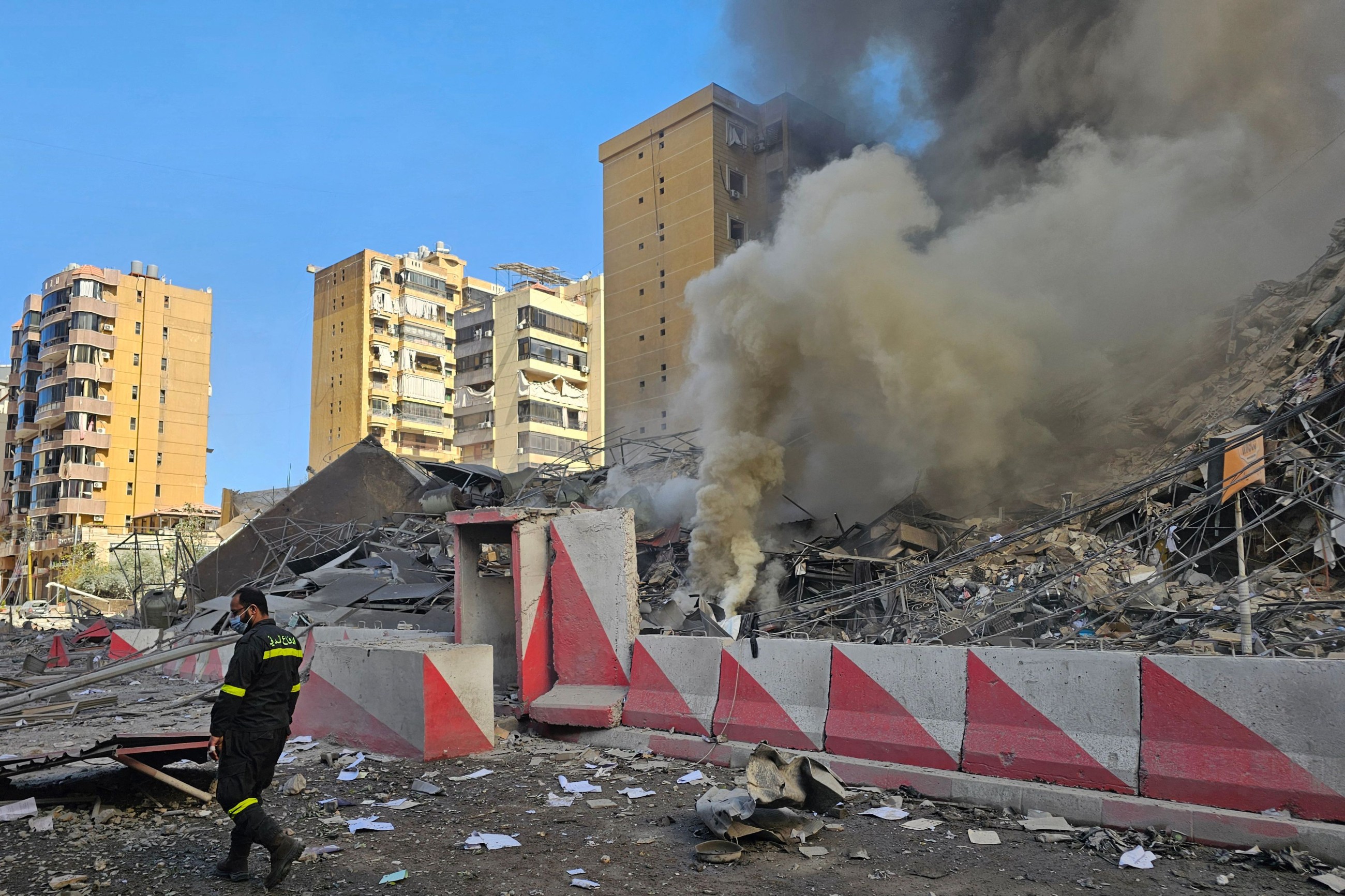
Smoke billowed over Beirut after the attacks. The first strike destroyed a building housing an office of Al Qard Al Hasan in the southern suburb of Chiyah. A Lebanese journalist on site told The Associated Press he was wounded in the leg and taken to a nearby hospital. Video footage showed what appeared to be two strikes on the building that were minutes apart.
The strikes on Chiyah were followed by more airstrikes on nearby areas, forcing Lebanese troops to close roads where Al Qard Al Hasan branches are located to ensure people's safety.
In southern Lebanon, the Israeli military said it launched a "focused raid” to eliminate Hizbollah operatives and infrastructure using a brigade combat team under the command of the 36th Division.
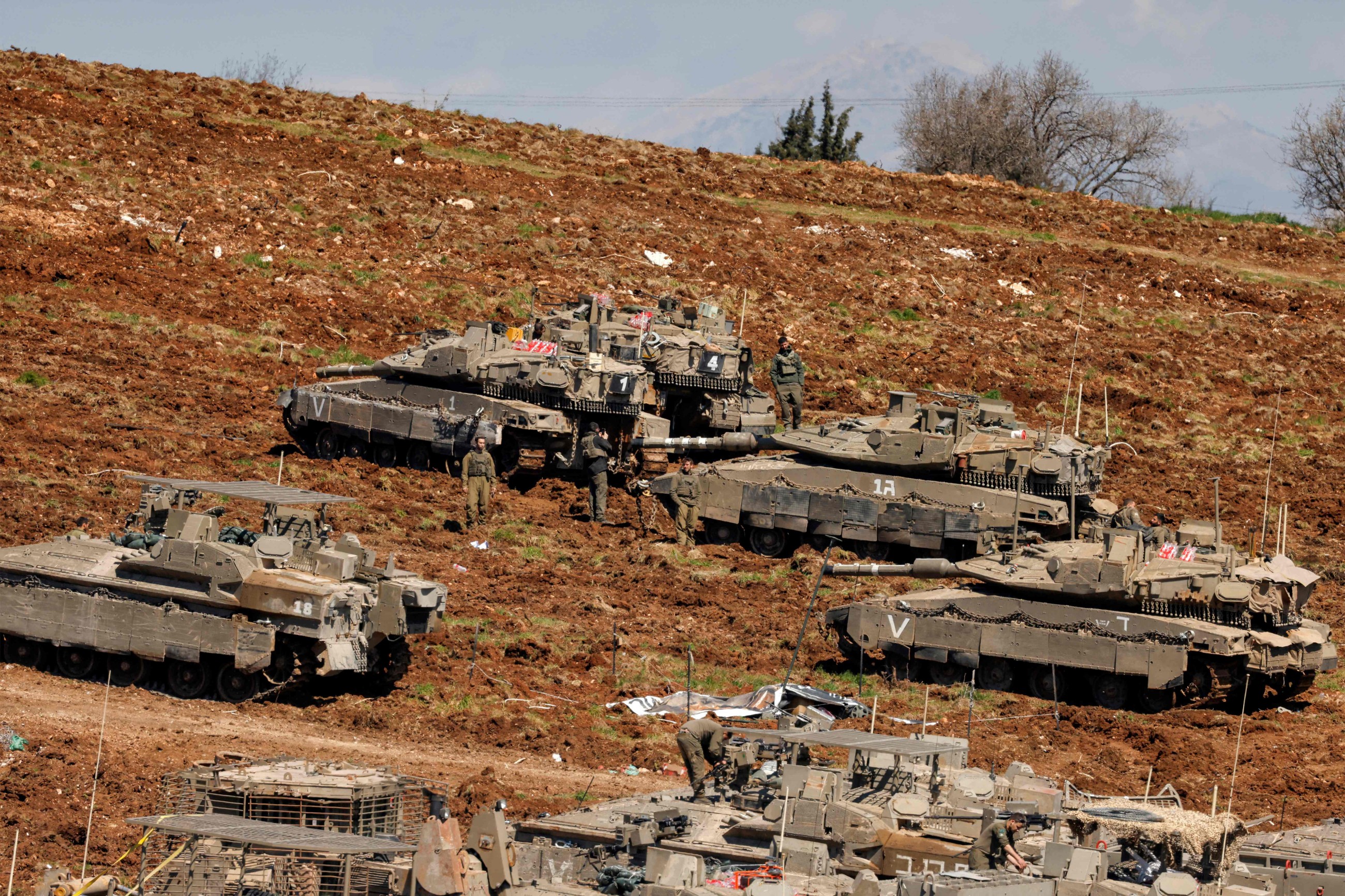
The military said before they initiated the operation, its forces launched a combined air and ground attack in the area.
Hizbollah, meanwhile, said it struck Israeli troops inside Lebanon with anti-tank missiles and that it fired a volley of rockets on the northern Israeli city of Kiryat Shmona in retaliation for Israeli strikes on cities, towns and villages in Lebanon.
The latest round of fighting between Israel and Hizbollah began on Feb.2 when the group fired rockets and drones on northern Israel following the killing of Iran’s Supreme leader, Ayatollah Ali Khamenei, two days earlier in a joint US-Israeli strike. Israel retaliated with large waves of airstrikes and Israeli troops captured several new posts in southern Lebanon.
The Lebanese government last week declared Hizbollah’s military activities illegal and ordered the country’s security forces to detain those who were behind the strikes on Israel.
Three Hizbollah. members were also detained last week while carrying weapons on their way to south Lebanon and were questioned by judicial authorities.
On Monday, the military court in Beirut ordered them released on a $20 bail each, judicial officials said.
The officials said the judge asked the three men what they were doing and they responded that they were heading to south Lebanon to fight against Israeli forces. They spoke in condition of anonymity as they are not allowed to speak to the media.
The human rights group said in a report Monday the Israeli military "unlawfully” hit a village in southern Lebanon with shells containing white phosphorus, a controversial incendiary munition.
Through geolocating and verifying seven images, Human Rights Watch said Israel fired white phosphorus using artillery at residential areas in the southern Lebanese village of Yohmor. It happened hours after the Israeli military warned the residents of the village and dozens of others in southern Lebanon to evacuate.
Human Rights Watch said it couldn’t independently identify if any residents were still in the area or if anyone was harmed.
The Israeli military did not immediately respond to a request for comment. In the past, it has maintained that it uses white phosphorus as a smoke screen and not to target civilians.
Human rights advocates say the use of white phosphorus is illegal under international law when the white-hot chemical substance is fired into populated areas. It can set buildings on fire and burn human flesh down to the bone. Survivors are at risk of infections and organ or respiratory failure, even if their burns are small.
"The Israeli military’s unlawful use of white phosphorus over residential areas is extremely alarming and will have dire consequences for civilians,” said Ramzi Kaiss, Lebanon researcher at Human Rights Watch.
Organisations like Human Rights Watch and Amnesty International said the munition was used in Israel’s last war with Hezbollah, over a year ago, on numerous occasions in southern Lebanon, while civilians were still present.
Associated Press