Oman mediates indirect US-Iran talks over Tehran's nuclear programme
Last updated: February 6, 2026 | 16:31
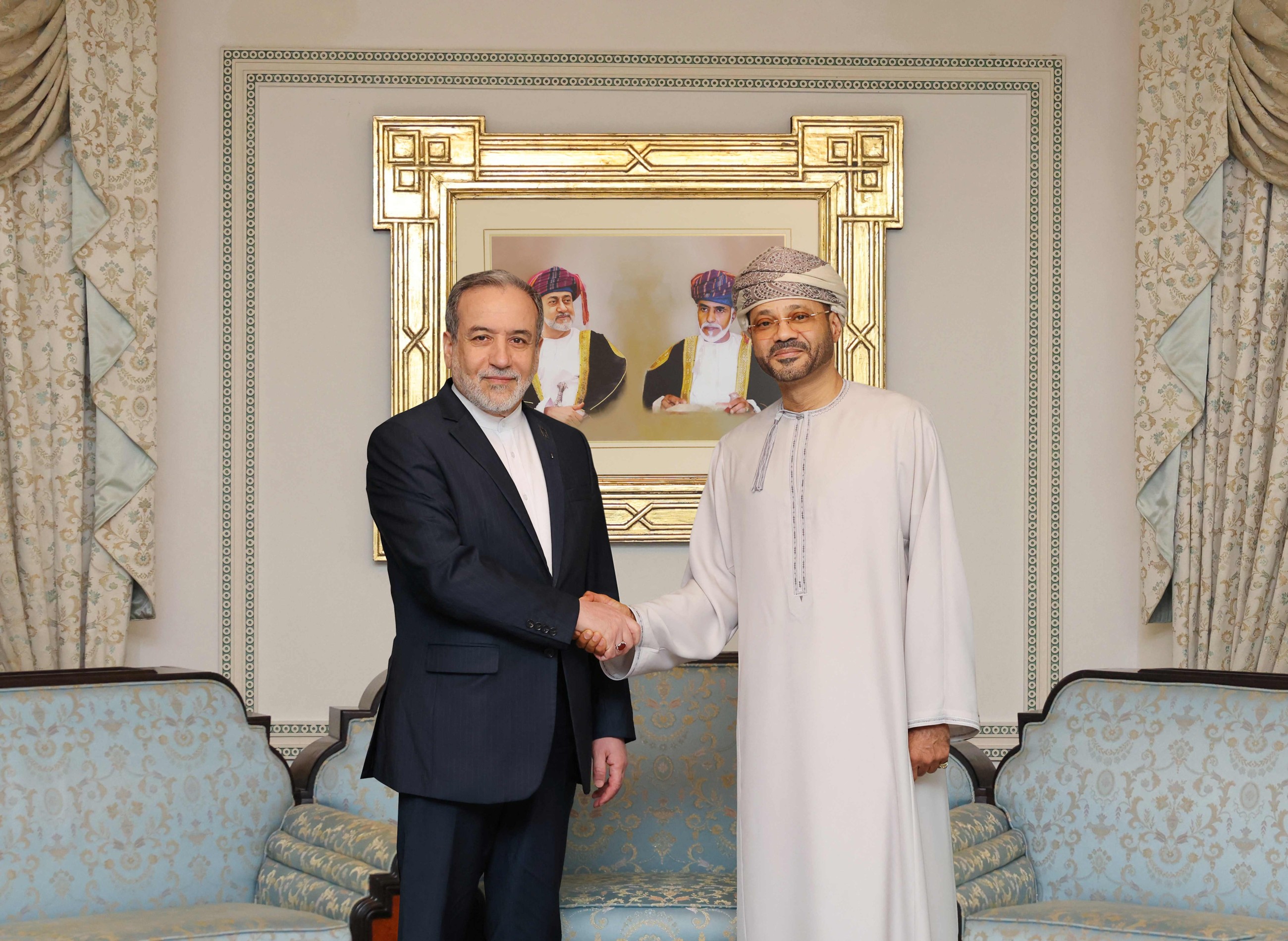
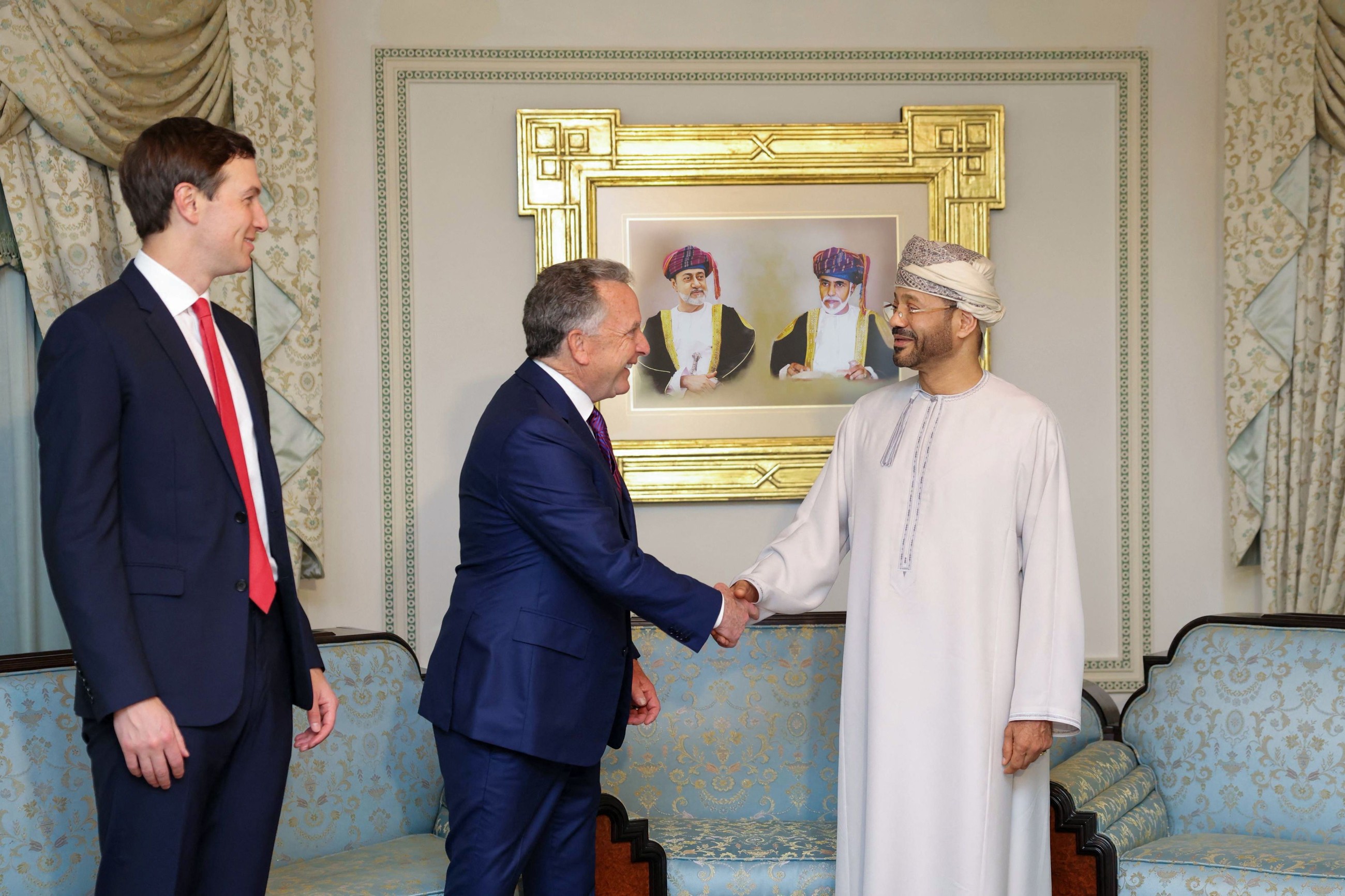
Badr Bin Hamad Al Busaidi receives Abbas Araghchi (L), Steve Witkoff and Jared Kushner ahead of their meeting in Muscat, Oman, on Friday. AFP
Iranian Foreign Minister Abbas Araghchi and his accompanying delegation depart for the site of the talks in Muscat. Reuters
Foreign Minister Abbas Araghchi (C) heads to venue for talks between Iran and the US, in Muscat, Oman, on Friday. AP
Oman mediated indirect talks on Friday between Iran and the United States over the Islamic Republic's nuclear programme, seeking to de-escalate tensions between the nations after Washington bombed Iranian nuclear sites and Tehran launched a bloody crackdown on nationwide protests.
Oman issued a public statement acknowledging the talks after Associated Press journalists watched Iranian and American officials separately visit a palace on the outskirts of Muscat to speak to the sultanate's foreign minister, Badr Al Busaidi.
It wasn't immediately clear if that was the end of the talks for the day. However, the palace stood empty after the convoys left.
On the Iranian side, Foreign Minister Abbas Araghchi wrote on X that "Iran enters diplomacy with open eyes and a steady memory of the past year."
Abbas Araghchi (L) shakes hands with Badr Bin Hamad Al Busaidi in Muscat. AFP
The two countries returned on Friday to Oman, months after rounds of meetings turned to ash following Israel's launch of a 12-day war against Iran back in June.
The US bombed Iranian nuclear sites during that war, likely destroying many of the centrifuges that spun uranium to near weapons-grade purity. Israel's attacks devastated Iran's air defences and targeted its ballistic missile arsenal as well.
US officials like Secretary of State Marco Rubio believe Iran's theocracy is now at its weakest point since its 1979 Islamic Revolution after nationwide protests last month represented the greatest challenge to 86-year-old Supreme Leader Ayatollah Ali Khamenei's rule.
Khamenei's forces responded with a crackdown that killed thousands and reportedly saw tens of thousands arrested - and spurred new military threats by US President Donald Trump to target the country.
Steve Witkoff shakes hands with Badr Bin Hamad Al Busaidi as Jared Kushner looks on during a meeting in Muscat. AFP
With the aircraft carrier USS Abraham Lincoln and other warships in the region, along with more fighter jets, the US now likely has the military firepower to launch an attack if it wanted. But whether attacks could be enough to force Iran to change its ways - or potentially topple its government - remains far from a sure thing.
The palace, near Muscat's international airport, had been used by Oman in earlier talks between Iran and the US in 2025. AP journalists saw Iranian officials at the palace and later returning to their hotel.
Only after the Iranian vehicles left did another convoy including an SUV flying the American flag enter the palace grounds, where it stayed for about an hour and a half.
After that, Oman's Foreign Ministry published a statement saying Al Busaidi met separately with Araghchi, then with US Mideast special envoy Steve Witkoff and Jared Kushner, President Donald Trump's son-in-law.
Footage later released by the state-run Oman News Agency showed that US Navy Adm. Brad Cooper, the head of the American military's Central Command, also attended the meeting — something unusual that hasn't happened in previous rounds.
"The consultations focused on preparing the appropriate circumstances for resuming the diplomatic and technical negotiations by ensuring the importance of these negotiations, in light of the parties' determination to ensure their success in achieving sustainable security and stability," the Omani announcement said.
A convoy of vehicles carrying Iranian delegation is seen driving towards a hotel in Muscat on Friday. AP
Neither the Americans nor the Iranians offered any readout of the meetings.
Details remained sparse even before the talks began. Officials at Oman's borders on Thursday showed particular concern over anyone carrying cameras into the sultanate before the negotiations.
'Don't want us to hit them'
Araghchi said as the talks began that Tehran maintains "full readiness to defend the country's sovereignty and national security against any excessive demands or adventurism" by the United States.
"Iran enters diplomacy with open eyes and a steady memory of the past year. We engage in good faith and stand firm on our rights," he added on X.
According to Iran's state television, the Iranian delegation first handed over its message to Oman's foreign minister which was then passed on to the US. A second such round of talks was now underway, it added.
The White House has made clear it wants the talks to rein in Tehran's ability to make a nuclear bomb, an ambition the Islamic republic has always denied.
The US delegation intends to explore "zero nuclear capacity" for Iran, White House Press Secretary Karoline Leavitt said, warning that Trump had "many options at his disposal aside from diplomacy."
"They're negotiating," Trump said of Iran on Thursday. "They don't want us to hit them, we have a big fleet going there," he added, referring to the aircraft carrier group he has repeatedly called an "armada."
A top adviser to Khamenei also appeared to offer the theocracy's support to the 63-year-old career diplomat.
Araghchi "is a skilled, strategic and trustworthy negotiator at the highest levels of decision-making and military intelligence," Ali Shamkhani wrote on X.
"Soldiers of the nation in the armed forces & generals of diplomacy, acting under the order of the Leader, will safeguard the nation's interests."