'A tragedy we did not choose:' Over 400 Palestinians dead since Oct.10 Gaza ceasefire
- Last updated: December 27, 2025 | 11:54


Jaber Al Attar, a 51-year-old doctor living in northern Gaza, was elated when the news arrived of a ceasefire between Israel and Hamas, bringing an end to two years of relentless bombardment.
But just four weeks after it was announced, he received a phone call on his way to work at Al Awda Hospital in Nuseirat to say that his daughter, Maysaa, had been killed by Israeli drone fire as she sheltered in a tent.
“There is absolutely no safety; there is no hope for us to have any security,” he tells The Independent from the same tent in the Al-Atatra area of Beit Lahia, where he is living after being displaced. “I spent my life in hardship and misery.”
Jaber’s daughter is one of at least 410 Palestinians to be killed since the ceasefire came into effect on 10 October, according to Gaza’s Health Ministry.
During a victory lap speech in the Knesset, US President Donald Trump had promised “peace for all eternity”. But for Gazans, the nightmare has not ended: it is a ceasefire in name only.
In addition to the more than 400 Palestinians who have been killed, the health ministry says that 1,134 have been injured by Israeli shelling and gunfire. At least three Israeli troops have also been killed by Palestinian militants, while two people were killed on Friday in what police called a "rolling terror attack" in northern Israel.
Images show a landscape unchanged by two months of peace, with apartments razed to the ground and families wandering among the rubble. Humanitarian agencies continue to warn that nowhere near enough aid is entering the strip, which has been in the grip of a hunger crisis for most of the year.
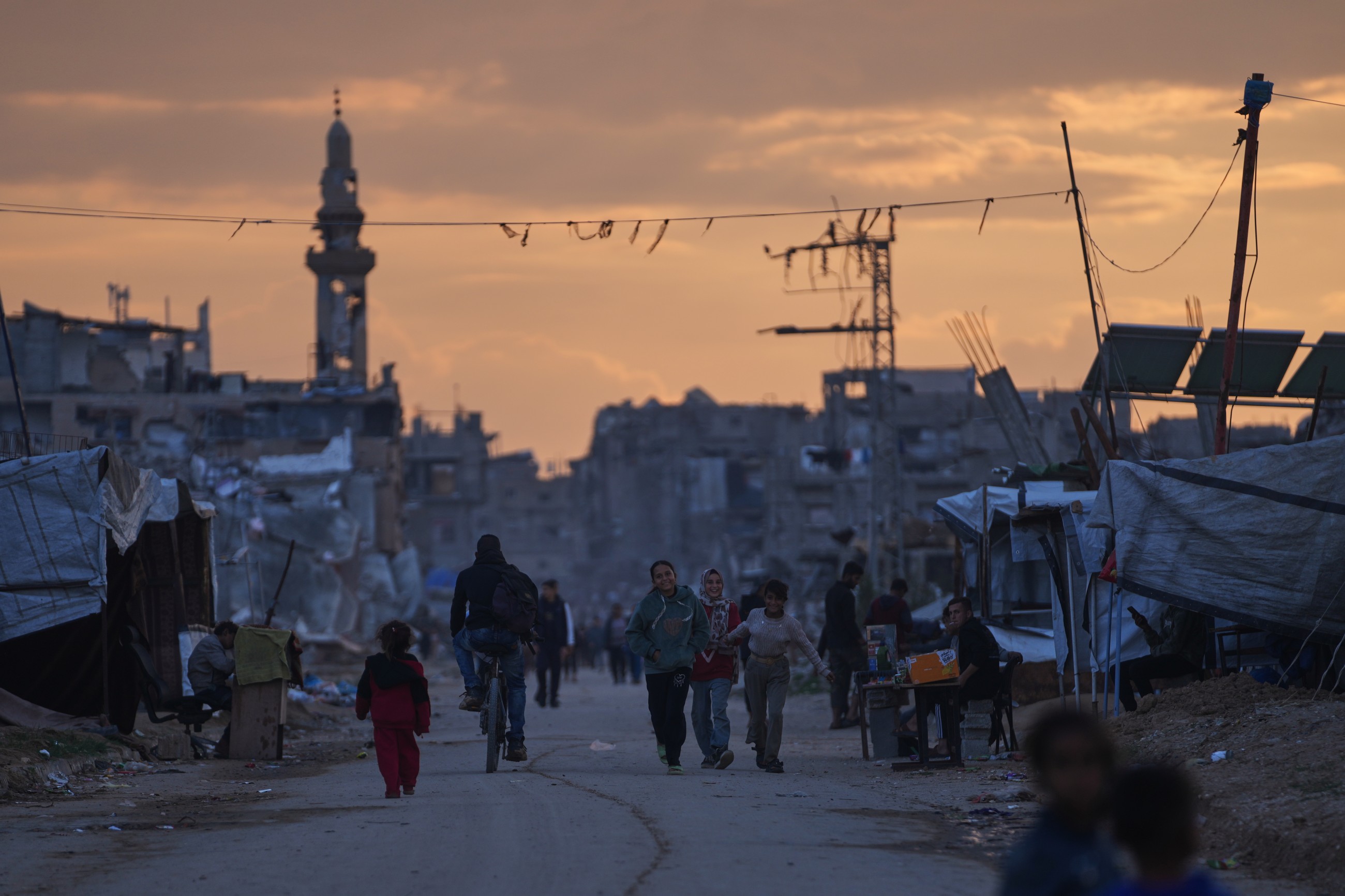
“From the very first moment, and every day, morning and evening, there is gunfire and artillery shelling in the yellow and non-yellow zones. There is no peace of mind. There is nowhere else for us to go. There is nothing but your own destroyed place,” says Jaber.
“We are still suffering to this day. There is heavy gunfire and intense shelling, but this is the state of our country: a tragedy we did not choose.”
The deadliest night of the “ceasefire” so far came on 29 October, when at least 109 Palestinians were killed by Israeli forces during an overnight attack. The Israeli military said the attack was a response to the killing of an IDF soldier by Hamas. The militant group said it had “no connection” to the incident.
Dozens more Palestinians, including children, have been killed after crossing the “yellow line”. This refers to the boundary which Israeli forces agreed to withdraw from under Trump’s ceasefire, but Gazans say its position is constantly changing – with deadly consequences.
The Israeli military says its operations, in particular within the yellow line, are “carried out to address direct threats from terrorist organisations in Gaza”.
But in one particularly horrific incident, two young boys – Fadi, 8, and Jumaa, 11 – had gone out to gather firewood for their wheelchair-bound father in Beni Suhaila, near Khan Younis. They were killed by a drone strike near a school sheltering displaced people.
The IDF described the children as “two suspects who crossed the yellow line, conducted suspicious activities on the ground, and approached IDF troops operating in the southern Gaza Strip, posing an immediate threat to them”.
Israel says it has abided by the terms of the ceasefire, and has repeatedly described victims of its attacks as suspected terrorists.
Aid dispute
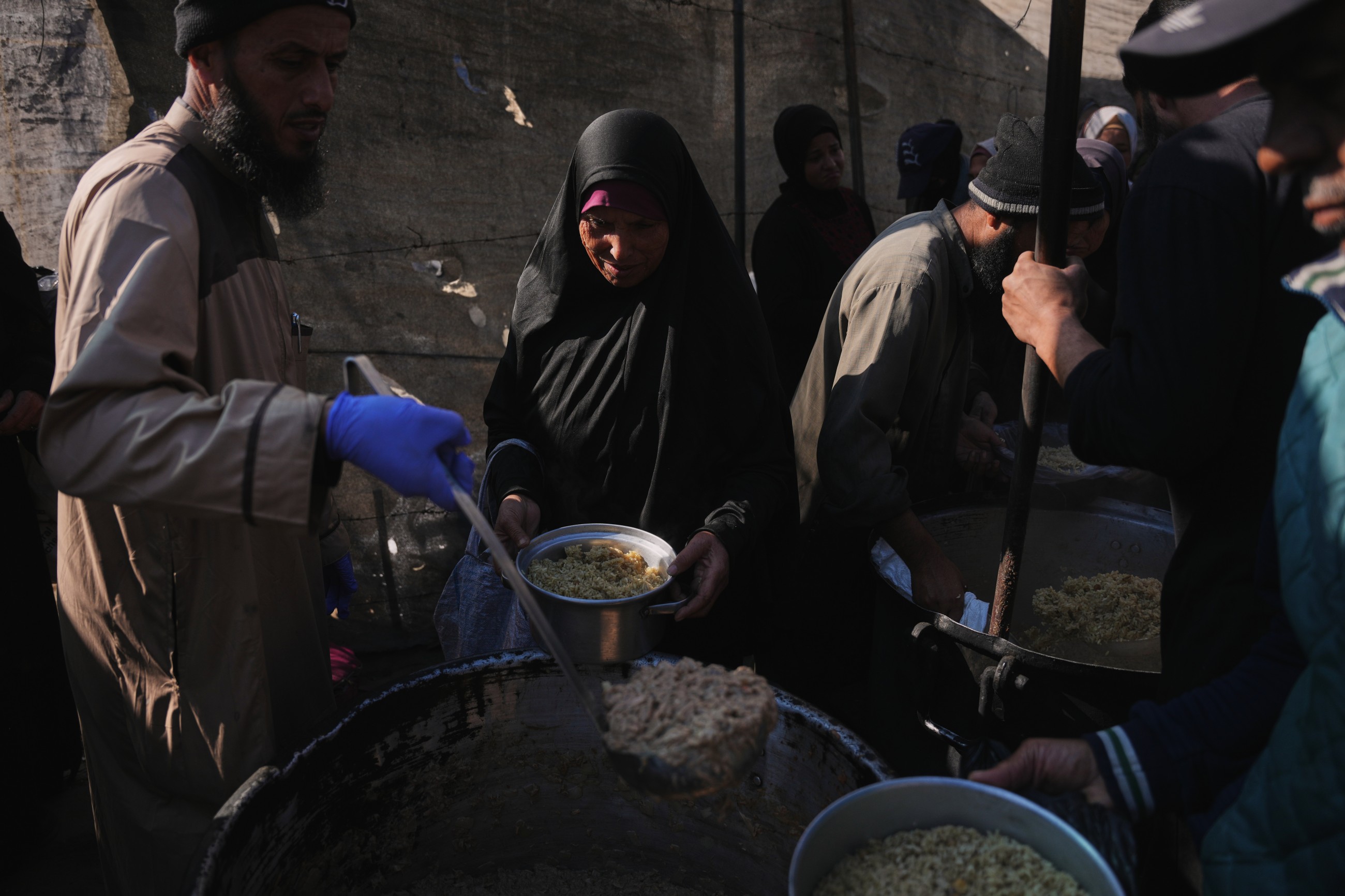
A dispute over aid is also ongoing, with humanitarian groups warning that far less aid than required is entering the strip. Hamas claims fewer trucks are entering Gaza than had been agreed, but Israel maintains that it is fulfilling all of its obligations under Trump’s plan.
As Israel and Hamas continue to trade blows, the suffering of ordinary Palestinians continues.
Since his daughter’s death, Jaber says he has suffered psychologically, his weight plummeting from 100kg to 75kg. “I used to own three houses, and now I’m homeless in a tent,” he says.
Imad Abu Shawish, a 38-year-old freelance journalist, has seen the horror of post-ceasefire Gaza up close.
On 22 November, he sifted through the rubble of an Israeli airstrike on a residential building in Nuseirat, which killed 11 members of the Abu Shawish family, including two married couples and seven children.
Only one daughter from the two families survived: 19-year-old Batoul. Imad pulled her from under the flattened building with his own hands.
'Terrified, anxious, fearful, and panicky'
“There is absolutely no safety, no safety at all,” he tells The Independent. “My life has changed drastically. My eating and drinking habits have changed. My emotional and psychological behaviour has changed. My feelings towards others have changed. I am still in shock, deeply traumatised.”
He continues: “I don’t know where I am or what I am going through. What happened to me? I still don’t have an answer. I’ve become terrified, anxious, fearful, and panicky. Perhaps it’s because I’m afraid the war will return at any moment and we’ll be killed.
“I don’t think these bad feelings will easily disappear from our minds. We need internal healing and psychological treatment.”
Palestinians have also been suffering in severe winter weather, with strong winds and torrential rain tearing apart tents housing hundreds of thousands of homeless families.
“Everyone’s tents are flooded,” says Abed Al Moneim Al Zein, a 60-year-old from northern Gaza who is currently displaced in Khan Younis. “There aren’t enough tents, mattresses, or blankets.”
His brother Ameen, a 56-year-old from Beit Lahia with a wife and three daughters, was killed 19 days after the ceasefire came into effect.
“Ameen loved his city dearly; he adored it,” recalls Abed. “He was always smiling and participated in all the city’s events, from celebrations to football matches.
“The area he went to wasn’t a yellow zone. He went looking for shelter after losing his home. It was a school in the city centre.”
Abed continued: “Life is nonexistent. There are no basic necessities. We live in fear, tension, anxiety, and terror. The war has affected us immensely, beyond human endurance.”
The Israeli military said in a statement: “IDF troops under the Southern Command are deployed in the area in accordance with the ceasefire framework and will continue to act to remove any immediate threat.
“In contrast, Hamas is not fulfilling its part of the agreement and has violated the ceasefire hundreds of times.”
The Independent