UK swelters in hottest June day on record as temperature reaches 36˚C
- Last updated: June 24, 2026 | 22:06


The UK recorded its hottest ever June temperature on Wednesday with the mercury rising to 36.1˚C in southern England, breaking the previous record of 35.6˚C set in 1976.
It is the second month in a row that Britain has broken historical temperature records, as scientists warn that climate change is making extreme weather events like heatwaves more frequent and intense.
The record was broken several times in the course of the afternoon, with temperatures reaching 36.1˚C in southern England as Britain experiences a second month in a row of record-breaking heat, the UK's Met Office said.
The Met Office has issued a rare red "extreme heat" warning for parts of central and southern England and Wales, for Wednesday and all day Thursday.
There is also an amber warning for extreme heat in place for a wider area of England for the whole of Friday, and another focused on the east and south-east of England on Saturday.
The previous record for the UK's highest June temperature was 35.6˚C set in 1957 and equalled 1976.However, maximum temperatures are still expected to fall just short of the UK's all-time high of 40.3C set in 2022.
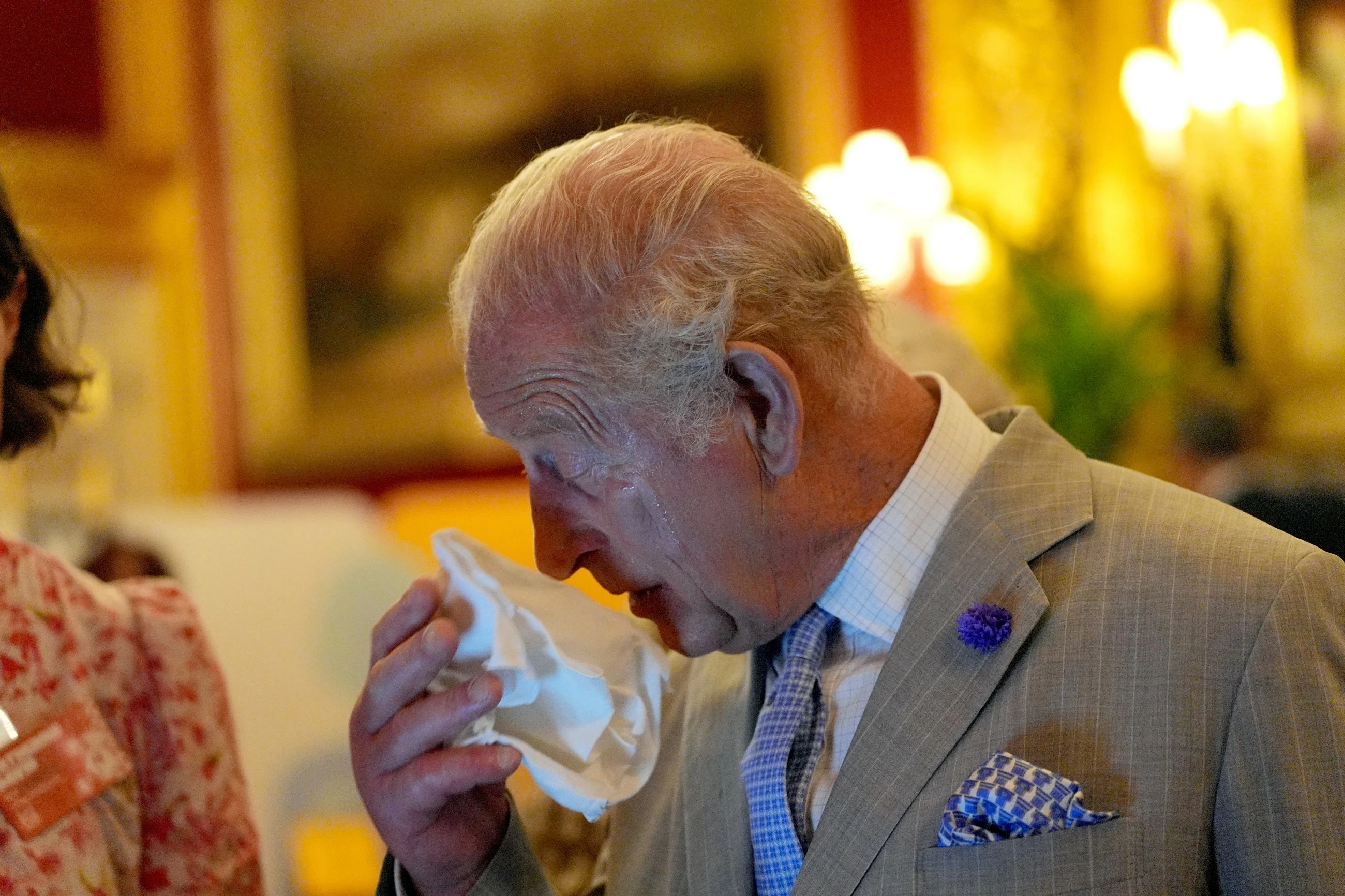
Even King Charles III struggled with the heat and had to be cooled with a portable fan as he attended a reception in the capital, part of events for London Climate Week.
Hundreds of schools were partially or fully closed during the peak of the heatwave, as teachers and parents raised concerns that old school buildings in Britain were not equipped to deal with the warmer summers. Train companies slashed services anticipating disruptions to the infrastructure due to the heat and urged passengers not to travel unless necessary.
The heat and humidity could also trigger some more stormy weather, with the Met Office issuing a yellow warning for thunderstorms for south-west England, running from 6pm to 11.59pm on Thursday.
Most areas in the south-west are likely to miss the worst of the storms but they could bring disruption in places.
Overnight temperatures will also remain high this week and a number locations will not get cooler than 20˚C, becoming what is known as a tropical night.
It is likely we will see the warmest June night on record, on either Wednesday or Thursday night as minimum temperatures across Wales, the Midlands and south-east England are not expected to fall below 21 to 23˚C.
Some places could be warmer than the current UK and England record of 22.7˚C set in 1979, with the new Wales record set on Monday night of 20.3˚C possibly beaten again.

London resident Yana Markevich said it was a "struggle" in her flat without any air conditioning, and that she had launched a petition to ease regulations on some homeowners to install air conditioning, which remains rare in British homes.
Markevich said she had set up a portable AC and sealed the windows in preparation for the heatwave.
"I think sooner or later the UK will have to accept that proper cooling is becoming part of basic housing standards," Markevich told AFP.
In central London, decorator Aaron Timothy, 25, took a break with a towel over his head, telling AFP: "I'm practically swimming in my own sweat, which is not pleasant."
'TERRIFYING HEATWAVES'
Trade unions urged better working conditions in the heat, with the Unite union calling on "bus firms to act immediately to protect drivers from extreme temperatures."
"Bus drivers, who work in driver cabs that become even hotter than it is outside, are at particular risk," Unite said, adding temperatures in the cabin where drivers sit can "exceed 40˚C."
At University College London's Grant Museum of Zoology, curator Tannis Davidson said researchers were considering having to "preventatively decant" jars after one specimen jar broke due to the heat last year. "It's our collective cultural heritage that we have to worry about beyond just living (in the heat)," Davidson told AFP.
Prime Minister Keir Starmer, who resigned earlier this week but will stay in the post till his successor is chosen, said the weather was a reminder that climate change is "one of the most significant challenges of our time."
Environmental campaign group Greenpeace UK called for the government to "reduce our dependence on fossil fuels."
"The summer of '76 may be seared into the nation's memory, but it's quickly being overtaken by even more terrifying heatwaves," Greenpeace UK's Angharad Hopkinson said. In a report published Wednesday, experts at the Climate Change Committee warned the government that the UK needed a faster transition to electric cars and heat pumps to meet its 2030 emissions targets.
WAM / AFP