Budget-friendly weddings: Youngsters in America reshaping life’s milestones
- Last updated: June 9, 2026 | 09:54


Lindsey Morris knew she wanted to spend intentionally to make her wedding day feel perfect — but only within her means. So, she set a wedding budget of $5,000 and came in well under it, spending just $4,200. “There was no way I was going into debt on purpose,” the 38-year-old executive assistant says.
While Morris could have taken on credit card debt, she couldn't justify doing so for a one-day event — particularly after experiencing financial strain herself. “It just felt incredibly tough because I had a job, but ... I wasn't making enough for my living expenses,” she says. “Everything was super tight.”
So she re-adjusted expectations. While her traditional family wanted her to get married in a church — which was either unavailable or too expensive — she opted instead to get married in the courtyard garden of the University of Michigan, which cost $90, plus an additional $225 for a rain backup.
Leaning on her family and community also helped keep costs low. Morris asked her cousin to officiate the wedding at no cost. The cake, flowers, décor and entertainment each came in under $400. For entertainment, she reached out to students at the university's music school, eventually choosing a violinist and cellist for $200.
Morris' parents offered to contribute to the costs, but she says she declined because it wasn't necessary, and because she felt that accepting help could have given them more influence over the guest list. Ultimately, 200 people attended.
Morris says the wedding exceeded her expectations, as well as those of her guests, some of whom have since asked her for help planning their own debt-free weddings.
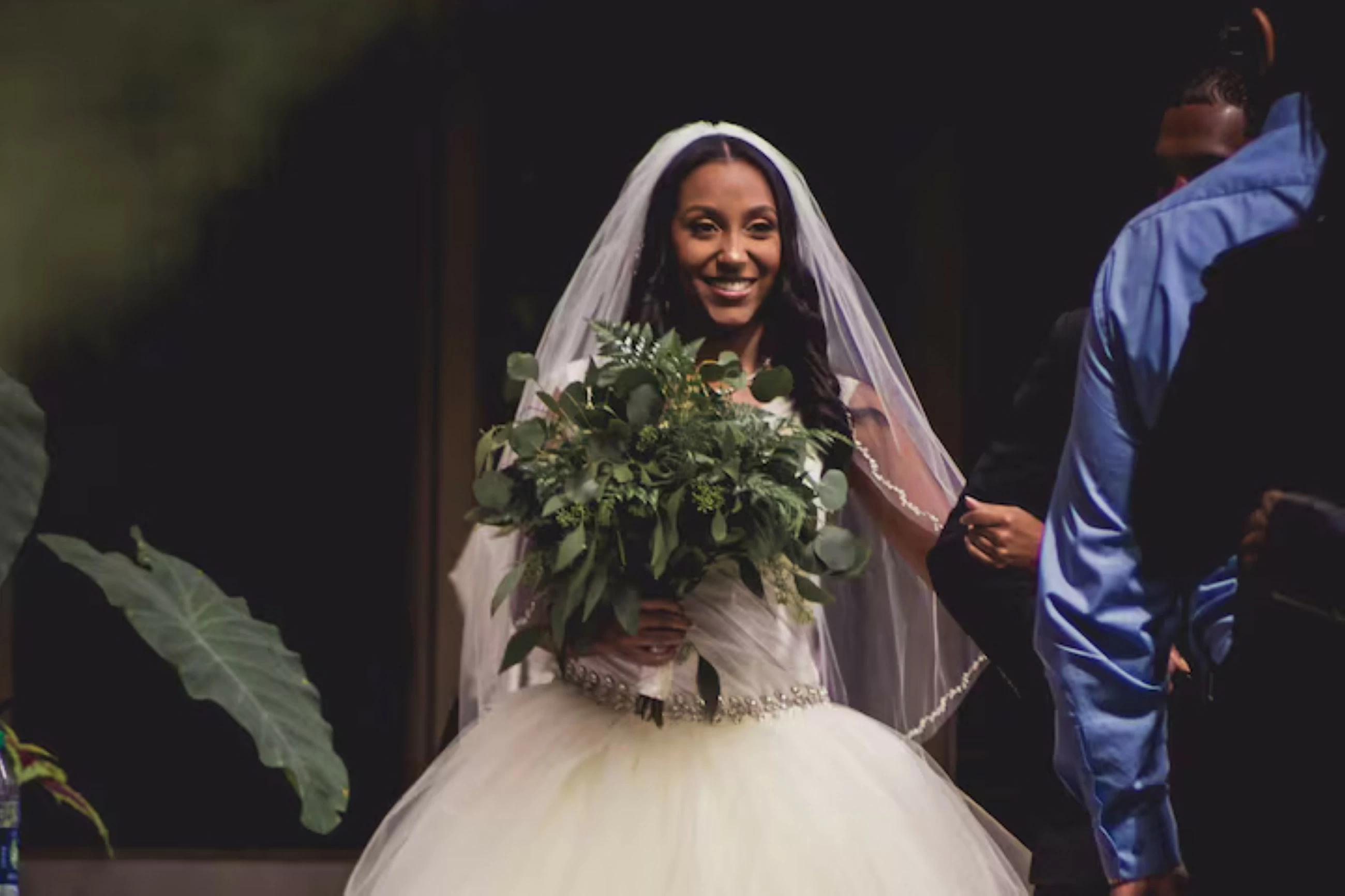
For Morris, her wedding is proof that young people don't need to overspend to mark life's major milestones. “I came home and I was debt-free and was happy,” she says. “It just felt amazing. I got what I wanted.”
The Wider Trend
Young people are more open to redefining traditional milestones, according to a 2025 survey by market researcher YPulse, with 83% of respondents saying they plan to approach major life decisions on their own terms — not the pace set by previous generations.
Jeff Judge, a certified financial planner and managing partner at Chesapeake Financial Planners, says scaling back a wedding as Morris did is not a financial sacrifice, but a capital allocation decision. “A couple that shaves $25,000 off a single-day event can redirect that money toward a down payment, wipe out a student loan, or fund several years of retirement contributions,” he says. “The math is staggeringly in their favor.” Still, Judge says it is important for couples to know what they are saving for and to have clear financial priorities.
Some couples “save on the wedding but still have no emergency fund, no plan for competing debts, no retirement account started,” he says. “The milestone goes away, but the financial drift stays. That's where it breaks down.”
Key Takeaways
Milestones can still be meaningful without being financially overwhelming. Like Lindsey, many young adults are reshaping weddings and other life milestones to reflect their financial reality, not social expectations.
A budget-friendly wedding can be a strategic financial choice. Spending less can free up money for long-term goals such as a house down payment, paying down student loans or early retirement savings. “I would rather spend a lifetime with my husband than a lifetime struggling with debt,” Morris says.
Cost-cutting only works with a plan. Savings matter most when intentionally redirected toward clear financial goals. “The risk isn't skipping the party,” Judge says. “It's that some couples treat frugality on celebrations as permission to be vague about everything else.”
Reuters