Study finds summer getting longer, faster than expected
Last updated: April 11, 2026 | 15:43
People stand in front of a cooler installed around the Colosseum amid a heatwave in Rome, Italy. Reuters
Representational image.
Children play at a water fountain in the city center during a heatwave in Vienna, Austria, on Thursday.
Reuters
A man helps a child cool off with water from the Barcaccia Fountain at the foot of the Spanish Steps during a heatwave in Rome, Italy, July 1, 2025. REUTERS/ Antonio Denti
Tourists stand in front of a cooling fan installed outside the Colosseum in during the heatwave in Rome. Reuters
Summer weather is arriving earlier, lasting longer and packing more heat than it used to-and it's happening faster than scientists had previously measured.
A new study by researchers at the University of British Columbia (UBC) has found that between 1990 and 2023, the average summer between the tropics and the polar circles grew about six days longer per decade. That’s up from roughly four days per decade found in past research investigating up until the early 2010s.
For many cities, the numbers are even more striking. In Sydney, Australia, summer temperatures now last about 130 days, up from 80 days in 1990, adding 15 days per decade. Toronto summers are expanding by eight days per decade.
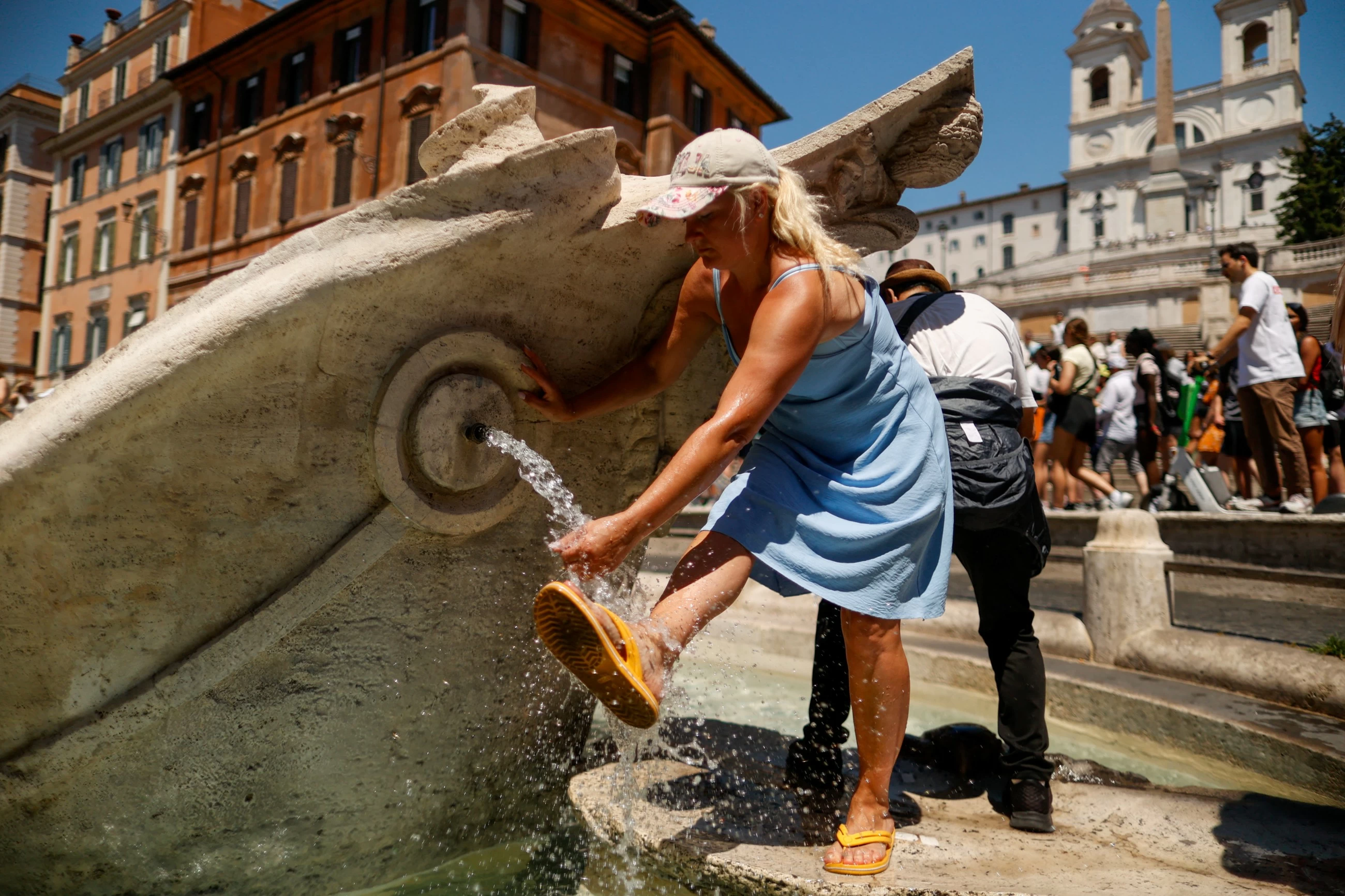
A woman washes her foot at the Barcaccia Fountain near the Spanish Steps during a heatwave in Rome, Italy. Reuters
The researchers defined summer based on the weather: the stretch of days each year when temperatures rise above what was historically typical for a given location during the warmest part of the year-a threshold set using climate data from 1961 to 1990.
The study’s findings have implications for agriculture, water supply, public health and energy systems, many of which have been built around assumptions about when the warm season begins and ends.
"These findings challenge what we believe to be the normal cycle of the seasons,” said lead author Ted Scott, a PhD student in UBC’s department of geography. "When summer happens and how quickly it arrives impact patterns and behaviours in plant and animal life, and human society.”
The study also found that seasonal transitions-the shift from spring to summer and from summer to autumn-are becoming more abrupt. Instead of a gradual warm-up, summer-like temperatures arrive more suddenly. This could disrupt systems that depend on seasonal cues; for example, flowers may bloom before pollinators are active, crops may need to be planted earlier, and rapid spring warming may lead to faster snowmelt and greater spring flood risk.
The study, published in the journal Environmental Research Letters, also introduced a new way of measuring cumulative heat that builds up over a summer, combining temperature and time. By this measure, accumulated summer heat over the Northern Hemisphere land is rising more than three times faster since 1990 than it did from 1961 to 1990.
The study found that coastal areas in the Northern Hemisphere are seeing some of the fastest growth in summer length and accumulated heat, which could affect millions of people who have moved to these areas in part because of their perceived moderate climate.
For now, the study makes tangible what many people may have sensed-that the rhythm of the year is changing, and that this change is happening faster than expected.