Stunning image of ‘Christmas Tree cluster’ captured in Abu Dhabi
- Last updated: December 24, 2025 | 21:44


Mohammed Abu Al Samen, Staff Reporter
After 35 hours of filming over more than a month, Al Khatim Astronomical Observatory, located in Abu Dhabi desert, managed to capture a distinctive image of a patch of sky containing many celestial objects.
These included the Tree Cluster, a group of stars that looks like a tree and is known in Western societies as the Christmas Tree Cluster because of its resemblance to a Christmas tree.
The centre pointed out that above the cluster lies the Cone Nebula, which is a mass of gas and dust in the shape of a cone. The cluster and the nebula together are symbolised by the astronomical symbol NGC2264. Near them are two other objects, the Snowflake Cluster and the Foxfur Nebula.
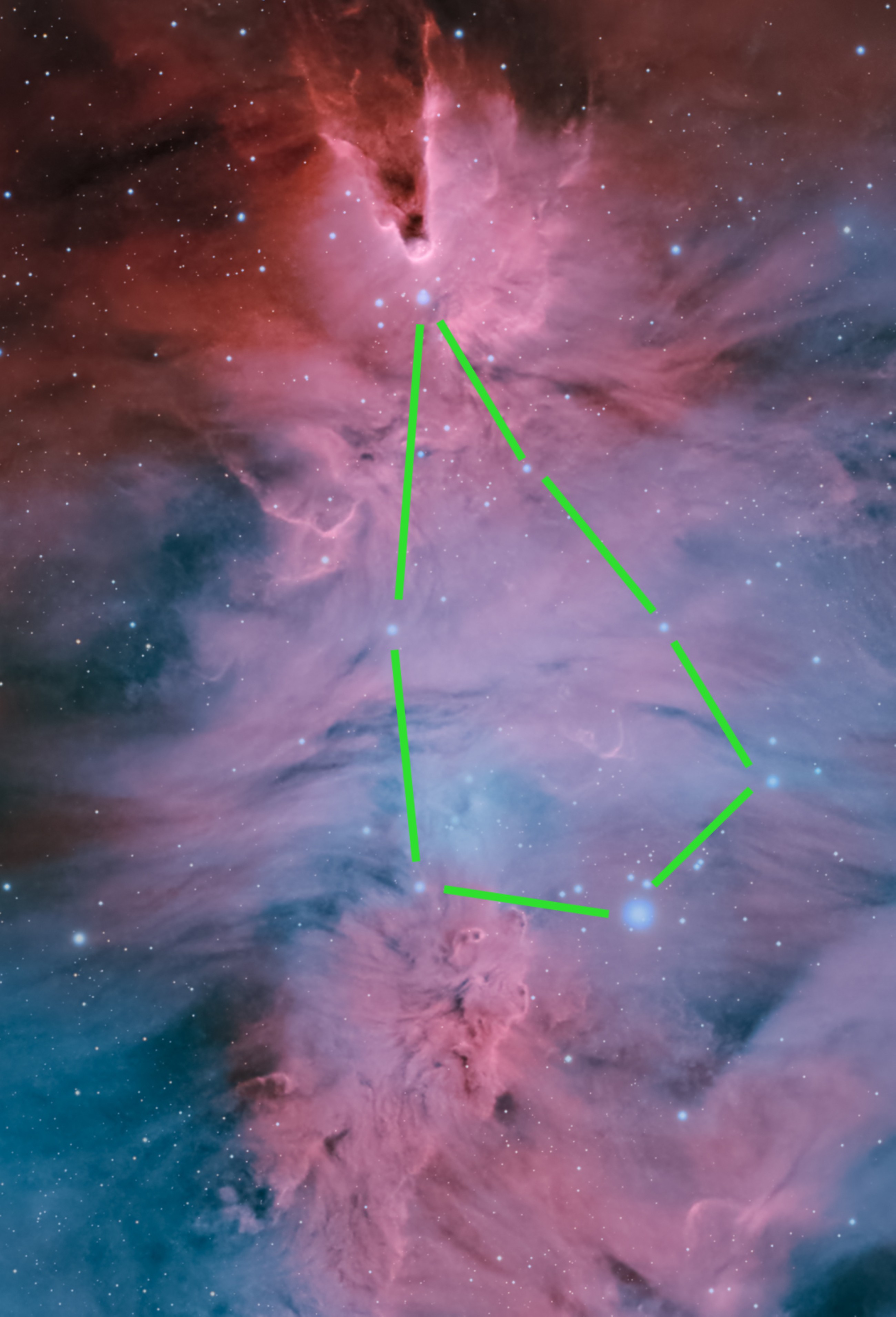
All of these objects are located in the Monoceros constellation, at a distance of 2300 light-years, which means that the light that appears in this image was emitted from these objects in 275 BC and has only reached us now! The red and pink colour in the image is due to the ionization of hydrogen gas, while the blue colour is due to the ionization of oxygen gas.
The image also shows other features such as some dark nebulae, which are giant masses of gas and dust that block the light behind them, making them appear as black spots.
The centre explained that it used a refracting telescope with a diameter of 108 mm, a colour camera and a light pollution filter in the imaging, noting that the level of light pollution at the monitoring location was Bortle 6.5 and the imaging duration was 35 hours, producing 421 images, each lasting 5 minutes.
The centre’s staff included Mohammed Awda, Haitham Hamdi, Osama Ghannam, Anas Mohammed and Khalfan Al Nuaimi.