Tabari Artspace DIFC hosts Mohamed Monaiseer’s searing works on conflict
- Last updated: September 7, 2026 | 09:05


Muhammad Yusuf, Features Writer
Tabari Artspace, DIFC, is presenting (Sept. 11 - 1 Oct. 1) a solo by Mohamed Monaiseer. Titled 85 Seconds To Midnight, Monaiseer examines history through cycles, repetition and flows, while probing the unstable boundary between imagination and reality. War, occupation and imperial power have long animated his practice; here he considers how they recur across contexts and generations, altering borders, enemies and technologies, while familiar structures of domination are left standing.
This body of work was developed during the war on Gaza, which began while Monaiseer was undertaking a residency at Can Serrat in Spain. The exhibition brings together a web of references to explore how violence repeats across time and how the stories through which we encounter it, are subjective and constructed. The title, 85 Seconds To Midnight, invokes the current status of the Doomsday Clock and its measurement of humanity’s proximity to catastrophe. Time is mobilised in various ways in this series, as a countdown to judgment day and through the idea of cycles.
Monaiseer sees colonial power resurface in patterns of contemporary occupation, dispossession, territorial control and the unequal valuation of human life, and during his residency, he came to connect these ideas to our contemporary state of emergency and its possible mediation. He is also interested in the forms through which these searing realities reach us. News reports, digital images, literature, oral histories, conspiracy theories, folklore and myth each offer their own versions of events, blurring the boundaries between what is imagined, perceived and believed.
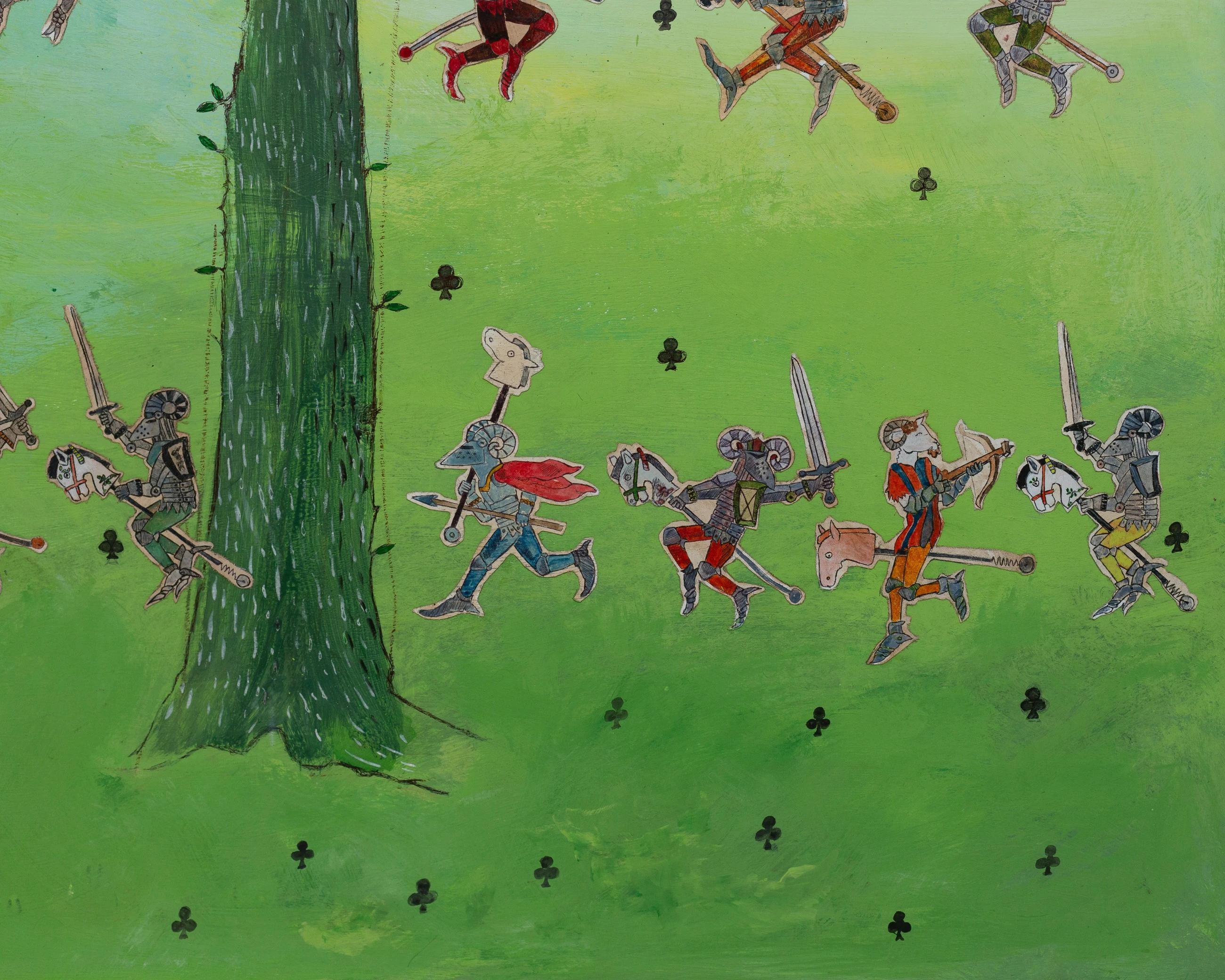
The exhibition comprises approximately 40 drawings, paintings, sculptures and textile works, as well as a video installation filmed during the residency and presented in the back room. Recurring motifs in these works are absorbed from literary fiction, popular storytelling and contemporary media. Armoured figures in various poses, dancing or mounted on toy horses, draw on the absurd heroism of Don Quixote, deliberately destabilising the visual language of war. Dark humour runs throughout the compositions: for Monaiseer, it is a means of examining the exercise of – or performance of - power and the fantasies through which conflict can be romanticised, rehearsed and projected.
Elsewhere, pixelated figures and fragmented grids evoke the digital mediation of contemporary warfare and our era of misinformation, in which information is increasingly manipulated and corrupted ab ovo. Monaiseer has previously engaged with the historical construction of conflict; in these works, he considers how conflict reaches us through technology, compressed images, screens, news feeds and endlessly circulating footage, producing realities that are experienced at a distance and often manipulated.
The playing card symbols that form patterns in his work remind us that, for some, conflict amounts to a game or a gamble. The grids that divide his canvases derive from his own interactions and from oral narratives. In daily conversations at Can Serrat, a resident named Anna spoke to Monaiseer of planes moving across the sky, associating their formations with the poisonous chemicals used on civilians in modern warfare. Anna’s perceptions find space here, the geometry of aircraft formations converging with the visual language of pixels, screens and conflict. Monaiseer places contemporary codes alongside older forms of narration also.
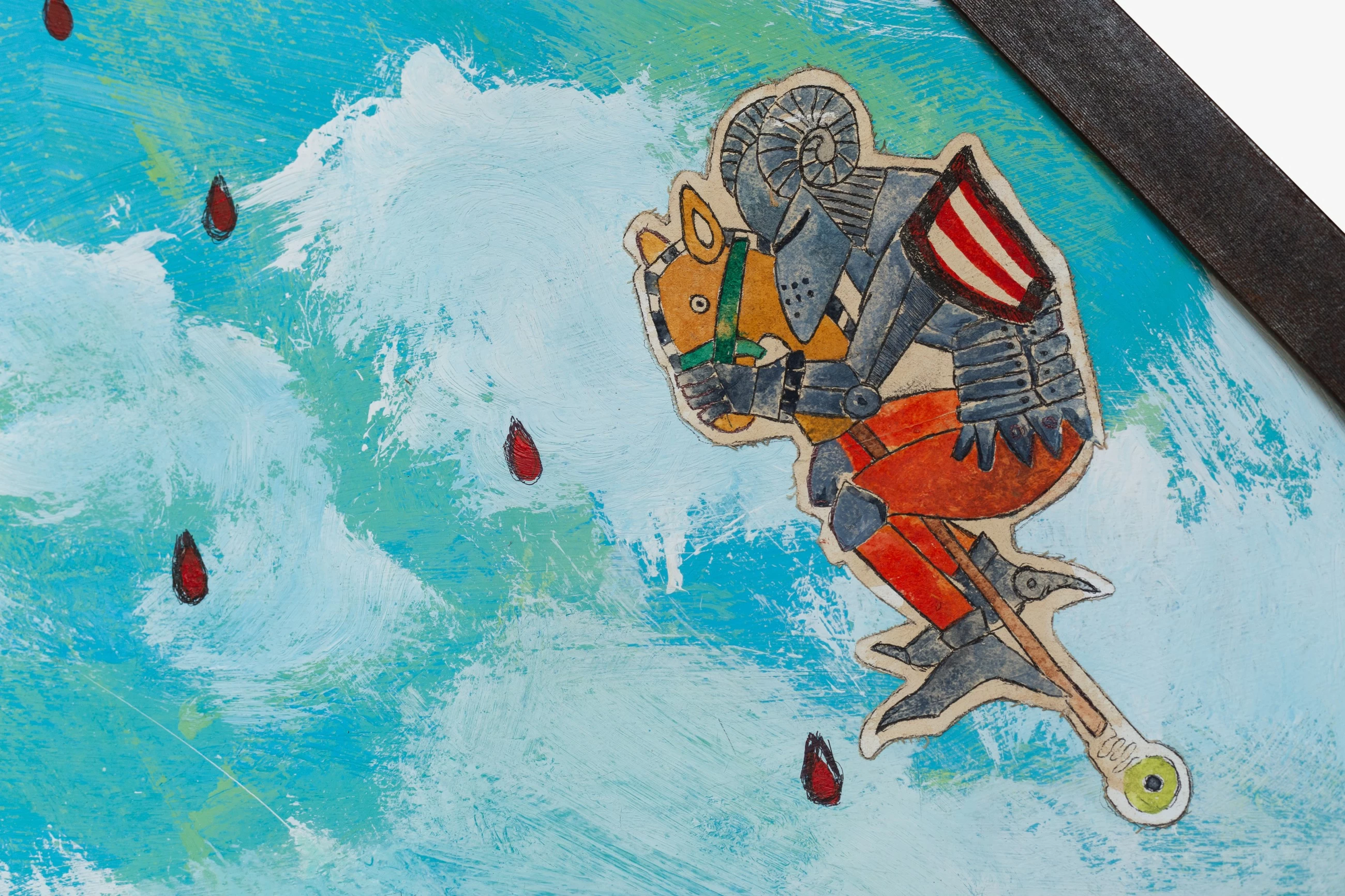
Figures drawn from folktales and oral histories recur throughout the exhibition, among them the story of a drummer whose sound echoed through the mountains of Spain, creating the impression of a larger military force and frightening the approaching French army. Sheep recur as another central figure, moving between pastoral imagery, fable and metaphor, to evoke herd mentality and the ease with which individuals can be pushed into collective positions, with individuals becoming pawns.
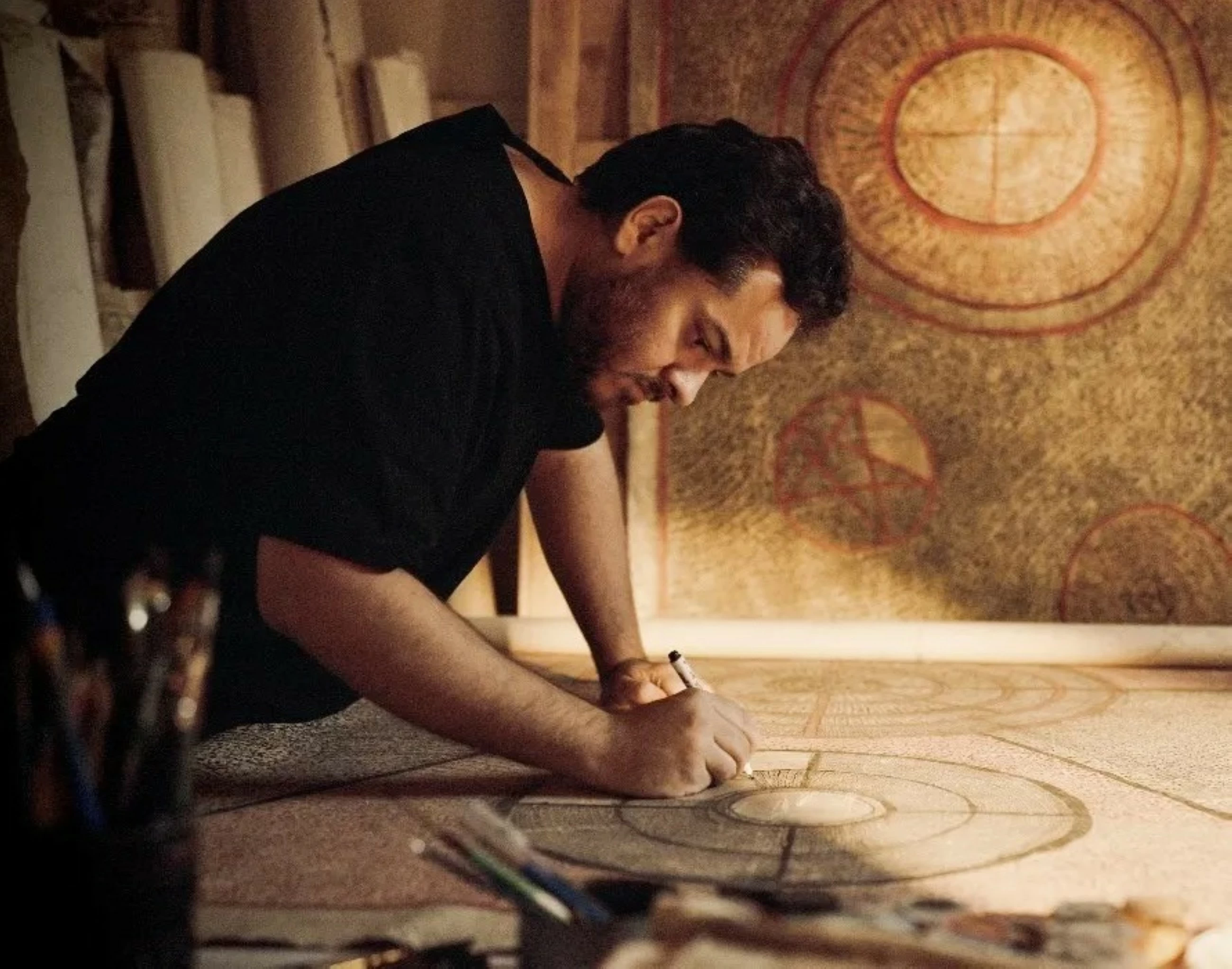
Mohammed Monaiseer (b.1989, Egypt) works through drawings and paintings that resemble heritage craft, dealing with mystical and transcendental concepts such as alchemy, metaphysics and oral histories. He is given to obsessive-like repetition, Sufi in its pedigree. “He critically explores the intersection of colonial history and power dynamics within seemingly innocuous objects of play. His work delves into how aesthetics of domination can disguise themselves in everyday rituals,” according to one write-up.
Monaiseer received his BA in Educational Art and MFA from Cairo University. He has participated in numerous group exhibitions and fairs, including Art Basel Qatar (2026), Tefaf Maastricht (2023), and his solo exhibitions include Limen: Thresholds, Tabari Artspace, UAE (2025); I, Pet Lion, Gypsum Gallery, Egypt (2024); Adrift in the Labyrinth of a Parallel Mind, Athr Gallery, Jeddah (2019) and Taxidermy Dreams, Alserkal Avenue, Dubai (2019).
Can Serrat is a Catalan farmhouse located in El Bruc (Montserrat), 45 kilometres outside Barcelona. One of the oldest international residency programmes in Catalonia, it has welcomed artistic and literary projects since 1989. The organisation is focused on supporting and guiding the creative process through individual and collective meetings, and an extensive professional network.
The house can accommodate up to 35 people from a diverse range of countries and disciplines, which allows for fruitful exchanges. In 2020, the space activated a multidisciplinary co-living programme, as well as an online project that offers support, advising, and collective creation workshops called Remota. Can Serrat receives support from the Generalitat de Catalunya and is a member of Xarxaprod, a network of artistic production centres in Catalonia.