A theatre is reimagining Homer’s Odyssey through the agony of war
- Last updated: August 29, 2026 | 09:46


War’s timeless ache – death, captivity, the agonising wait and the pull of home – has found a new stage in wartime Kyiv, with Homer’s epic reimagined as a contemporary Ukrainian odyssey. The play “Odysseus, Maeotis” is ready to open in the Ukrainian capital as the ancient tale enjoys a global moment with Christopher Nolan’s IMAX spectacle and box-office hit “The Odyssey” starring Matt Damon.
In Kyiv, the story is performed by professional actors and active-duty soldiers, including Daniil Mireshkin, a serviceman who plays the warrior king Odysseus
“I think this combination of myth and modernity allows us to draw parallels and understand just how critical the question of return is: the return of military personnel to civilian life, the return of our territories and the return of ourselves to our true identity as Ukrainians,” Mireshkin said.
The actor spoke to The Associated after a final rehearsal Tuesday, ahead of a premiere that has been repeatedly delayed due to successive Russian attacks.
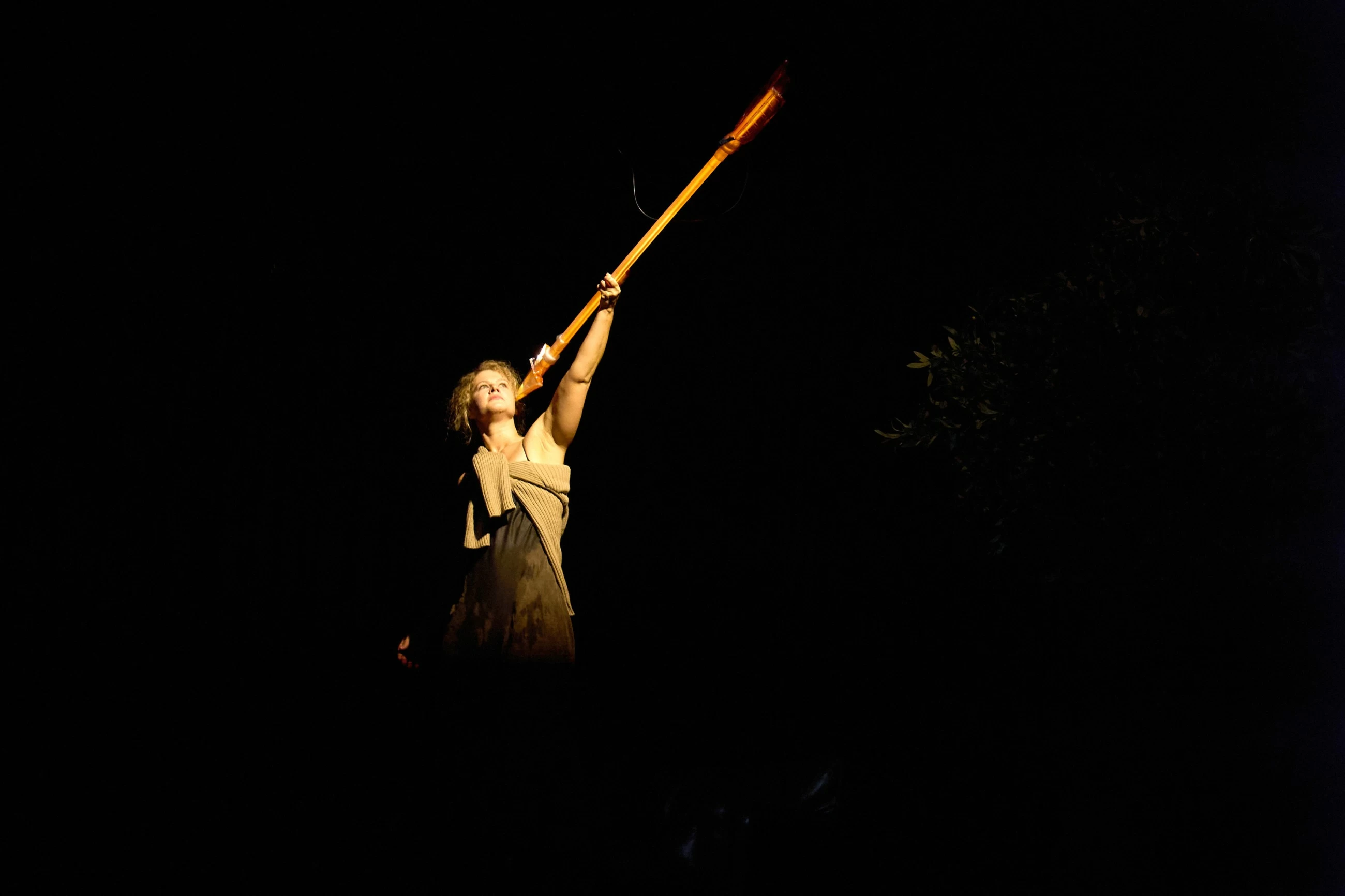
“This story helps us talk about these topics, which, as it turns out, haven’t lost any of their relevance,” Mireshkin said.
The staging at the Ivan Franko National Academic Drama Theater is designed to be austere and unsettling.
Against a darkened set laced with neon light bars, projections wash over the actors themselves. The monsters of the original - the Cyclops and the sirens - are replaced by drones that buzz across the stage and models of robotic war machines.
The play unfolds in parallel: Odysseus’ punishing journey and the long wait at home by his wife, Penelope.
Director Ivan Uryvskyi is candid about how the play recasts the ancient poem’s themes of return and those trapped in exile and captivity.
“Of course, very little of Homer’s original text remains here, because the play was written from scratch. We simply took the core narrative arc - Odysseus’ return home,” he said.
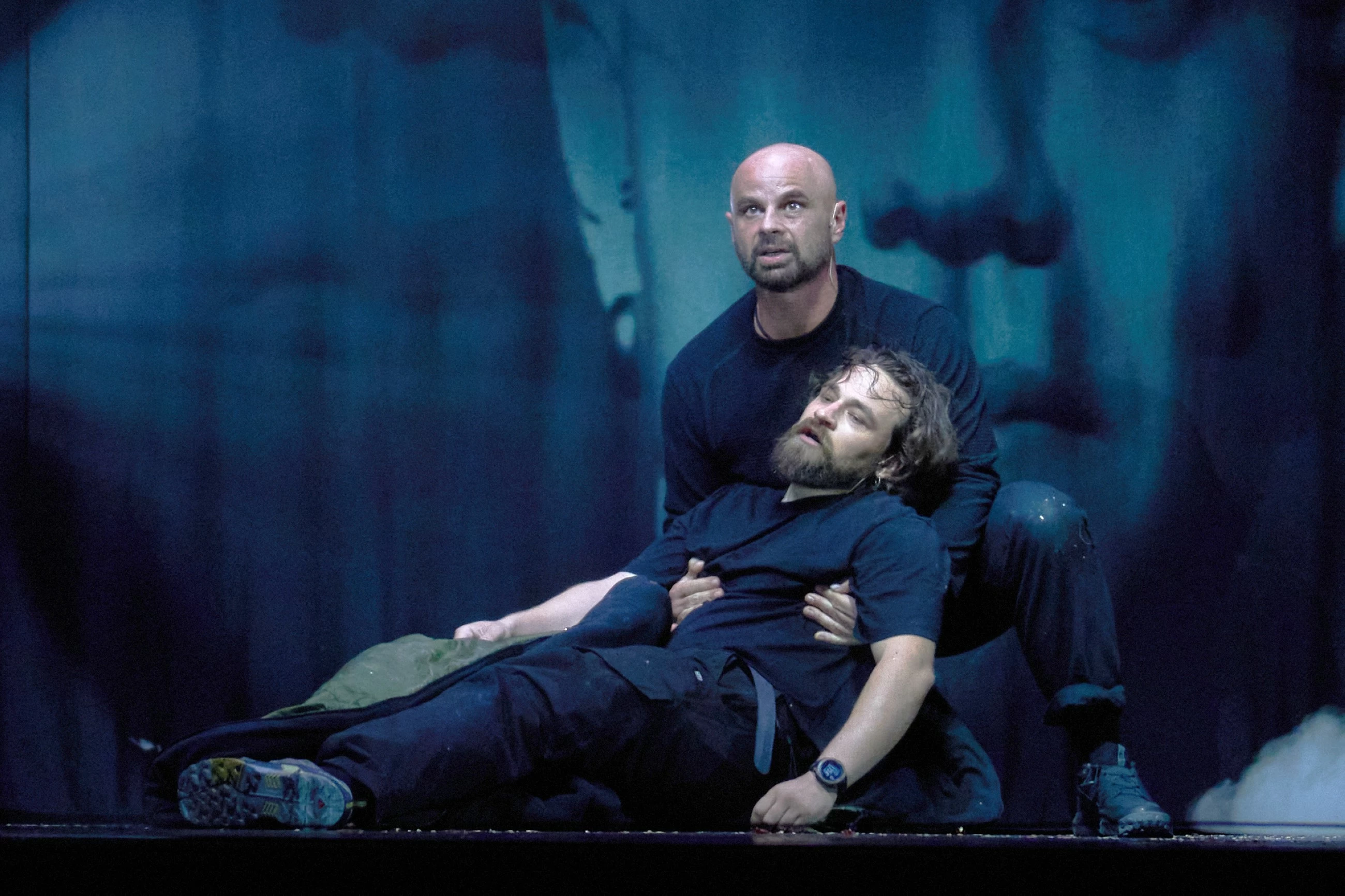
An additional Greek reference is carried in the play’s title: “Maeotis” is an ancient name for the Sea of Azov, taken from the people who lived along its shores, a place once considered to be the edge of the known world.
The sea is home to Mariupol, the port city seized by Russia after a 2022 siege, and the play is based on accounts by its defenders from the Azov brigade, now part of the 1st Corps Azov - a part of the National Guard of Ukraine.
Mireshkin, the lead actor, and playwrite Oleksii Dorychevskyi are members of the 1st Corps Azov. Dorychevskyi drew on a year of interviews with former prisoners of war for the production. According to the Corps, an estimated 600 Azov brigade servicemen are among the thousands still in Russian captivity.
For Daryna Leheida, who plays Penelope, the ancient queen’s plight resonates with the stories of women in Ukraine who wait for loved ones to return. “It’s about the fate of Ukrainian women who wait, believe and hope, but who can also feel powerless, hopeless and stripped of faith,” Leheida said.
“It’s about the temporarily occupied land waiting to come back home,” she said. “It’s about the children and people who are waiting, what we face during this waiting and the toll that war takes on us.”
Meanwhile, President Volodymyr Zelensky on Wednesday awarded Elon Musk Ukraine’s Order of Freedom, one of its highest state honours, for his “outstanding personal merits” in protecting human life and freedom and strengthening ties with the United States. Musk, the founder of the aerospace company SpaceX, has become one of the most influential, and contentious, private sector figures in Ukraine’s war effort. His decision to provide access to Starlink, SpaceX’s satellite internet network, was a lifeline for Ukraine after Russia’s full-scale invasion in 2022 and remains critically important.
Starlink has become deeply embedded in Ukraine’s military operations, with commanders and soldiers relying on satellite connectivity to communicate and coordinate operations.
Musk’s decision-making could shape Ukraine’s future military capabilities. Starlink doesn’t currently operate over Russian territory, but Zelenskyy wants Musk to reconsider the policy. That would allow Ukrainian forces to maintain satellite connectivity for longer-range drone attacks targeting Russia’s military and economic infrastructure. Musk made no immediate comment on the award, which was announced by presidential decree.
The technology has been integrated into Ukraine’s drone operations, helping operators maintain links with drones and navigate them over longer distances. Ukraine’s access to Starlink is the main reason for the early successes of its middle-strike drone campaign, which caught Russian forces off guard and undermined their logistics lines earlier this year. The campaign has put pressure on Russian logistics in Crimea, giving Ukrainian forces a degree of battlefield momentum that Kyiv has not enjoyed since its successful counteroffensives around Kherson and Kharkiv in late 2022. Musk has allowed the Ukrainians to use Starlink inside their own territory, including in Russian-occupied regions, but has restricted use of the satellite system inside Russia.
Earlier this year, SpaceX blocked unauthorised Starlink terminals being used by Russian forces in occupied territory, strengthening Ukraine’s position. Musk is both a crucial partner for Kyiv and a potential source of vulnerability. As Starlink has become embedded in its wartime communications, Musk and SpaceX have significant influence over how the technology can be used, making it important for Kyiv to preserve a positive relationship.
Associated Press