Past forward: Emirati artists brush heritage with contemporary colours at Aswar
- Last updated: August 18, 2026 | 09:53


Muhammad Yusuf, Features Writer
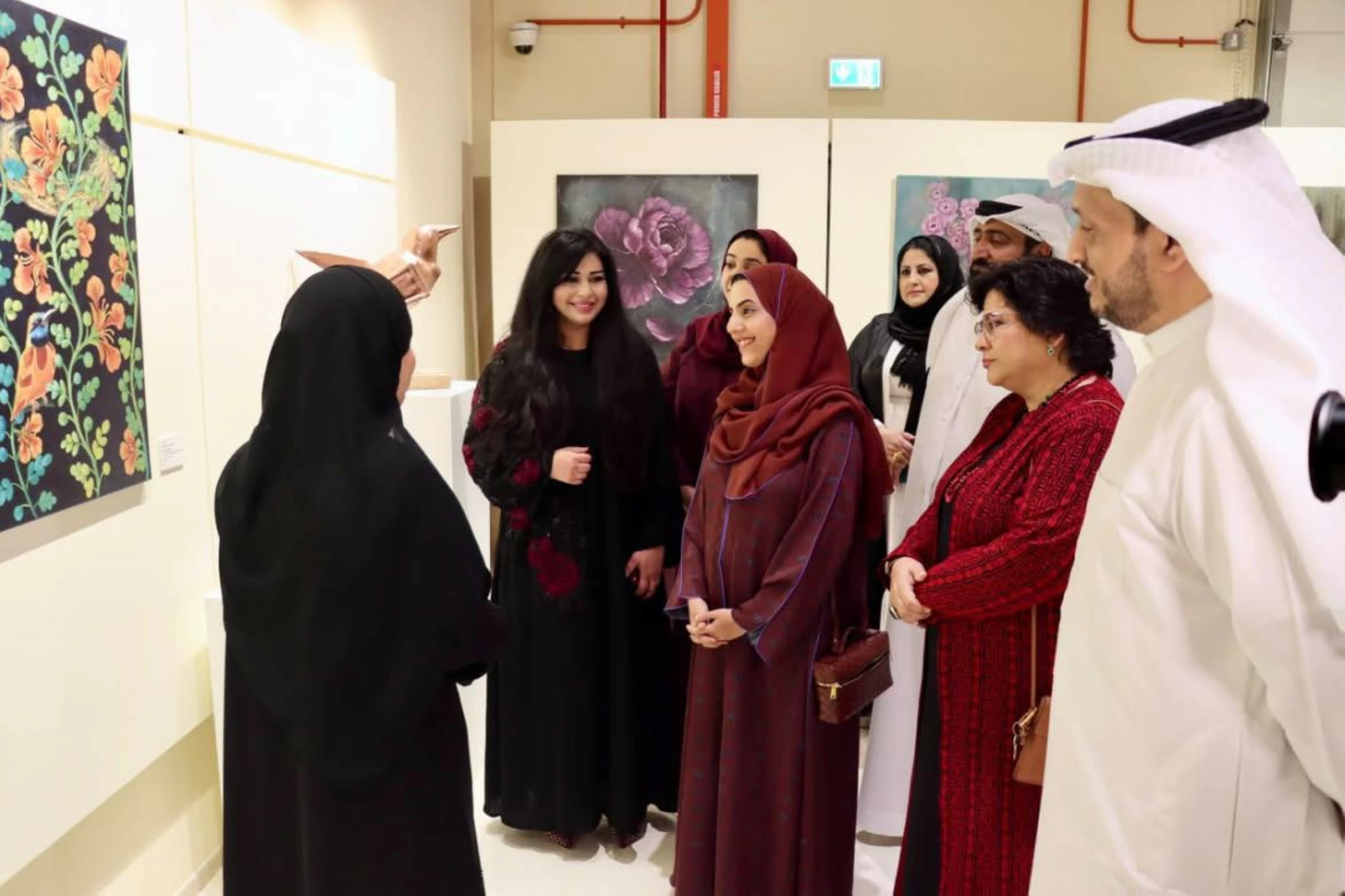
Sheikha Jawaher Bint Abdullah Al Qasimi, Director General of Rubu’ Qarn for Creating Leaders and Innovators, inaugurated on August 15 Rooted Patterns: Contemporary Emirati Narratives at Aswar Art Centre, Sharjah, in the presence of the Centre’s founders, Salem Aljunibi and Dr. Noha Farran, and a number of cultural and artistic figures, including Abu Bakr Al Kindi, Director of the Sharjah Institute for Heritage; Abdulhamid Al Yasi, Director of the Youth Care Department at Sharjah Youth; Sheikha Al Shamsi, Director of Sajaya Young Ladies of Sharjah; Prof. Joe Colistra, Dean of the College of Architecture, Art and Design at American University of Sharjah; Maha Al Sebai, Chairwoman of the Dubai Business Group for Gold & Jewellery Designers; and Emirati artists Dr. Najat Makki and Mona Al Khaja, alongside artists, researchers and members of the media.
The exhibition marks the culmination of ‘Creative Methodologies: From Personal Narratives to Artistic Practice’, an eight-week educational programme developed by Aswar to connect artistic research, experimentation and practice, with professional exhibition opportunities. The programme brought together six Emirati women artists, supporting them in developing personal narratives, artistic concepts and individual visual languages.
The exhibition features Amna Albanna, Amna Alketbi, Elyazia Aljassmi, Muna Bin Suloum, Nouf Aldurs and Sara Albannay. Salem Aljunibi, Co-Founder, Aswar Art Centre, said that “Rooted Patterns explores the relationship between personal narratives, memory and cultural heritage through six distinct Emirati artistic practices. Drawing on elements of the environment, heritage and lived experience, the artists reinterpret familiar cultural references through contemporary approaches, offering diverse perspectives on Emirati identity and its presence in contemporary art.”
Dr. Noha Farran, Co-Founder, Aswar Art Centre, said that “Rooted Patterns takes the idea of the pattern as a living trace of memory and a deeply rooted element of Emirati culture. From sadu weaving, embroidery and ornamentation to patterns formed through personal and family memory, the exhibition examines how inherited references evolve through contemporary artistic practice.” For the participating artists, roots become a starting point for creative exploration. Heritage provides a cultural reference, while contemporary practice opens space for reinterpretation and new narratives that give voice to the UAE today. The exhibition brings memory and place, heritage and transformation and individual and collective experience, into a shared conversation about the ways art can preserve the traces of heritage, while renewing their meanings in the present.
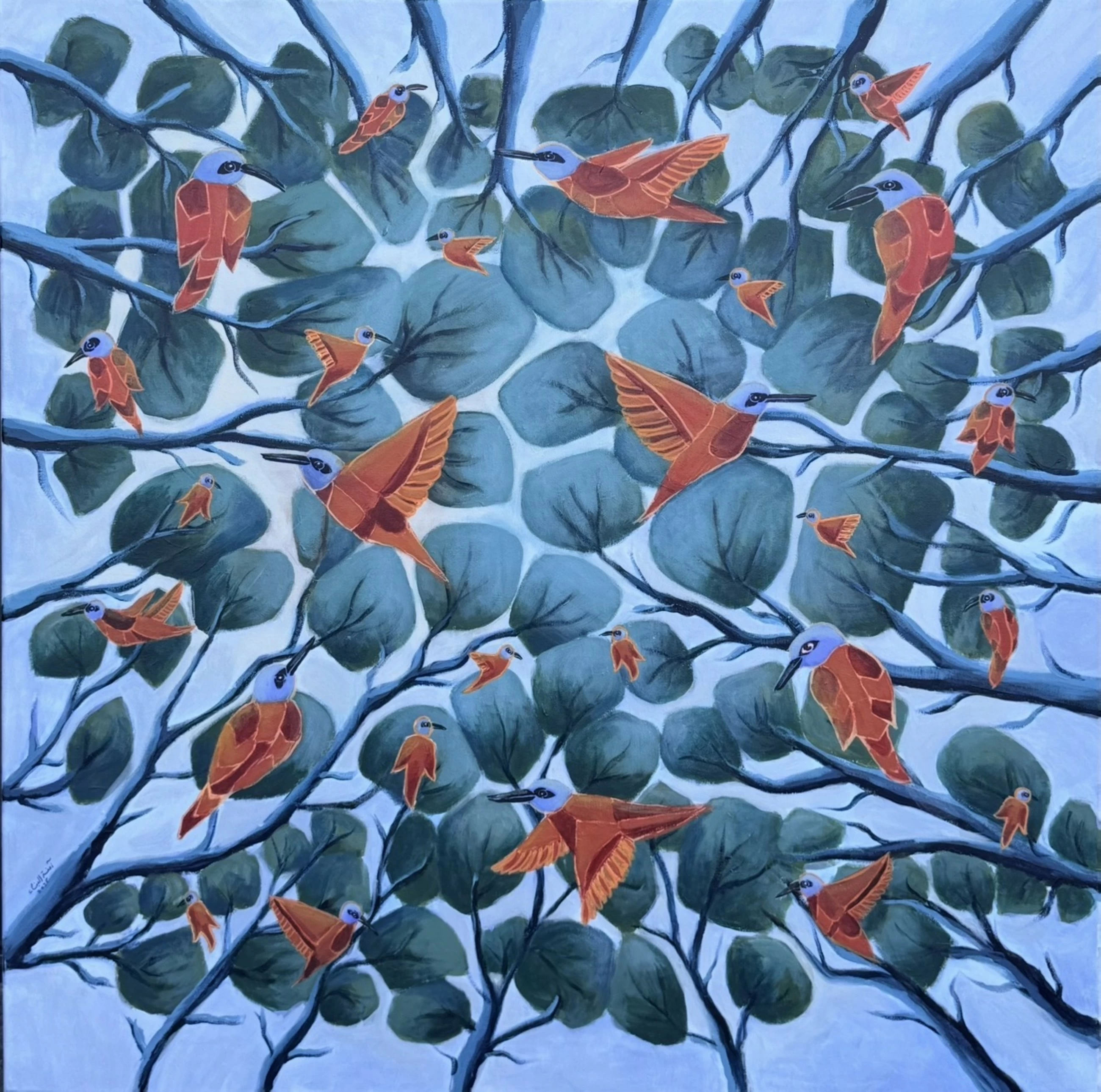
Amna Albanna’s The Bee-eater and Childhood Memory draws on the blue-cheeked bee-eater as a recurring motif, connecting childhood memories of nature, birds and care with an imaginative visual language. Across her paintings and bronze-toned sculpture, the bird moves from remembered image to physical presence, carrying ideas of affection, protection and belonging. Sara Albannay’s A World in a Marble transforms the small glass marble, a familiar object from childhood games, into a vessel for memory and imagination. In A World in a Marble and Memory in Orbit, the marble becomes a point of departure for wider worlds of play, stories, movement and visual imagination.
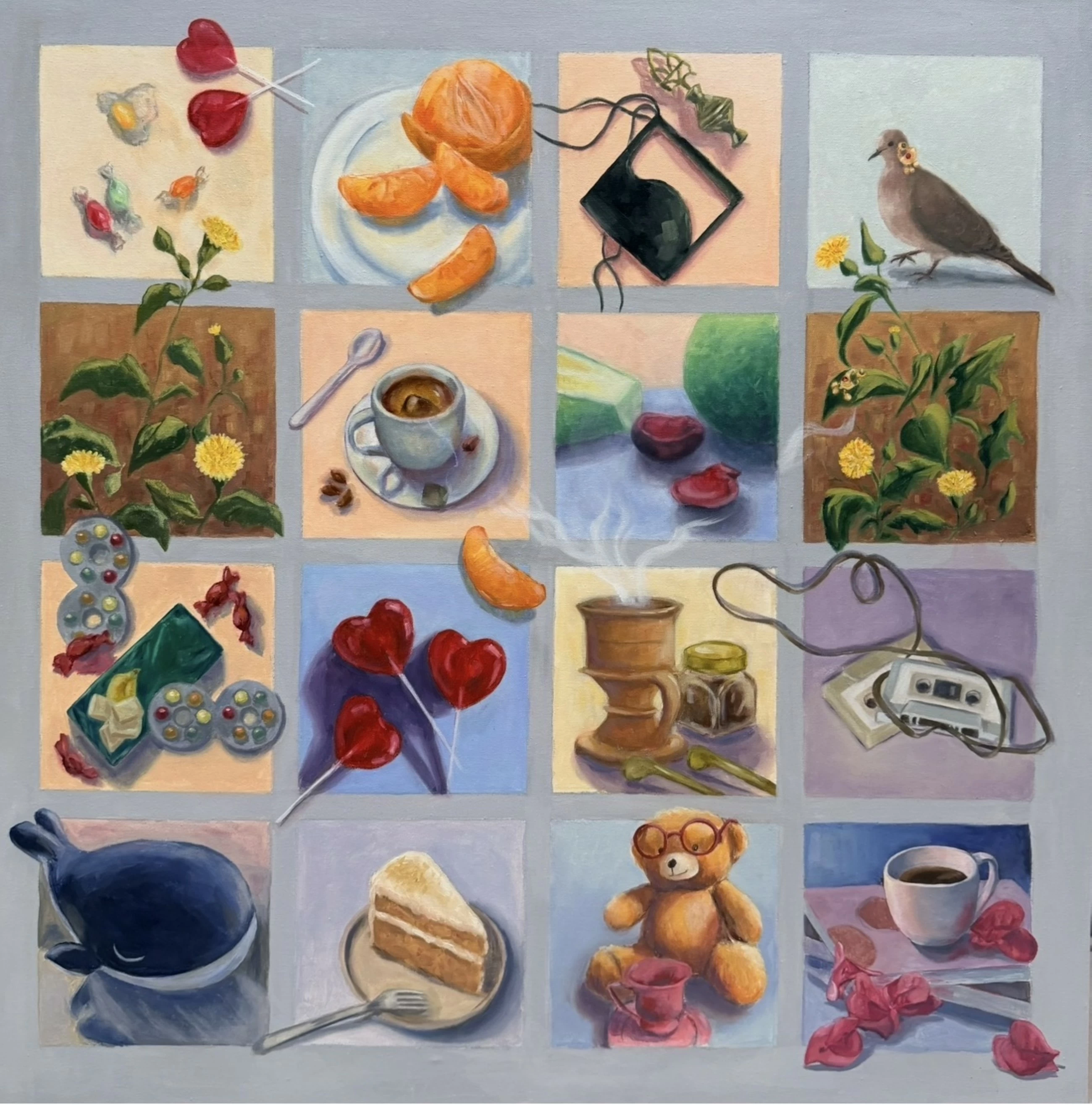
Amna Alketbi’s When Pillows Were Mountains revisits childhood through ordinary objects and fragments of everyday life. In works including Stories Between the Squares and When Pillows Were Mountains, pillows, sweets, toys and familiar domestic elements become landscapes of adventure, revealing the imaginative power of childhood to transform the mundane. Nouf Aldurs’s The Al Adheed Plant and Inner Light draws inspiration from the al-adheed plant and its cycle of opening and closing. Through paintings and a sculptural interpretation of the plant, the artist reflects on light, transformation and inner resilience, using the natural world as a language for states of human experience.
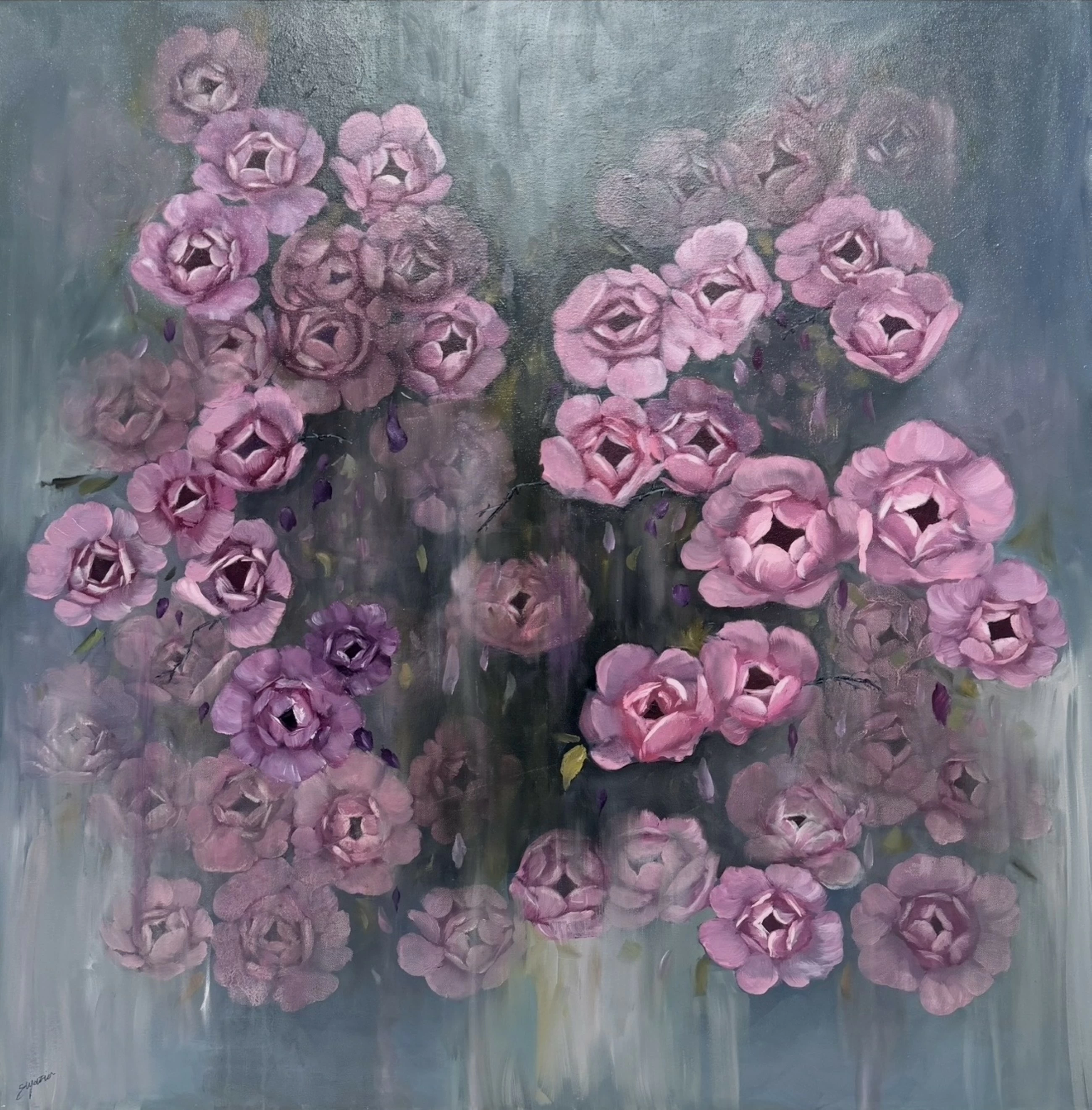
In Elyazia Aljassmi’s Flowers in Transformation, flowers form the central motif, representing renewal, hope and the capacity for growth. Across Blooming in the Ether, Between Beauty and the Wall and Emergence Amid the Ashes, they appear within shifting environments as symbols of resilience and transformation. Muna bin Suloum’s Roots, Light and Memory explores tree trunks as symbols of rootedness, stability and connection to the land. Her works move from forest landscapes and natural wood to gold, metal, mirrors and an interactive sculptural installation, inviting audiences to encounter the work physically, while engaging with fragments of poetry and personal memory.
Rooted Patterns: Contemporary Emirati Narratives offers a meeting point between heritage and contemporary artistic practice. New visual narratives are created from old memories and ancient experiences. An AI Overview notes that artists use history, traditional crafts and local symbols, to shape modern identities. Instead of treating the past as fixed, creators recontextualise heritage to address modern social, political, and global themes. Ancestral stories are blended with current realities to explore personal and regional roots; traditional techniques like weaving, metalwork, and calligraphy are repurposed into modern sculptures and mixed-media installations; contemporary works often question or re-examine historical narratives, turning static heritage into a living conversation.
Regional hubs, exemplified by events like Sharjah Biennial and Art Dubai, foster continuous exchanges between historical architecture, local heritage, and avant-garde expression. “Art that draws on cultural heritage often resonates deeply with audiences, evoking a sense of shared history and collective memory,” concludes Danielle Peleg Art Gallery. “These works can create powerful connections between the artist and the viewer, fostering empathy and understanding.” As an independent art centre in Sharjah, Aswar brings together art education, research, artistic production, exhibitions and cultural dialogue. Through its programmes, it creates opportunities for artists to develop their practices, experiment with new ideas and engage with audiences and the wider art community.