Dubai Culture and KHDA join hands for Arts in Dubai’s education system
- Last updated: August 10, 2026 | 09:46


Muhammad Yusuf, Features Writer
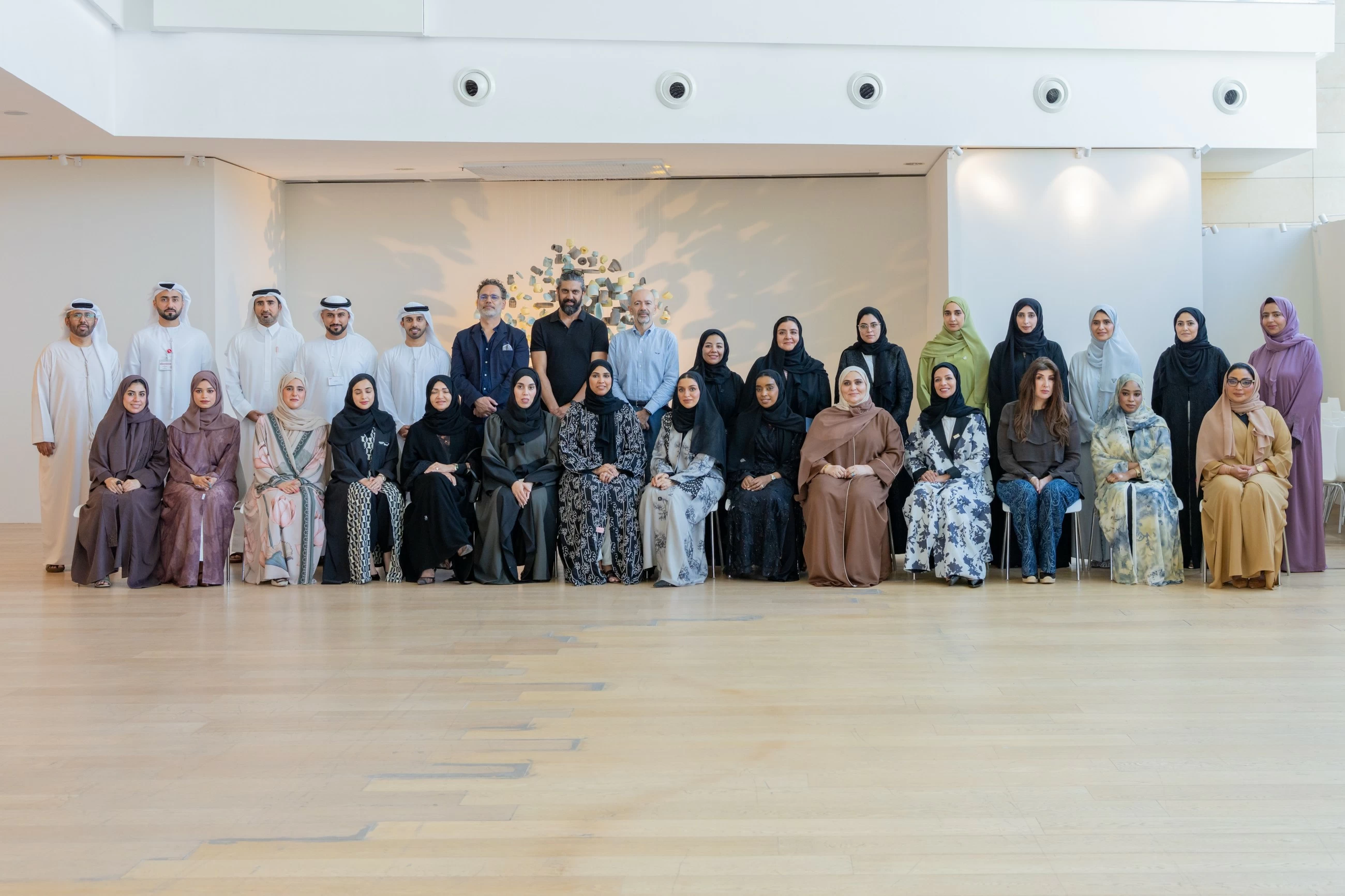
As part of its efforts to strengthen the role of the arts in education, Dubai Culture & Arts Authority (Dubai Culture), in collaboration with the Knowledge and Human Development Authority (KHDA), organised a brainstorming session titled ‘Innovation Lab: Integrating Arts and Design into the Educational System.’ The session explored mechanisms for embedding arts and design into private school curricula, while developing an integrated framework to identify, nurture and empower talented students. The initiative forms part of Dubai Culture’s ongoing efforts to advance creative education, equip future generations with the skills required for innovation, and reinforce Dubai’s position as a global centre for the creative economy.
Held at the Al Jalila Cultural Centre for Children, the session brought together senior leaders and employees from Dubai Culture and the KHDA for a series of in-depth discussions on the current state of arts and design education in schools, as well as the key opportunities and challenges associated with advancing creative education. Participants explored ways to integrate creative writing, music, theatre, visual arts, design, culinary arts, project-based learning and extracurricular reading into school curricula to support the early identification and development of young talent.
The session further reviewed existing creative programmes implemented in schools, alongside international best practices and successful models that could be adapted for Dubai, helping strengthen the education system and create a learning environment that fosters creativity and innovation. The event concluded with several key recommendations, including conducting a comprehensive study to identify policies and programmes that could be implemented across schools, mapping opportunities for collaboration and partnerships with relevant stakeholders, and defining priority initiatives for the short and long term.
Participants emphasised the importance of developing a shared vision for the future of arts and education in Dubai, in line with the emirate’s ambition to build a knowledge- and innovation-driven creative economy. Ahlam Al Bannai, Director of the Al Jalila Cultural Centre for Children, said that the session represented an important step towards developing a shared vision that strengthened the presence of the arts in education and creates opportunities for students to discover their talents and abilities from an early age.
She said: “The arts are a fundamental pillar of an education system capable of preparing future generations with the skills of innovation, critical thinking and creative expression, enabling them to meet the demands of the future. This reflects Dubai Culture’s commitment to developing an integrated education ecosystem that positions the arts as an essential part of the learning experience, while nurturing creative talent and supporting the continued growth of the creative economy.
“The outcomes of the session will help define priorities for the next phase of work and strengthen collaboration among relevant stakeholders, ensuring the development of high-impact initiatives that deliver sustainable outcomes for the education sector.” In a study, the American Academy of Arts and Sciences said that “arts education plays a vital role in the personal and professional development of citizens and, more broadly, the economic growth and social sustainability of communities.”
It found that arts education built well-rounded individuals; broadened understanding and appreciation of other cultures and histories; supported social and emotional development; built empathy, reduced intolerance, and generated acceptance of others; improved school engagement and culture; developed valuable life and career skills; and strengthened community and civic engagement. Arts education uniquely gives students the opportunity to engage with the past in a way that brings history to life and goes beyond textbooks, the study added. Expanding the curriculum beyond the Western-centric canon also furthered opportunities for deeper understanding and appreciation across cultures.
Research has shown that arts education not only increases historical knowledge, but also historical empathy, opening up a deep understanding of what it was like to live in different times and places. Art spans time and space and opens a window into experiences distant from us. From the cave paintings of Lascaux to Hokusai’s The Great Wave to Lin Manuel Miranda’s Hamilton, the arts document the richness of human history, preserved for future generations to contemplate and build upon.
An AI Overview points out that arts education in the United Arab Emirates is expanding rapidly, as the nation positions itself as a global cultural hub. Schools across public and private sectors increasingly integrate visual arts, music, and drama to foster critical thinking, creativity, and balanced student development. While basic art and music form part of early State curricula, private international schools often provide robust facilities such as specialised design studios, large auditoriums, and immersive IB or British arts pathways.
Programmes like the A.R.M. Holding Children’s Programme in partnership with Art Dubai, bring artist-led workshops to tens of thousands of students across UAE schools. A.R.M. Holding Children’s Programme is the UAE’s largest cultural education initiative. It connects prominent international and regional artists with over 15,000 students across 100+ schools nationwide through hands-on, creative workshops designed for ages 5 to 17. Proximity to major institutions like Louvre Abu Dhabi gives students unique out-of-classroom inspiration. The arts have always been a rich part of the Arab world’s history and culture. Islamic art dating back to the seventh century, is still celebrated today for its immense impact on architecture, painting, crafts and literature.