Rock legend Bruce Springsteen returns to his home with new exhibition
- Last updated: June 16, 2026 | 08:45


Rock legend Bruce Springsteen is one of New Jersey’s most famous native sons, and the Garden State is honouring The Boss with a new museum that celebrates his legacy and the history of American music. The venue is located in Long Branch, where the 20-time Grammy winner was born. It’s just a stone’s throw from Asbury Park, the once blue-collar coastal town that was the icon’s stomping ground and shaped his musical identity.
Spread over two levels, the Bruce Springsteen Center for American Music, which opened on saturday, has a floor dedicated to US genres including blues, country, hip-hop and jazz. There is also a heavy emphasis on celebrated voices of protest in music including Woody Guthrie, Bob Dylan, Nina Simone, Public Enemy, Kendrick Lamar and Springsteen himself.
“I’m the one of a long line of messengers,” Springsteen – a leading voice of opposition to President Donald Trump — says in a 25-minute film shown to visitors on arrival. “The stories that Bruce tells in his book ‘Born to Run,’ and of course in his lyrics, really became the inspiration for a lot of design choices here,” said Jared Gilbert, an associate at the CookFox architectural firm, which led the project.
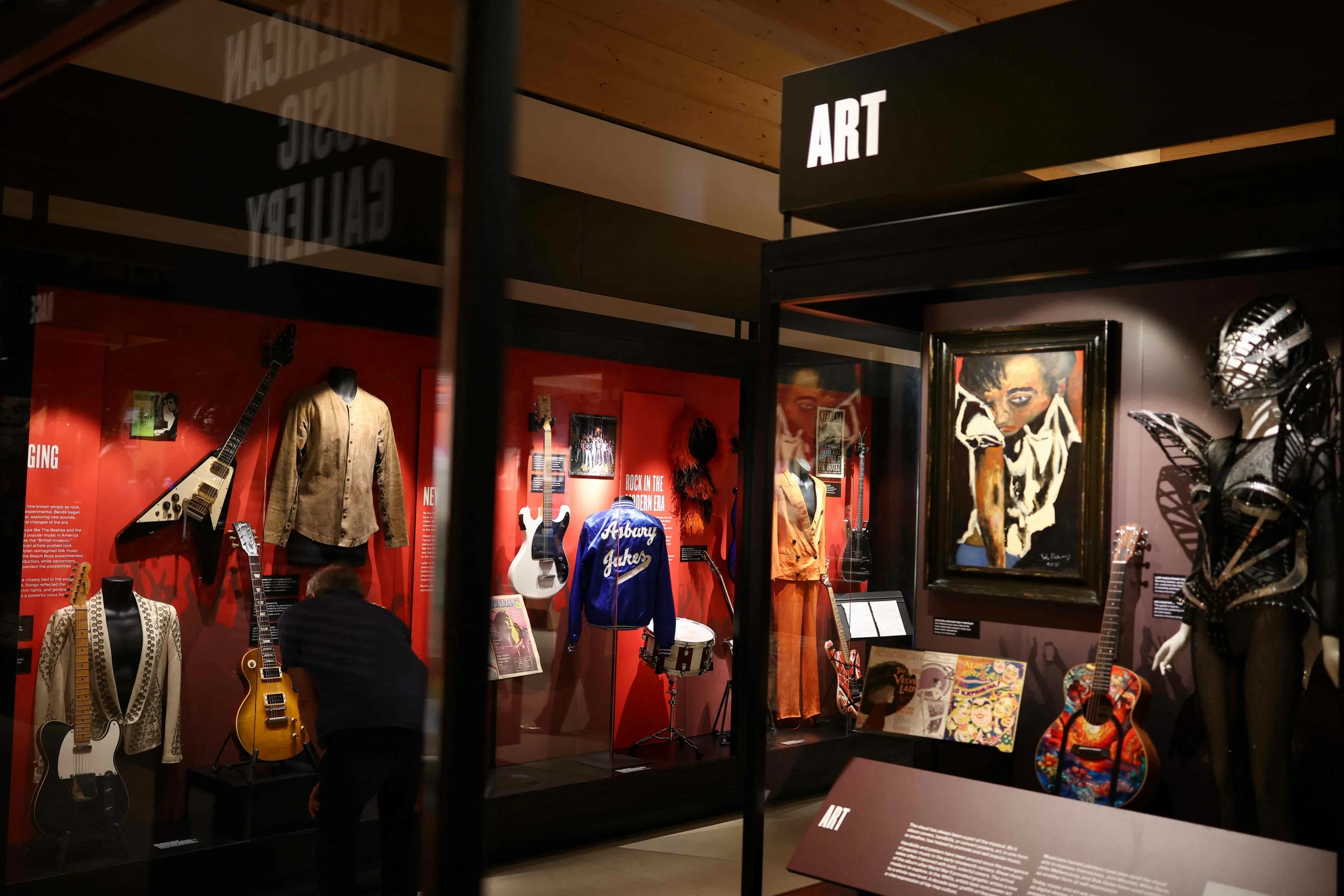
Exhibits include a gold jacket that belonged to Elvis Presley, a saxophone used by John Coltrane, an Eddie Van Halen guitar, and a Chuck D cap. The items were loaned to the centre by the artists or their estates, said executive director Bob Santelli, a close friend of Springsteen. “It was relatively easy for me to go and make a phone call and say we’d like to borrow this or like to borrow that,” Santelli said.
Bruce’s name goes a long way.” The museum, which cost $53 million and will host Springsteen’s archives, was largely financed through donations from “Springsteen fans with means,” Santelli added.
Listening stations and touchscreens allow visitors to navigate the full range of styles and eras, although there are notable omissions such as disco, funk, house and techno. “Unfortunately we were running out of space,” said collections director Melissa Kozlowski.
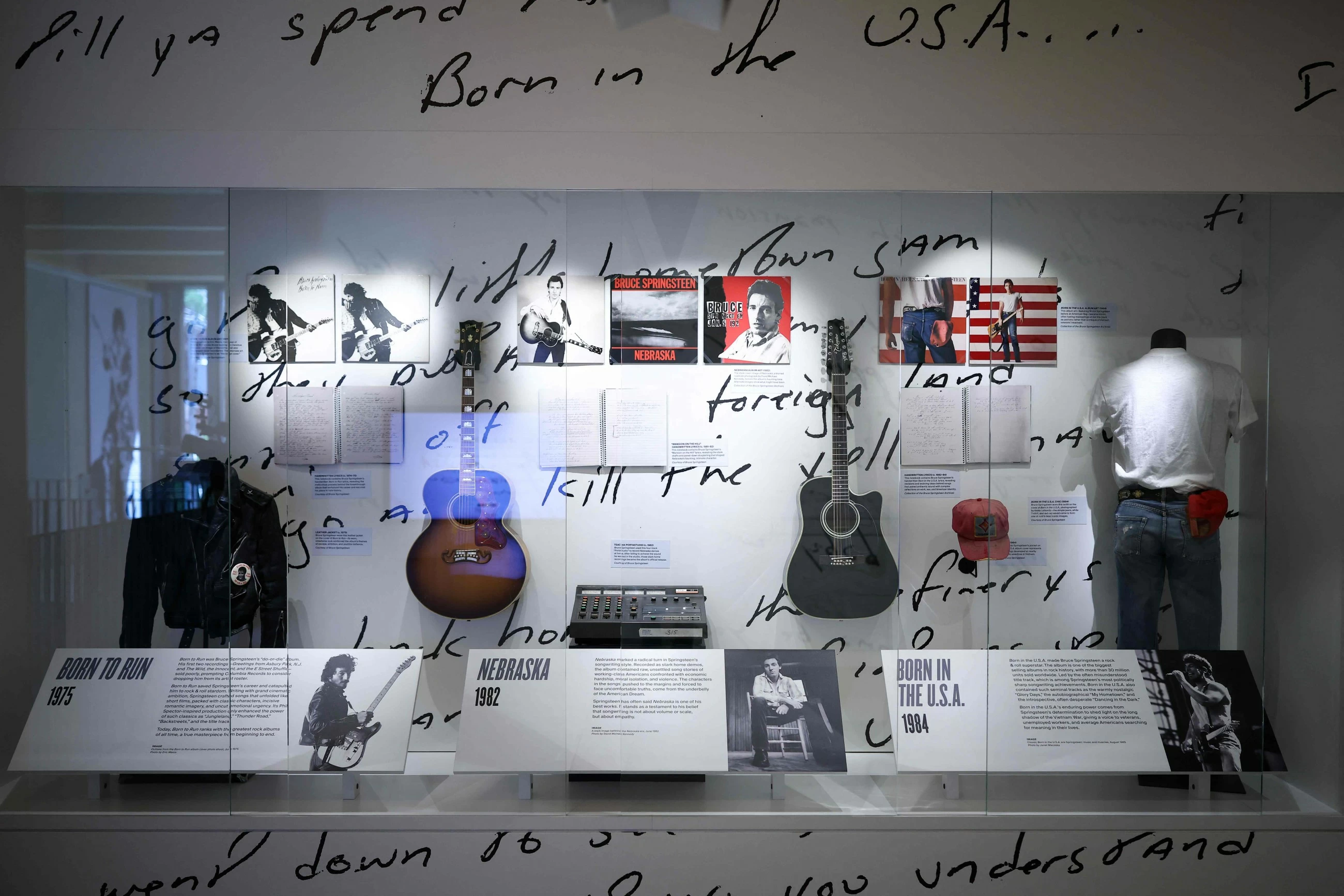
Upstairs, the story of Springsteen’s first concerts on the campus of Monmouth University is told. The formation of his E Street Band follows, as does his breakout in the mid-1970s, and the triumph of his 1984 album “Born in the USA.” A large section is devoted to the album’s title track, still mistakenly regarded as a patriotic anthem by some, even though it was written to condemn US treatment of Vietnam War veterans.
A virtual library brings together some of the key books for the singer, who was a college dropout and recounts in a video that reading only became a passion when he was 28. In a replica studio, visitors mix their own tracks using a mixing desk.
Springsteen completed a 20-date US tour in May, using each appearance to rail against Trump, but the president’s name does not appear in the exhibits. “We strive to tell an apolitical, non-political story,” said Santelli. “Bruce’s personal political ideas are his, it’s not necessarily ours. “This is a very important subject in this country, which is why we have a new exhibit, a temporary exhibit, that opened with the building that will be there for about six months.” We call it “Chimes of Freedom: Politics, Protest and the Power of Song.”
Meanwhile, not to mention the sense of civic duty that has given meaning to his life’s work and helped him retain a relevant place in pop culture decades after his popularity peaked. Springsteen was a dominant commercial force in the “Born in the U.S.A.” 1980s, but he hasn’t had a Top 10 hit since “Streets of Philadelphia” in 1994. We still talk about him like he matters, though. That’s because he does. Not only on account of marathon shows that fill arenas and stadiums but also because — whether viewed as self-important, or profound — he sees it as his responsibility to make music that reflects and comments on the times, in the American vernacular music tradition that goes back to Woody Guthrie. Springsteen in 2026 has a man-on-a-mission quality akin to the era of “The Rising,” the album he wrote in response to the terrorist attacks on the World Trade Center in 2001.
In his 2016 “Born to Run” memoir, Springsteen tells the story of how he was driving in a state of shock after the towers fell. A guy who recognized him yelled, “Bruce, we need you!” That shout instigated “The Rising,” and focused a recording career that had been in midlife malaise. A quarter of a century later, Springsteen is again responding to what he sees as a call of duty and a need felt by his fan base — or at least those whose left-leaning politics mirror his own. The job, as he sees it, is to put forth a communal, compassionate vision of what America is and can be; an idea that that runs counter to a MAGA world view espoused by President Donald Trump.
Agencies