Pop-up art show gives Germans rare chance to explore President’s residence
- Last updated: June 10, 2026 | 08:45


A pop-up art show featuring contemporary art, including video and audio installations, photography and traditional oil paintings, is set to open at Germany’s Bellevue Palace this week before the German presidential residence closes for renovation. At a press preview on Monday, German President Frank-Walter Steinmeier said he was pleased that the mostly emptied-out Berlin residence was being opened to art and to the public.
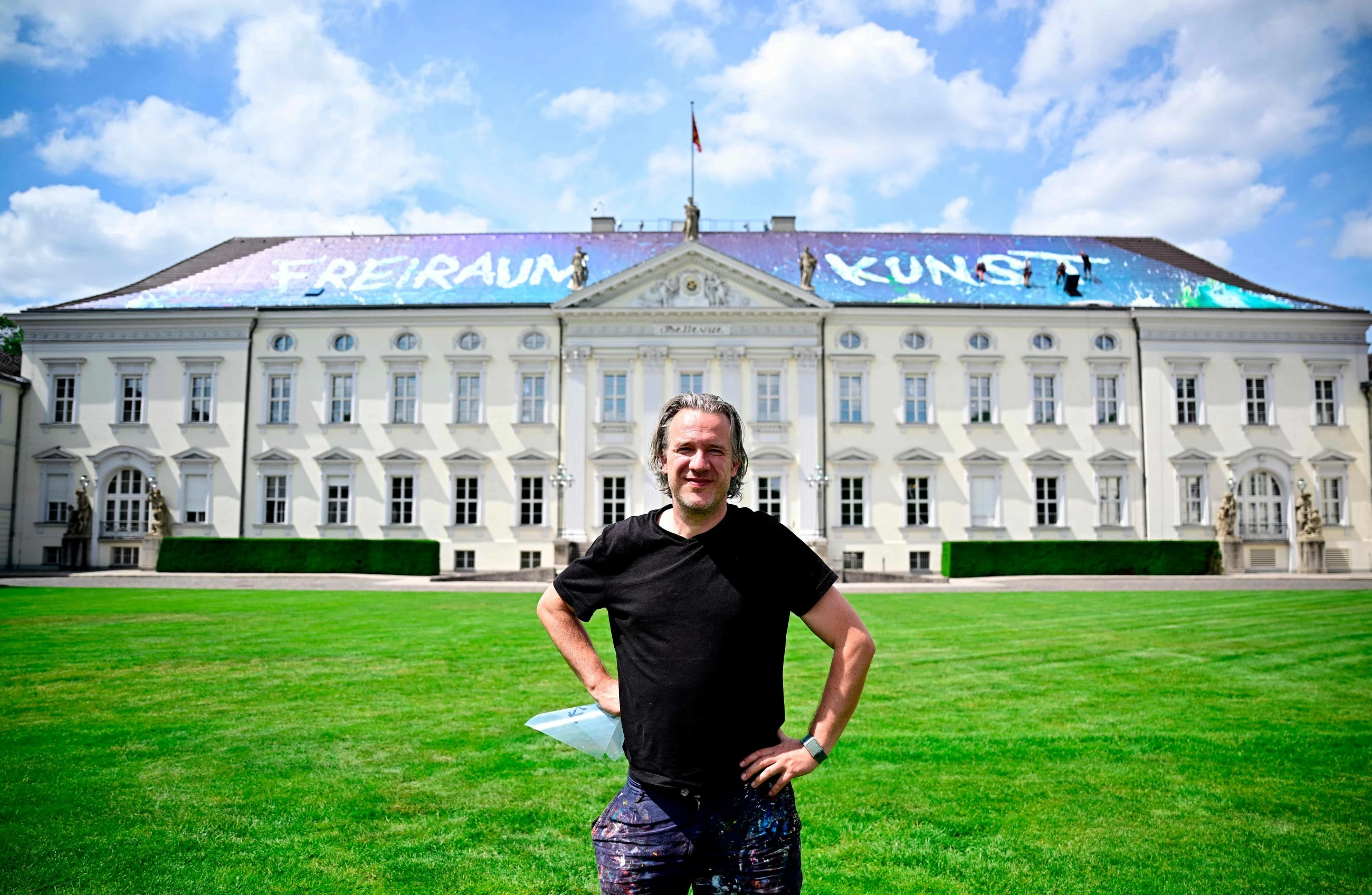
“We need art,” Steinmeier said. “A democracy without free art loses its capacity for self-criticism, and art without freedom loses its social relevance.” The former Prussian royal palace, built in the 18th century, is set to undergo extensive renovations, including a repair of the roof, a new air conditioning system and upgraded offices. The work is expected to last eight years, meaning Steinmeier is not expected to return to the residence. His second and final term ends next year. The pop-up show Freiraum Kunst, which roughly translates as “free art space,” was organised by the city’s Academy of Arts.
The president of the academy, Manos Tsangaris, thanked Steinmeier for the opportunity to use “these wonderful spaces.” “An opportunity like this to truly bring art to life is something we greatly appreciate,” he said. It opens to the public on Friday and runs until June 28.
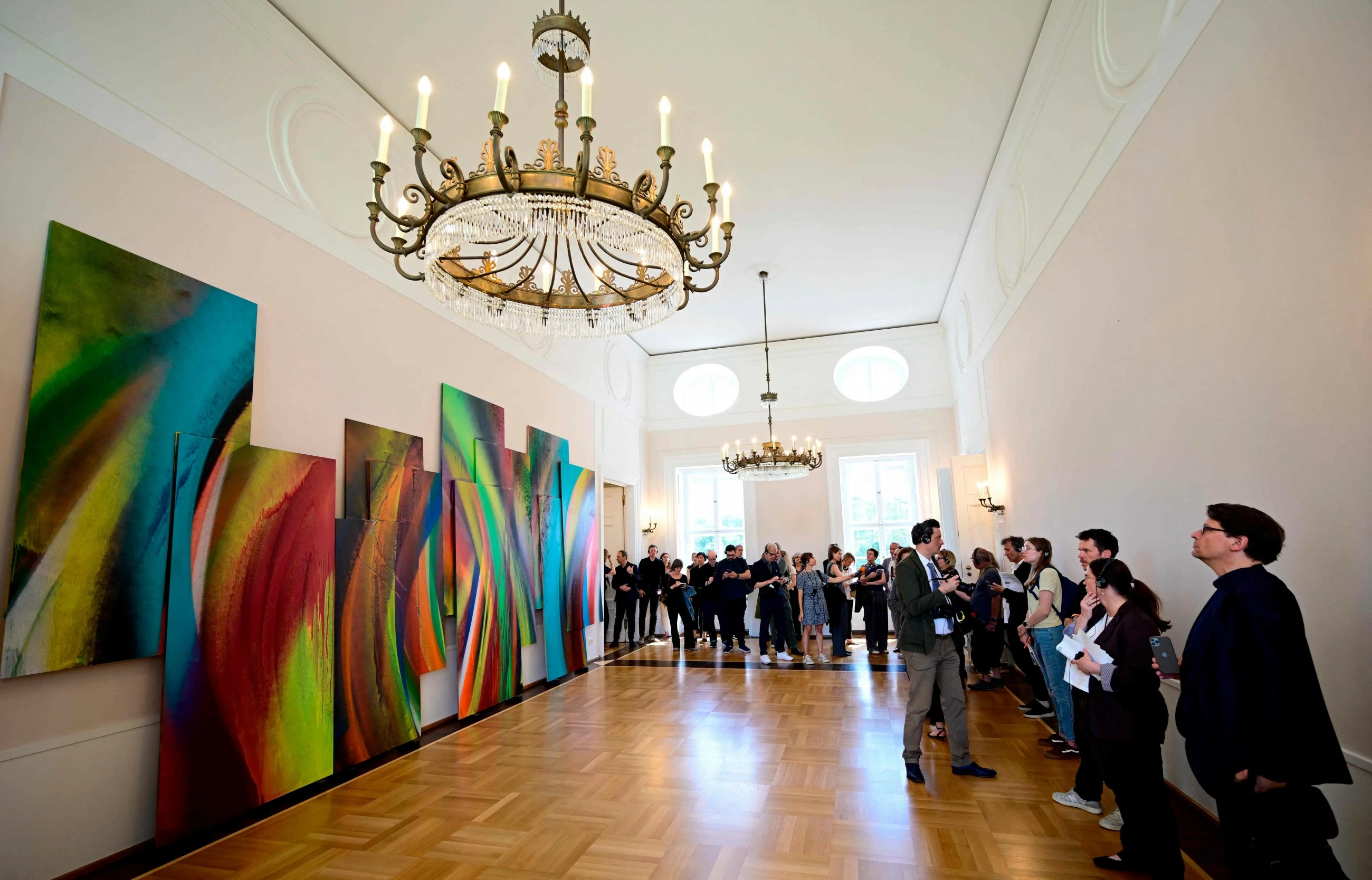
During this time, the president’s residency, which is normally not freely accessibly, will be open to anyone who manages to book a free ticket online. People’s interest in getting a glimpse inside the official presidential residence was so great that the website crashed just a few hours after it went live last month. The temporary art show is also certain to attract a lot of interest with works by well-known artists Katharina Grosse, Wolfgang Tillmans and Monica Bonvicini, among others.
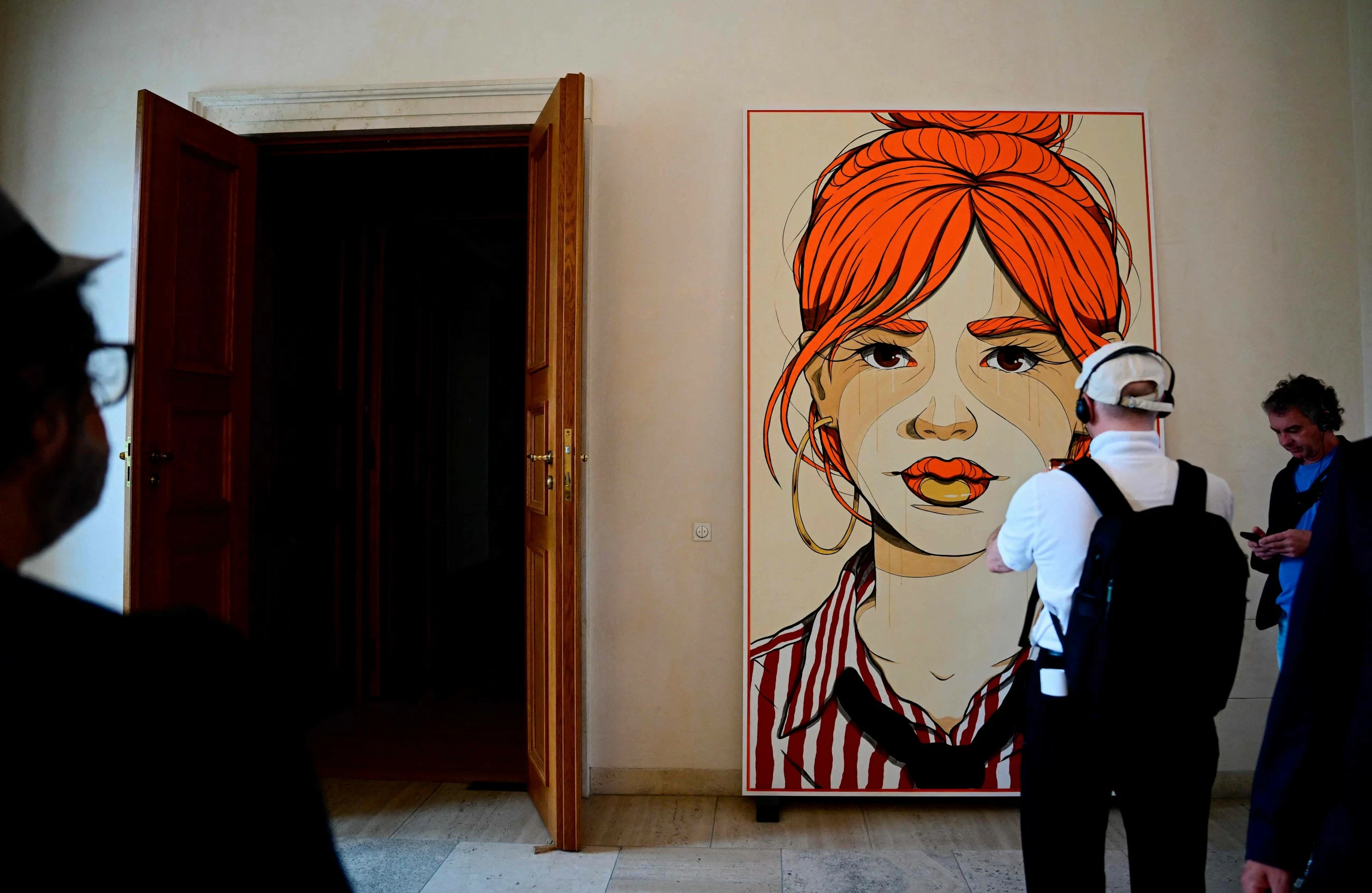
Upon entering the building, visitors will be able to see two paintings by artist El Bocho. The first one is an oversised portrait of a young woman with bright orange hair called “Die Bundespräsidentin,” or The Female President. Across from it hangs a painting of three faceless men in suits called “Die Alten” or “The Old Ones.” The question the artists wants to raise, said curator Anh-Linh Ngo, is why Germany has never had a female president so far.
In general, all artists were given a free hand in what messages they wanted to convey to the public and many used the opportunity to interact with the normally political space, the organisers said. Artist Karin Sander created a miniature sculpture of Steinmeier which she placed on a pedestal in the “political speeches room” — the only space the artists were asked to not alter as it has to stay untouched until moving day — in case the president needs to give an ad hoc political speech.
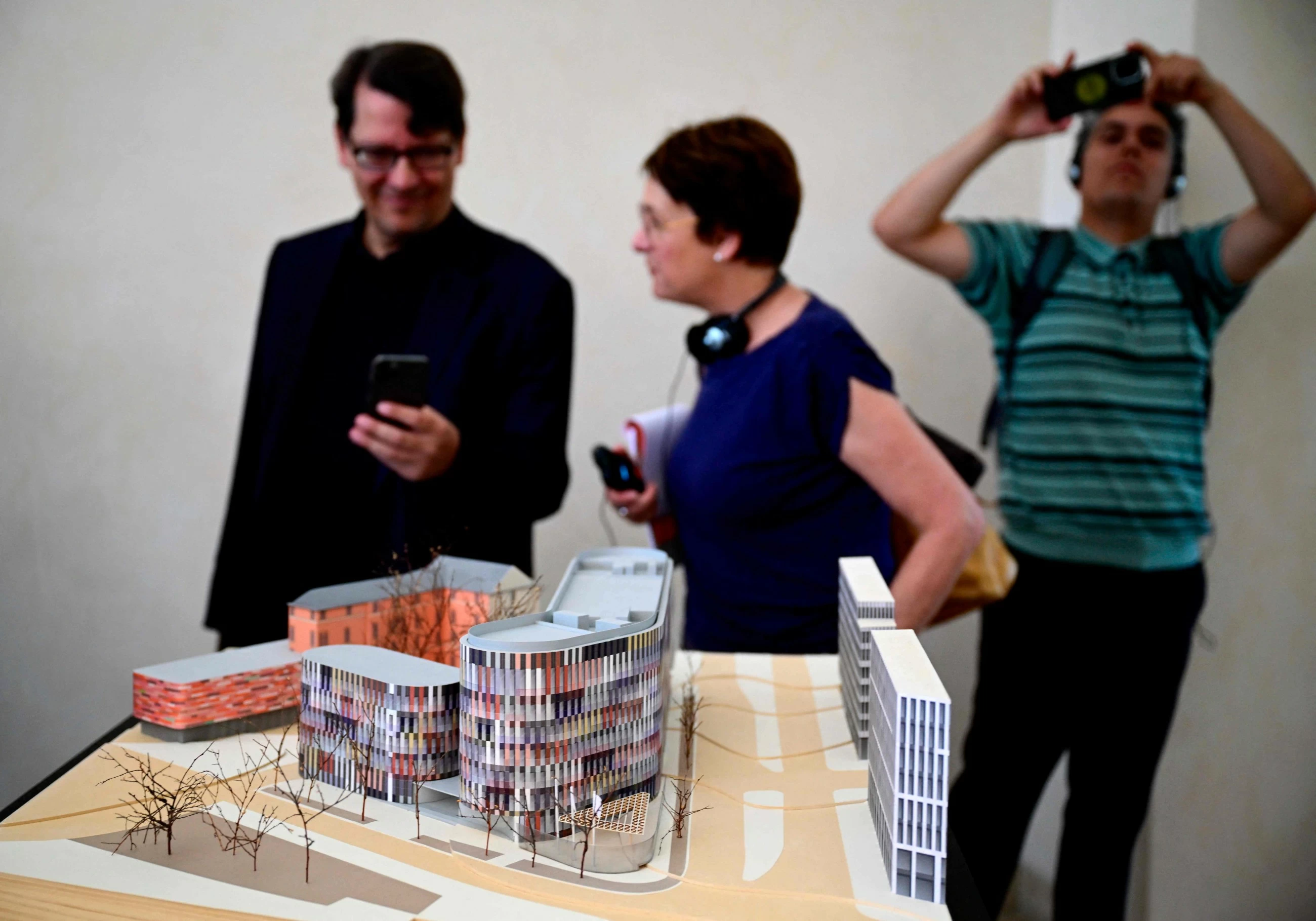
So now, a 36-centimetre tall sculpture of the president made of plaster stands on a pedestal in the center of the room under sweeping chandeliers and framed by light-blue silk curtains. It will keep that position until the real Steinmeier, whose role is largely ceremonial, either needs to give a speech or officially opens the president’s interim residency near Berlin’s central train station.
The overall move, which has already started, is expected to be finished by the end of the summer. Before visitors finish their art tour, they pass through the former lobby, where film screenings, dance and music performances and readings will take place. They will also be able to meet with the artists.
Meanwhile, Germans are more pessimistic about the economy than Europeans overall, prompting many consumers to save any extra income, according to a Boston Consulting Group study seen by Reuters on Tuesday. The consumer sentiment survey found that 64% of the roughly 1,800 respondents in Germany rated the current economic situation as poor, above the European average of 56%.
Four in 10 German consumers said they would save rather than spend any additional income, reflecting persistent concerns over inflation, energy costs and personal finances in Europe’s biggest economy. The BCG said 75% of German respondents saw high energy prices as a major burden, while 72% cited inflation. Some 78% expected prices to rise further over the next six months and around a third anticipated declines in income or savings.
Depending on the product category, discounts influence up to 74% of purchasing decisions, the study showed. In food, 55% of German consumers often or almost exclusively buy retailers’ own-brand products, compared with a European average of 39%. Sustainability has lost ground as a purchasing criterion, with only 17% of German consumers willing to pay more for sustainable products.
Agencies