Multidisciplinary artist Mahsa Shadras blends global influences with native roots
- Last updated: May 23, 2026 | 08:56


Muhammad Yusuf, Features Writer
Mahsa Shadras is an architect, jewellery designer and calligraphy painter, with over 15 years of work in the field. Born in 1983 in Tehran, she currently lives and works in Dubai. She did her PhD in Architecture in the European Graduate School in Switzerland, and after working as an architect and jewellery designer and establishing her own jewellery brand called Shadras Jewellery, she decide to revive her childhood passion, which was painting, especially by creating a new style. “My calligraphy painting is a spiritual process for me and I am inspired by Iranian and Islamic architecture,” Mahsa says. “I like to combine cultures and motives along with the poems of famous Iranian poets like Rumi and Hafez in a modern way, in acrylic on canvas.”
“My journey as an artist,” she continues, “is rooted in exploring the beauty of forms, colours and letters, merging traditional techniques with personal narratives. As an architect, jewellery designer and calligraphy artist, I bridge disciplines, bringing together different structures in one, single creativity. Art is an extension of myself — a space to explore, innovate, and connect with others on a deeply emotional level.” Mahsa Shadras speaks to Gulf Today
How are architecture, jewellery designing and painting related to calligraphy?
Architecture, jewellery design and painting, all share a deep connection with calligraphy through their emphasis on form, composition, and the expressive power of lines. Both architecture and calligraphy rely on proportion, rhythm, and balance. Jewellery, like calligraphy, transforms lines into art. Across these fields, calligraphy serves as a bridge between function and aesthetics, tradition and innovation, and is a fundamental part of my creative process.
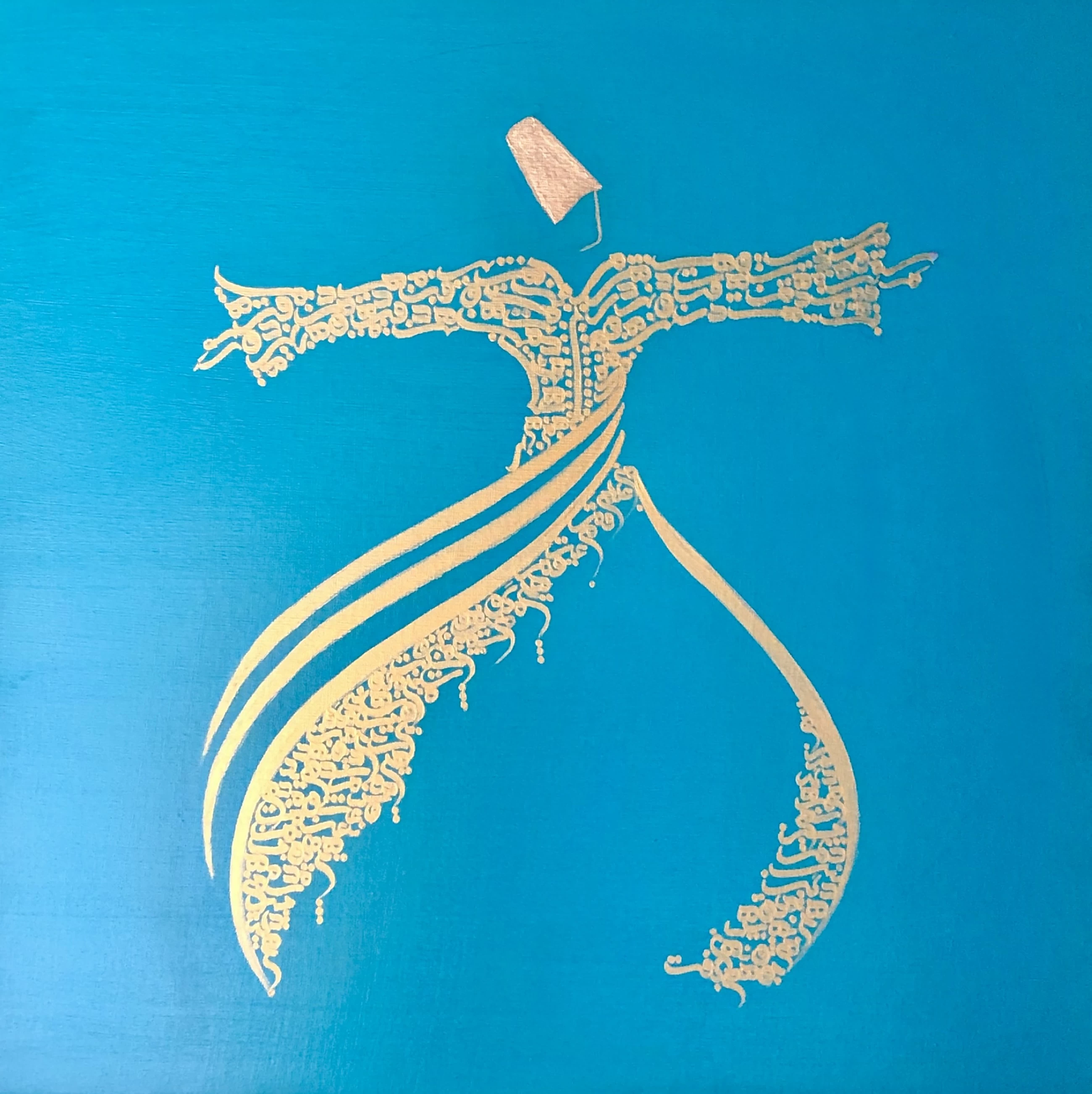
How does the poetry of Rumi and Hafez inspire your calligraphy?
Their verses are more than words; they are spiritual journeys. Rumi speaks of divine love, unity, and the soul’s longing, while Hafez explores beauty, mysticism, and the depth of the human heart. When I create calligraphy, I don’t just write their poems — I feel them. Each stroke becomes a form of meditation, a way of connecting with something bigger than myself.
What are the emotions, stories and philosophies behind your calligraphy?
I draw deep inspiration from the rich heritage of Iranian culture, Islamic motifs, and traditional architecture. I combine their traditional forms with a modern aesthetic, allowing the flow of letters to follow my feelings, transforming the canvas into a personal narrative.
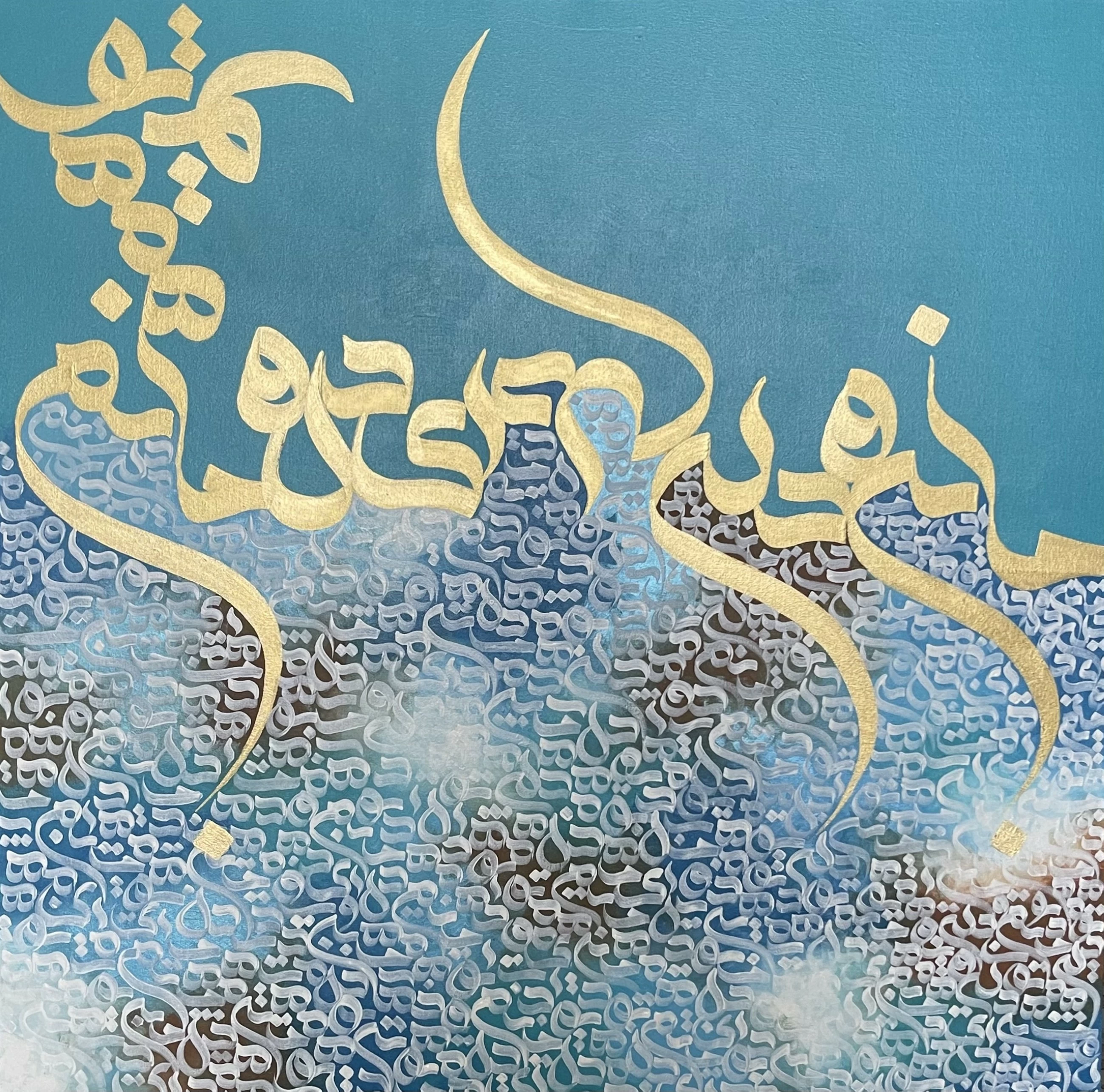
How has living and studying in Europe influenced your art?
Living and studying in Europe exposed me to a diverse range of artistic styles, philosophies and cultural expressions. The contrast between European minimalism and the ornate richness of Middle Eastern art, gave me the confidence to blend different aesthetics. My time in Europe allowed me to experiment more boldly with form, scale, and composition — leading to a more contemporary and expressive approach in my calligraphy.
How have Iran and the UAE impacted your art?
The beauty of Persian culture — especially classical literature, intricate motifs, and traditional forms of expression — flows through every piece I create. The UAE, on the other hand, has offered me a dynamic space to grow, explore, and express that heritage on an international platform. What makes it even more meaningful is how culturally connected we are — Arabic and Farsi share the same alphabet, and both cultures are deeply rooted in Islamic art and architecture. These shared foundations create a natural harmony in my work, allowing me to blend elements from both traditions, while embracing a contemporary style. My openness to new ideas here has encouraged me to push boundaries and present my calligraphy in a more modern, expressive way. It’s in the UAE that I’ve had the opportunity to bring my cultural story to a broader, international audience — and that has been truly empowering.
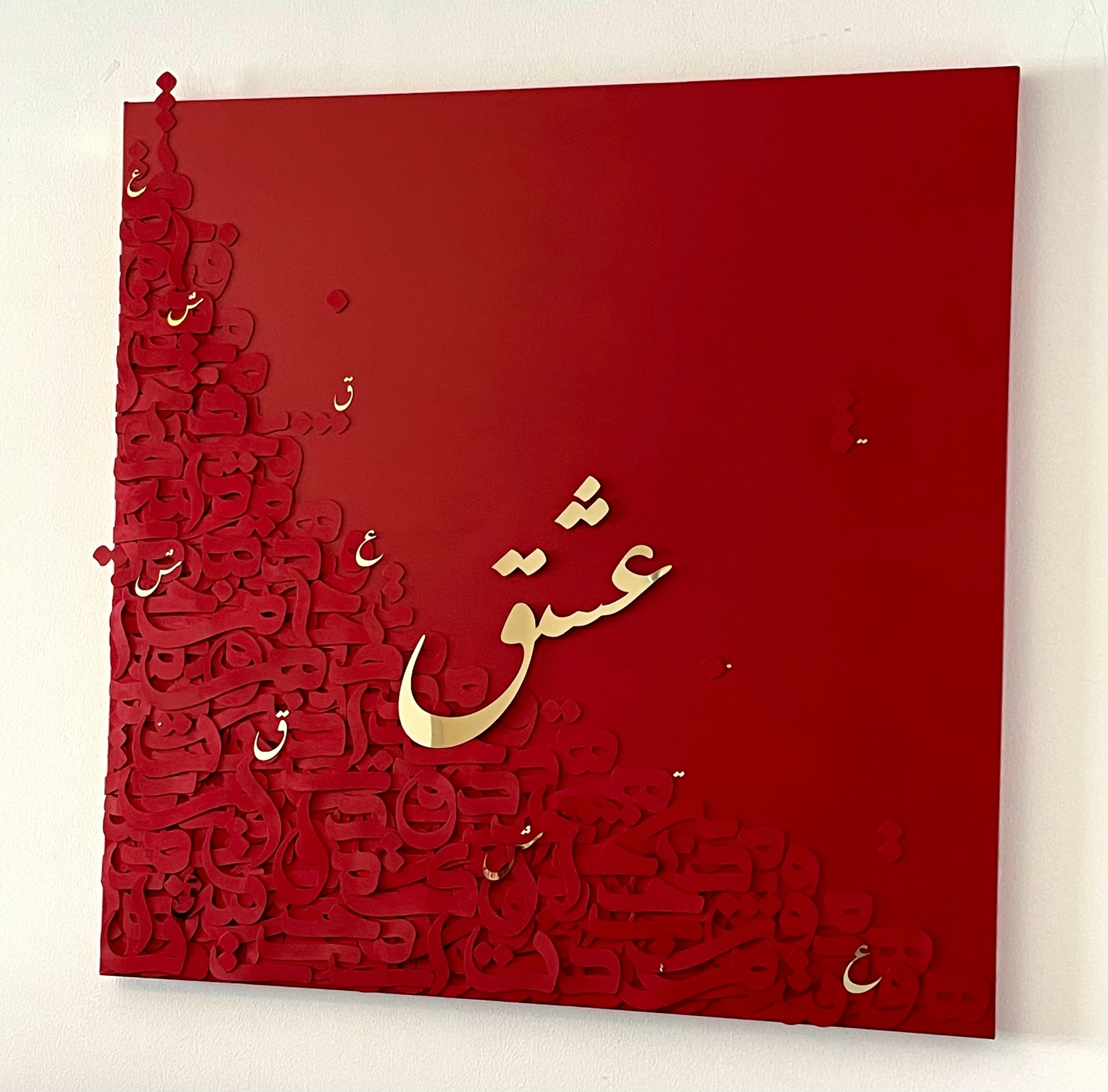
What is the feedback to your art?
Many viewers express a deep emotional connection to my work — even if they don’t read Farsi or Arabic. That’s something very special for me, because it shows how the visual language of calligraphy can speak across cultures. It touches me most is when someone sees a reflection of their own story or emotion in my work. The fusion of traditional calligraphy with a modern artistic approach resonates with a wide audience; collectors and art lovers are drawn to the symbolism, the flow of the letters and the stories woven into each canvas.
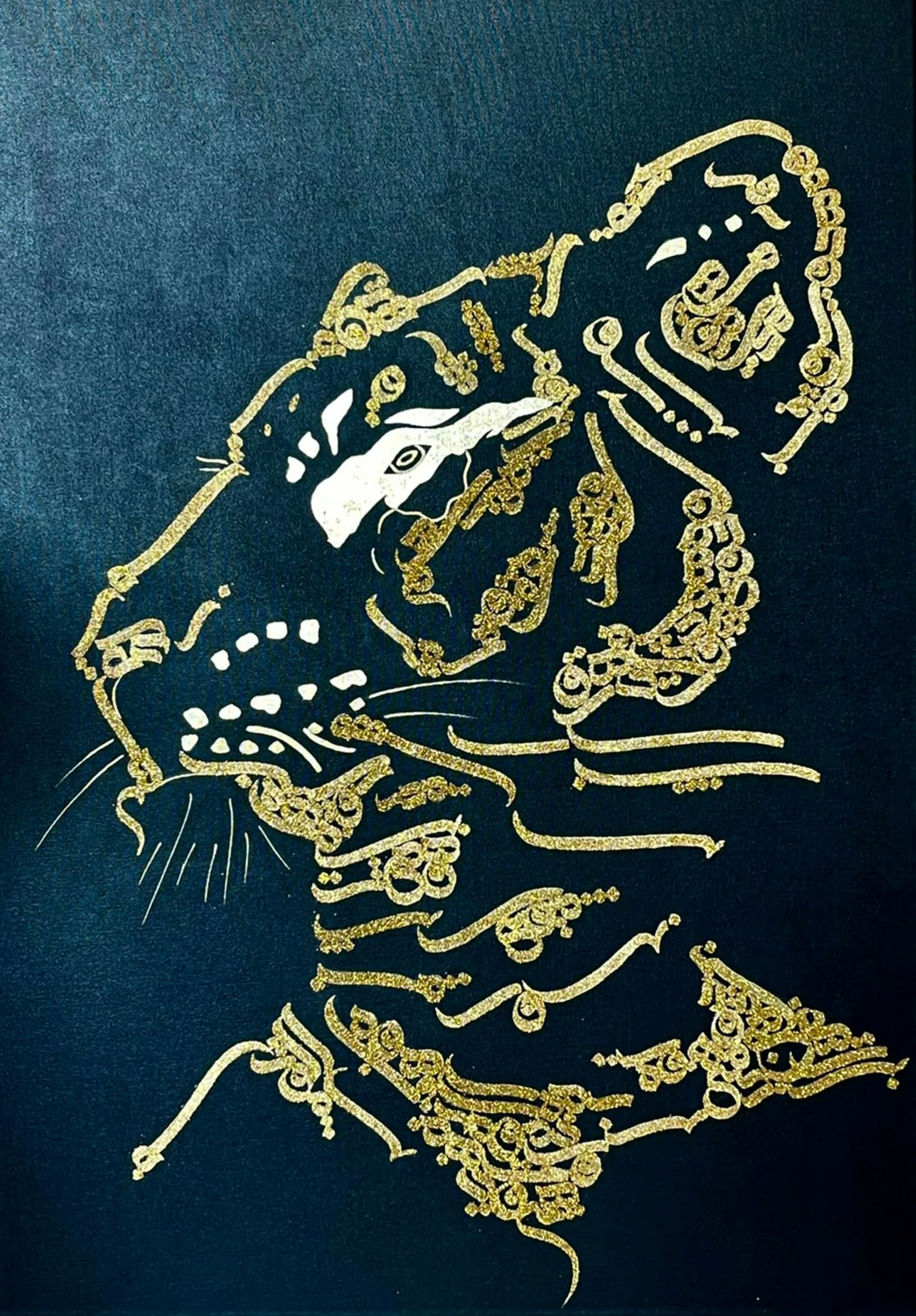
You have also blended pop art and calligraphy. What made you do this?
Blending pop art with calligraphy was a natural evolution for me — a way to bridge classical beauty with modern storytelling. Pop art, with its bold colours and contemporary figures, offered a fresh canvas to experiment on. The idea came from wanting to connect with a younger, more global audience, while staying true to my cultural roots. I love the tension between the expressive lines of calligraphy and the often playful imagery of pop art. It opens up new conversations — between East and West, tradition and innovation, word and image.
Why do you like to use gold in your work?
Gold, for me, is more than just a colour — it’s a symbol of timelessness, value, and inner light. I use it to highlight the emotional depth and spiritual essence behind the words and forms in my calligraphy. Gold also reflects light in a special way — it changes with the environment and the viewer’s perspective, much like the meaning of calligraphy itself, which is fluid, layered, and open to interpretation.