F.man’s ‘L’Accordo di Pace’ brings Abu Dhabi’s vision of peace to the Vatican
- Last updated: May 20, 2026 | 09:22


Muhammad Yusuf, Features Writer
Belgian visual artist F.man has created a work that brings one of Abu Dhabi’s most meaningful interreligious moments into the cultural and spiritual setting of the Vatican. Her light painting ‘L’Accordo di Pace’ (The Peace Agreement) can now be seen in a meeting room of Casa di Santa Marta, forming part of a wider artistic journey that links Abu Dhabi, Leuven (see below) and the Vatican through the universal language of peace. Casa di Santa Marta is a building adjacent to St. Peter’s Basilica in Vatican City.
The work is part of a diptych commissioned by the Belgian Church to help carry the message of Abu Dhabi’s historic and sacred peace moment into Europe. One painting was created for the Deanery of Leuven (Leuven is a city east of Brussels, Belgium), and a second work was intended for Pope Francis.
Following a delayed handover, the Vatican painting was placed at Casa di Santa Marta located in the Holy See on March 3, 2026, in the presence of representatives of the Church. More than a symbolic gesture, the placement gives the artwork a quiet but significant visibility in a place closely associated with dialogue, reflection and moral responsibility.
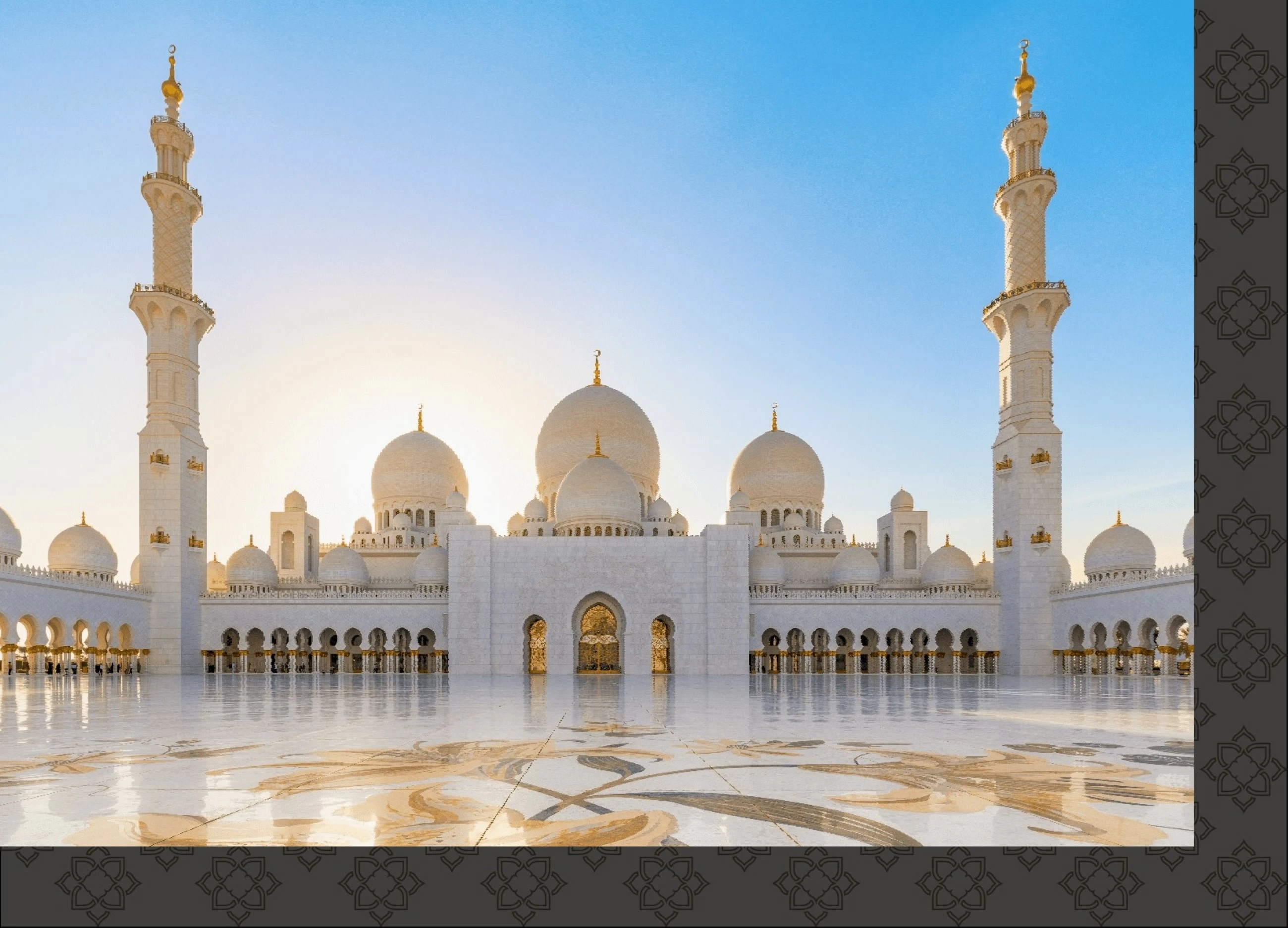
At the centre of ‘L’Accordo di Pace’ is the historic meeting in Abu Dhabi between Pope Francis and the Grand Imam of Al-Azhar, Ahmed Al-Tayeb, the co-authors of the landmark Document on Human Fraternity for World Peace and Living Together, signed in Abu Dhabi on February 4, 2019. The unprecedented pledge serves as a blueprint for interfaith dialogue, mutual respect, and global peace between the Catholic and Islamic worlds. The Document, which is also known as the Abu Dhabi declaration or Abu Dhabi agreement, supports human compassion and solidarity. The signing event was a moment that gave global visibility to fraternity, coexistence and interreligious dialogue.
The initiative, supported by His Highness Sheikh Mohammed bin Zayed Al Nahyan, became one of the defining cultural and spiritual milestones of the UAE’s message of tolerance. For F.man, who was personally present in Abu Dhabi during that period, the event was not only diplomatic or religious “but became part of a larger human memory,” according to her. Through art, she has now transformed that memory into an image that can continue to travel, speak and be seen. This is where ‘L’Accordo di Pace’ composition gains a deeper significance.
The work does not simply commemorate a meeting; it gives visual form to a message that is gaining urgency by the day. At a time when conflict and mistrust take up too much space in global communication and conversation, the painting asks viewers to remember that dialogue is possible, coexistence can be chosen as a way of life, and peace must remain an absolute constant in public consciousness.
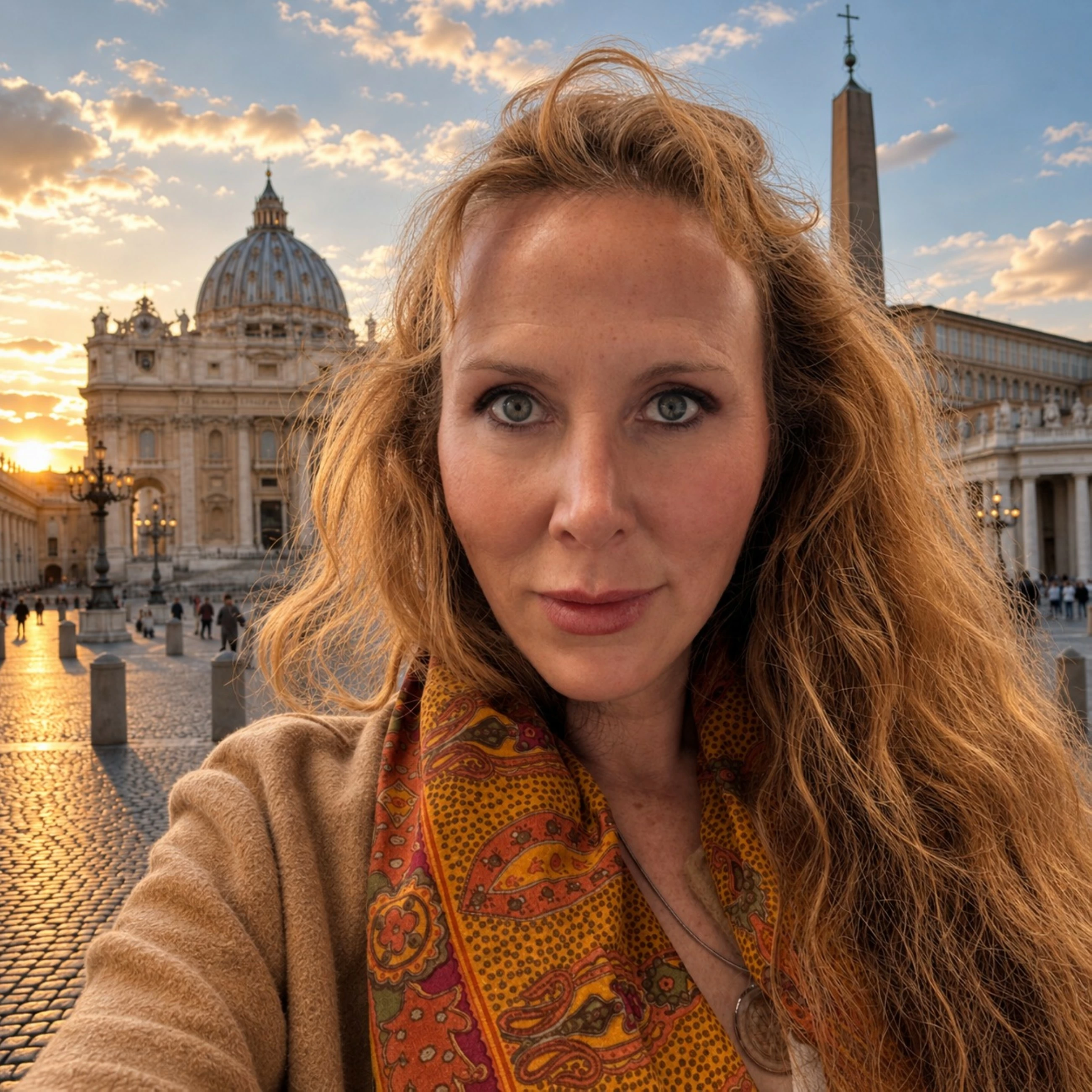
F.man’s practice has long been rooted in transformation. Born in Brussels and working between the UAE and Europe, she combines painting, sculpture, photography, performance, digital art, light art and technology, to produce innovative works of art. Many of her works change according to light and time, revealing different layers and meanings. Her UAE journey includes commissioned presentations at the Etihad Museum Dubai; a UAE Majlis installation for Sikka in Al Fahidi, which drew appreciation from Sheikha Latifa bint Mohammed bin Rashid Al Maktoum on Instagram; the Rainbow Tunnel installation at Louvre Abu Dhabi; the Belgian Pavilion at World Expo Dubai 2020; and Sky Art at Dubai’s Gold Souk, curated by F.man, and described as Dubai’s “first open-air museum”.
Her public-art vocabulary is central to her vision of peace. In Dubai, the 120-metre Transformation Wall at Al Warqa City Mall brought renewal, butterflies and rebirth into everyday public space after a period of global uncertainty. In Antwerp, HeavenGate placed her changing light-based painting directly into the urban fabric, while KeyGate in Monaco extended her dialogue between light, architecture and symbolic passage. The link with Louvre Abu Dhabi is worth particularly noting. In 2018, F.man created the Rainbow Tunnel, an immersive passage conceived as a bridge between worlds and cultures. Located close to the Abrahamic Family House, the Rainbow Tunnel was in direct conversation with the UAE’s vision of coexistence. ‘L’Accordo di Pace’ now extends that vision from Abu Dhabi to the Vatican.
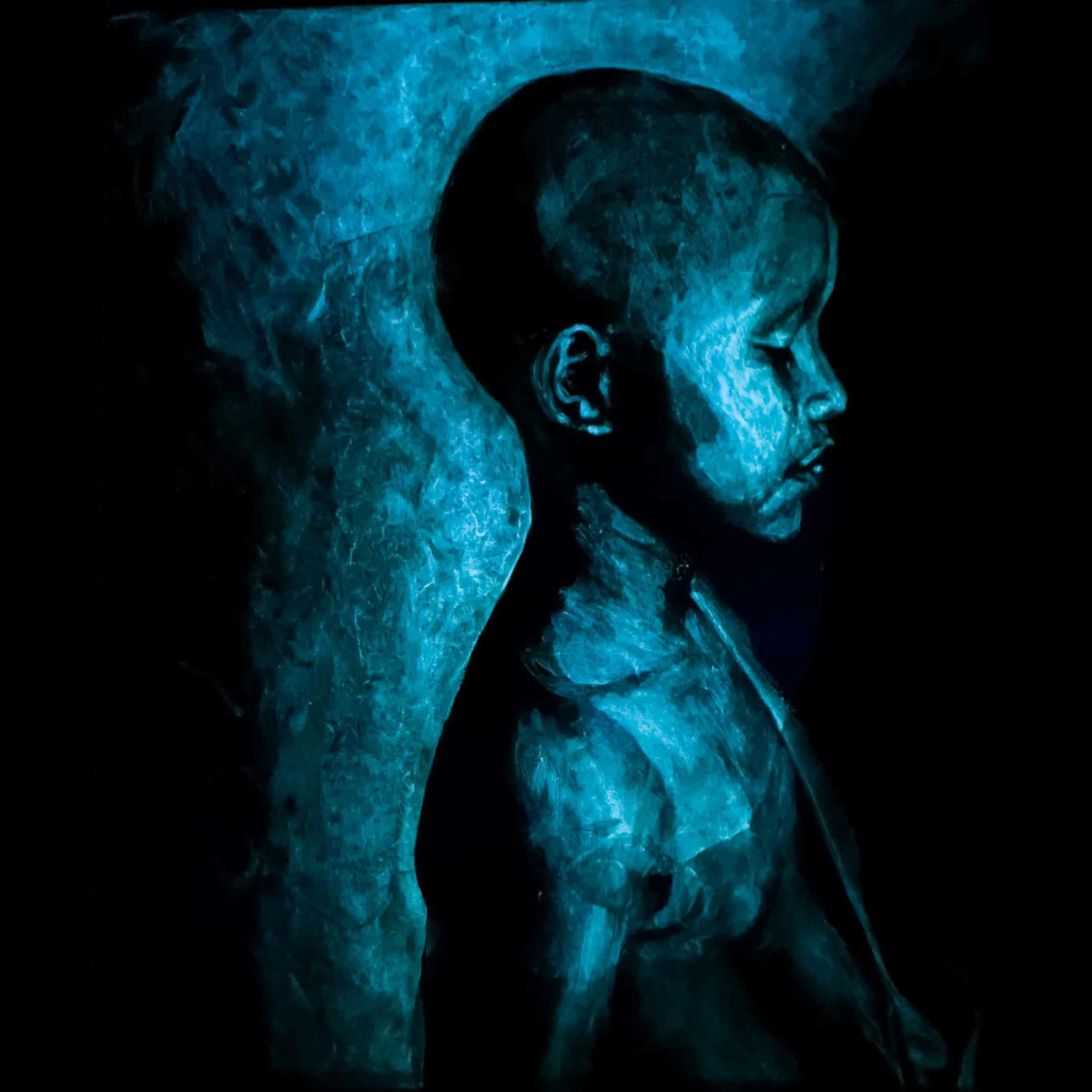
The painting itself changes under different light conditions. In daylight, it shows friendship beneath a bright blue sky. Under UV light, it reveals an energy field with the message “All brothers and sisters”, in nine languages. At night, a meditating child appears, radiating purity and illuminating the space as a symbol of universal connectedness. The layered vision is at the heart of the work. It reflects the meaning of peace itself — something that must be seen from more than one perspective. “Peace needs daylight, hidden light and inner light. It requires public gestures, but also private reflection,” says F.man.
With ‘L’Accordo di Pace’, F.man positions art as a bridge between memory and responsibility. Across her UAE and European trajectory, her work has consistently explored how art can connect cultures, histories and spiritual perspectives. “Peace means an essential right to exist,” she says. And in this sentence lies the kernel of ‘L’Accordo di Pace’. Peace is more than mere sentiment or diplomacy but a fundamental human choice and right, and, through art, can be made visible and enduring.