For Roya Vahidi art provides a canvas for emotional connection and dialogue
- Last updated: May 9, 2026 | 09:29


Muhammad Yusuf, Features Writer
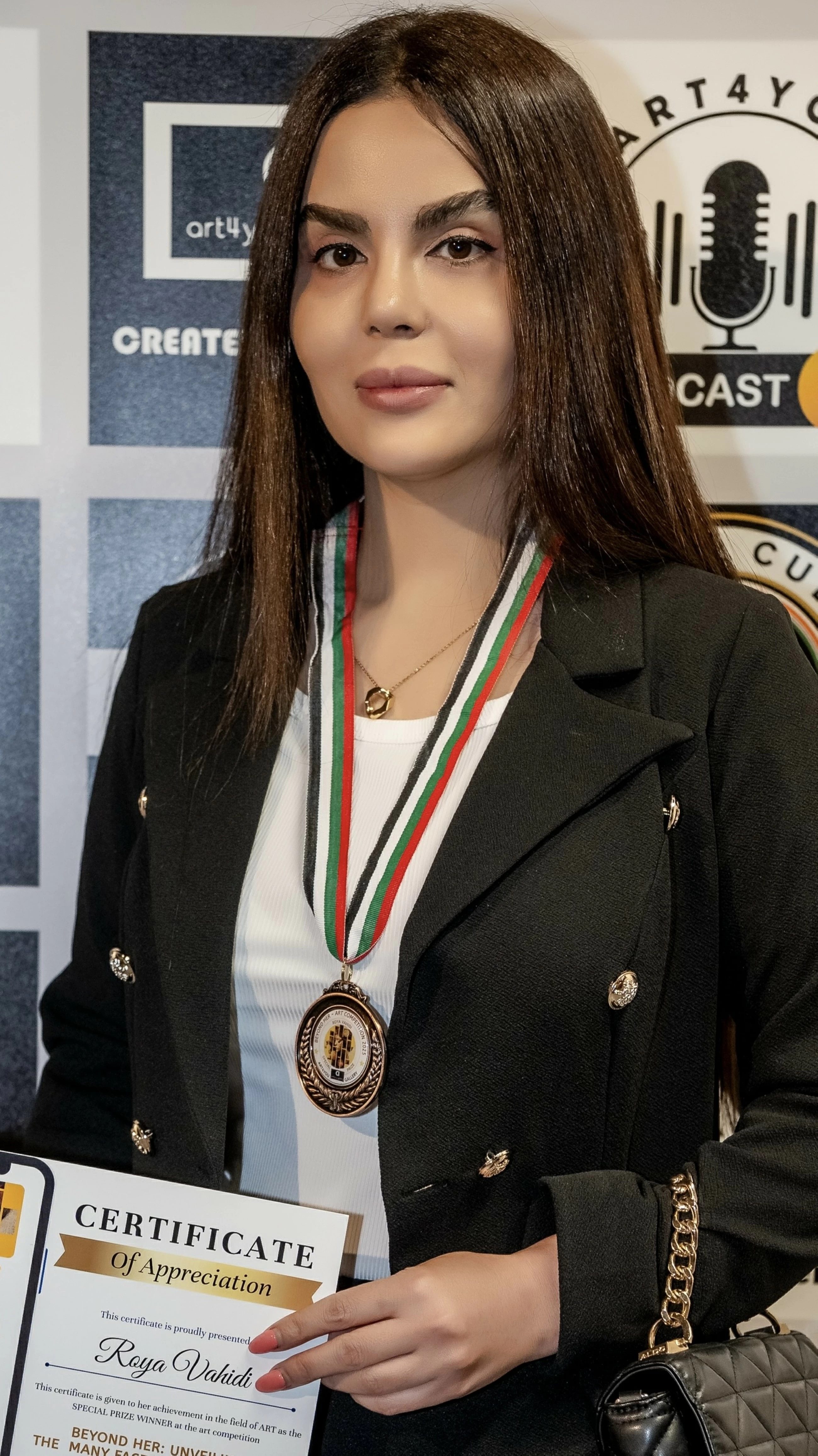
Roya Vahidi is an Iranian-born visual artist based in Dubai. “My artistic journey began in childhood through a deep emotional connection with colours, storytelling, and visual expression,” she says. “For me, art became far more than a creative practice; it evolved into identity, purpose, and a lifelong commitment.” Art allowed her to express emotions, experiences, and gave space to her to narrate untold stories in an authentic and meaningful way. Her work explores themes of women, resilience, inner strength, emotion, and human connection, while inviting viewers to discover their own interpretations within each piece.
Rather than offering fixed meanings, Roya believes art should create emotional dialogue and reflection. With international exhibitions, cultural collaborations, memberships, recognitions, and participation in globally recognsed art initiatives and world-record events, and proficient in drawing, illustration, mixed media, graphic, set and costume design, Roya continues to expand her artistic presence across the UAE, Europe, and Asia. She speaks to Gulf Today
Why do you like colour?
Colour has always been one of the most emotional parts of my artistic language. But I do not look at it as fixed preferences or decorative elements because, for me, every colour carries a different emotional weight and meaning. I believe all colours are beautiful in their own place, when they truly belong to the feeling and atmosphere of the artwork. In my process, colour is deeply connected to emotion, memory, silence, tension, strength, or even vulnerability. Sometimes an artwork needs softness and stillness, while another piece asks for contrast, intensity, or emotional depth. Because of this, my palette constantly changes, depending on the inner world of each work. I see colour as something that gives meaning to feeling and helps transform emotion into a visual experience.
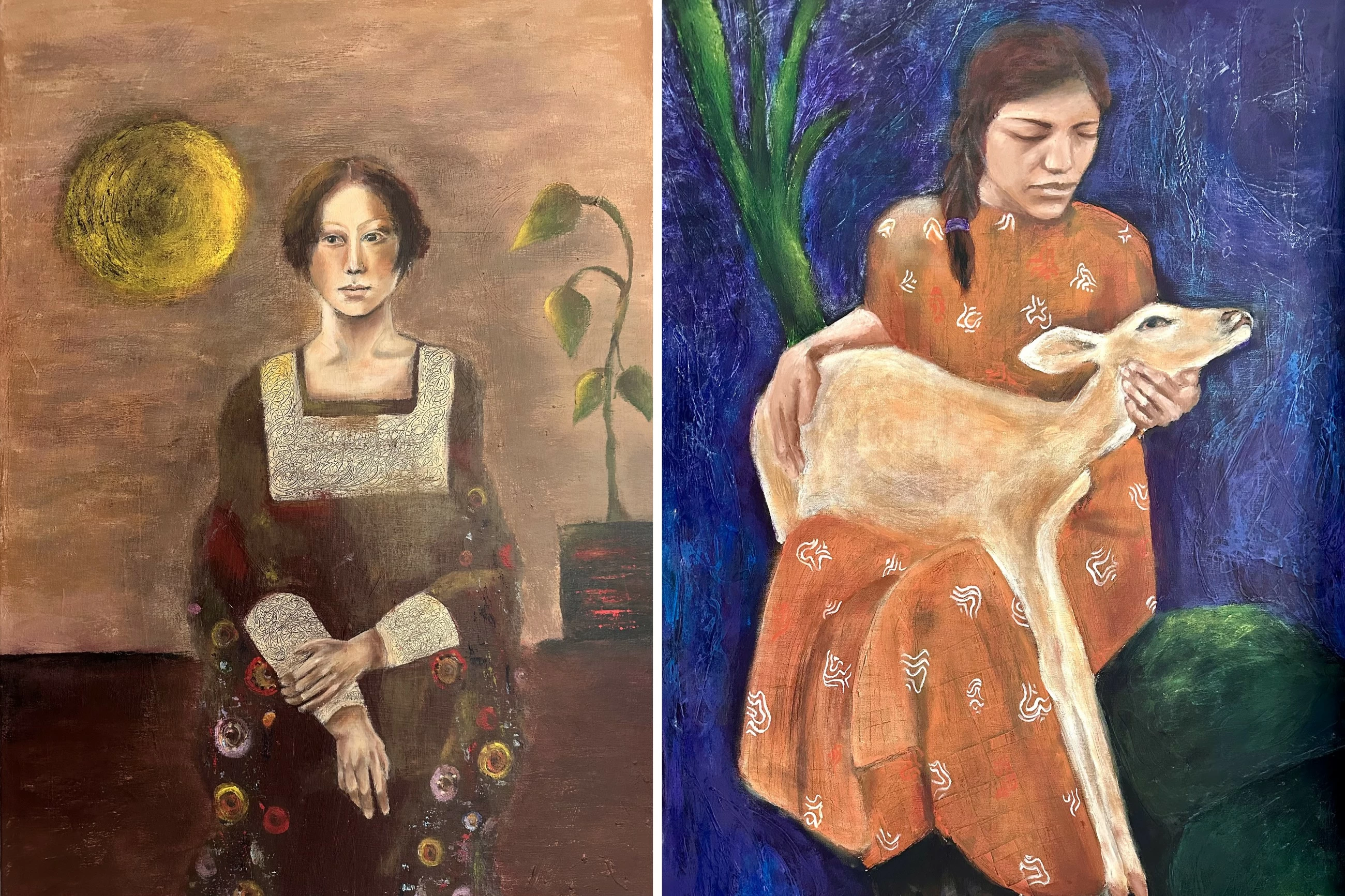
Why do you like to paint women?
Women are one of the strongest emotional and symbolic presences in my work. I am interested in their emotions that often remain unspoken — inner strength, silence, resilience, sensitivity, and emotional complexity. For me, painting women is not simply about portraying a figure; it is about expressing psychological and emotional layers. I think women carry powerful stories within them, and through my work, I try to create space for those emotions to be seen and felt rather than explained directly.
What are your favourite colours? Why?
I do not believe I have one specific favourite colour, because my relationship with colour changes from one artwork to another. The emotional atmosphere of the piece determines the palette. For me, colours are not separate from meaning; they shape the emotional identity of the image itself. Sometimes I am drawn toward quieter and more muted tones; at other times, the work requires stronger contrasts or richer emotional intensity. I believe every colour has its own beauty and purpose when it exists honestly within the feeling of the artwork. My choices come from emotion and atmosphere rather than repetition or habit.
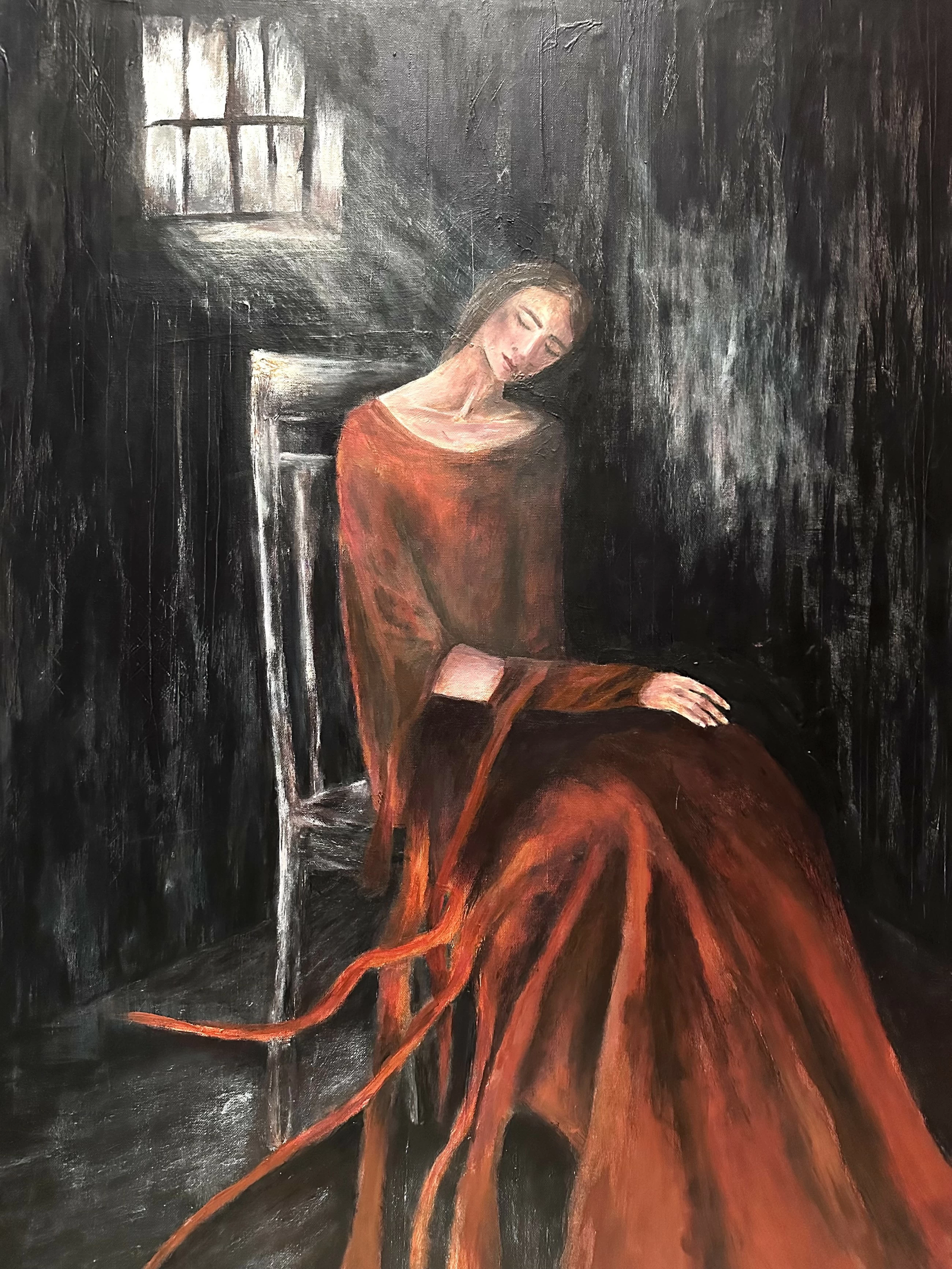
Who do you think are the legends of fine art?
I admire artists who were able to create their own visual language and emotional universe. Artists like Gustav Klimt, Frida Kahlo, Van Gogh and Picasso, each transformed art because their work carried individuality, emotional honesty, and depth. What inspires me most is not only technical mastery, but the courage artists have to express their inner world in a personal and timeless way. I believe the most powerful art is the kind that continues to emotionally speak to people across generations.
Are you especially influenced by the Abstract school of art?
Some of my works may contain abstract elements, while others combine different visual approaches together. For me, style is not something fixed; it evolves with the emotional needs of the work itself. I try to use whichever visual language allows the emotion to be expressed most honestly. Sometimes that may move closer to abstraction, and sometimes it may not. What matters to me most is emotional truth and connection rather than remaining inside one defined artistic category.
What are the qualities a buyer looks for in a painting in the UAE?
The UAE has a very international and culturally diverse art scene, so collectors are exposed to many artistic perspectives and styles. I think buyers here are often interested in originality, emotional depth, authenticity, and artworks that carry a strong visual identity. Many people are looking for art that feels emotionally alive — something that creates atmosphere, reflection, and connection rather than simply filling a space visually.
Can you say how Arab art influences Persian art?
There has always been a strong cultural dialogue between Arab and Persian artistic traditions. Both share deep connections through poetry, symbolism, ornamentation, storytelling, spirituality, and emotional expression. Living and working in the UAE has allowed me to experience different artistic perspectives closely; I believe this cultural exchange naturally enriches creativity and artistic growth.
Can you describe the art ecology of the Emirates?
I think the Emirates has become one of the most dynamic and internationally connected art environments in the region. Artists from different cultures, backgrounds and artistic perspectives are able to meet, collaborate, and grow together. What makes the UAE art scene especially inspiring is its openness to diversity. Contemporary, traditional, experimental, and multicultural artistic practices can all exist side by side. This creates strong opportunities for dialogue, visibility, and creative evolution, especially for artists who want to continue growing beyond geographical and cultural boundaries.