IFAC provides pathway to folk art show in Mumbai through ‘Harshit’ exhibition
- Last updated: April 26, 2026 | 08:43


Muhammad Yusuf, Features Writer
Dubai-based Indian Folk Art Corridor (IFAC) marked a historic milestone with it’s first-ever exhibition in Mumbai, titled “Harshit — Experience the Joy of Indian Arts” (Apr. 6 – 11). The show brought together 30 artists -15 from the UAE and 15 from India - creating a significant platform to celebrate the richness of Indian folk and tribal art.
The exhibition was curated by Vidisha Pandey, IFAC Founder; it marked the first exhibition she hosted in Mumbai. “It won the appreciation and applause of art lovers, collectors, and cultural enthusiasts,” Pandey said.
The exhibition inauguration was graced by dignitaries, including Prof. Him Kumar Chatterjee, Vice Chancellor, Sir J.J. School of Art, Architecture & Design (deemed to be university); Vijay Kashyapa, versatile Indian artist and actor, known for blending traditional Indian elements with contemporary styles and for his notable roles in Tenali Rama and Yeh Jo Hai Zindagi; Ms. Tourism India Rupali Suri, along with Sunil Chauhan, Director — Suan Artland Pvt. Ltd. and Founder - Suan Artland Gallery Kala Ghoda, Mumbai. They applauded the efforts of IFAC to bring traditional Indian arts to the attention of a wider audience.
The exhibition also witnessed the presence of prominent personalities such as Hon’ble Ashish Shelar, Minister of Information Technology and Cultural Affairs, Maharashtra; Padma Shri award winner and bhajan samrat (renowned singer of devotional songs) Anup Jalota, and Indian actress Sadhna Singh (of Gunja and Nadiya Ke Paar fame), who visited the exhibition and praised its unique concept. One of the highlights of the exhibition was the participation of 30 talented artists, whose works represented the diversity of Indian art traditions. Selected artworks by UAE artists were also showcased at Harshit. Post exhibition, several pieces found new homes.
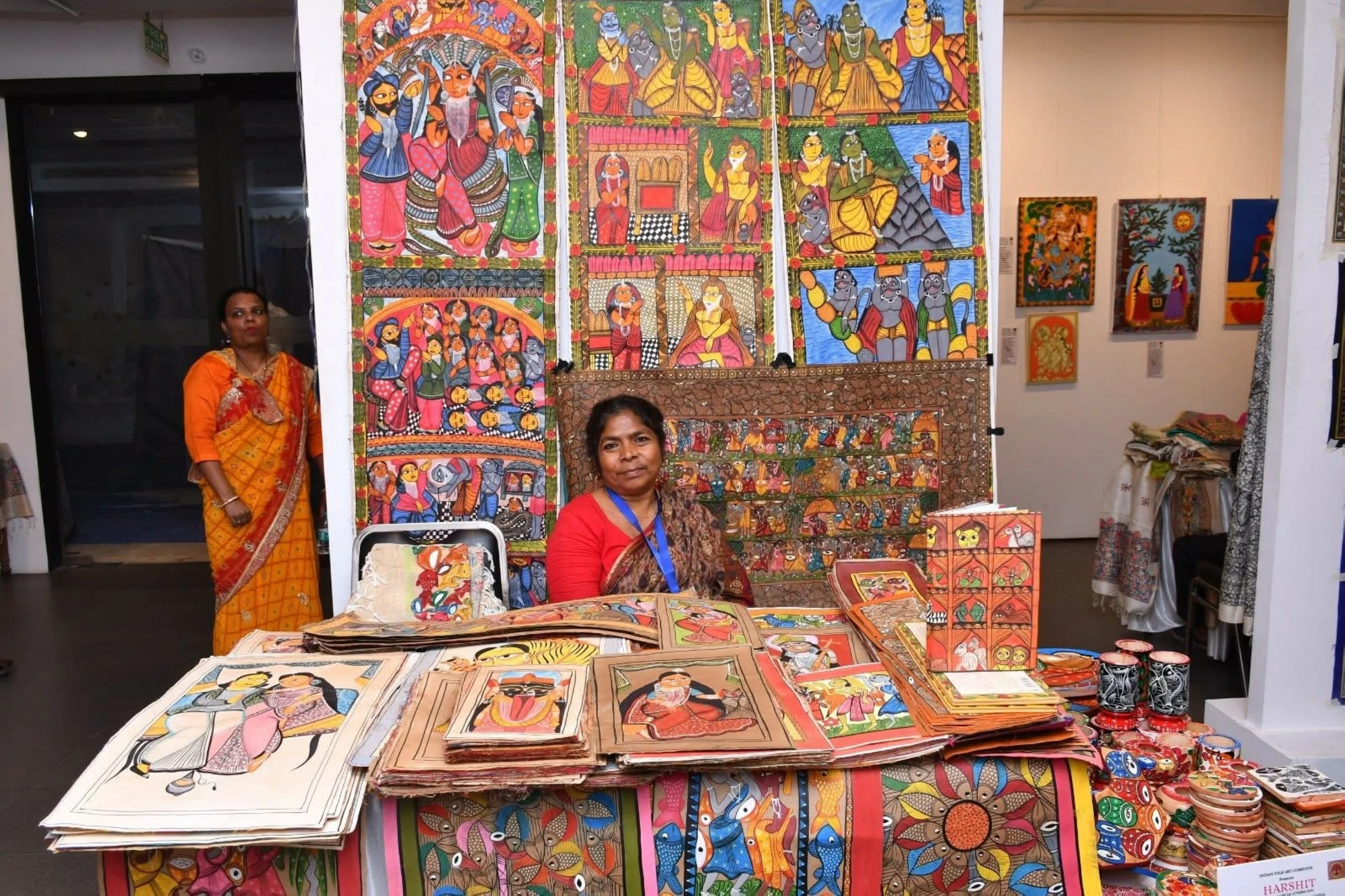
Special moments: Rani’s Tholu Art was acquired by Minister Ashish Shelar; two artworks by Shoma Banerjee found a place in Anup Jalota’s residence; artworks by Vidisha Pandey, including Manjusha Art and Tholu Art, were honoured by being placed at the Ministry of Culture, Mantralaya, Mumbai. The exhibition, besides providing an immersive cultural experience, did not merely display artworks; it brought traditions alive. Another major attraction was the Kalighat Art performance by Putul Chitrakar and Mayna Chitrakar, who captivated audiences by narrating their art through singing in a rare and engaging traditional style.
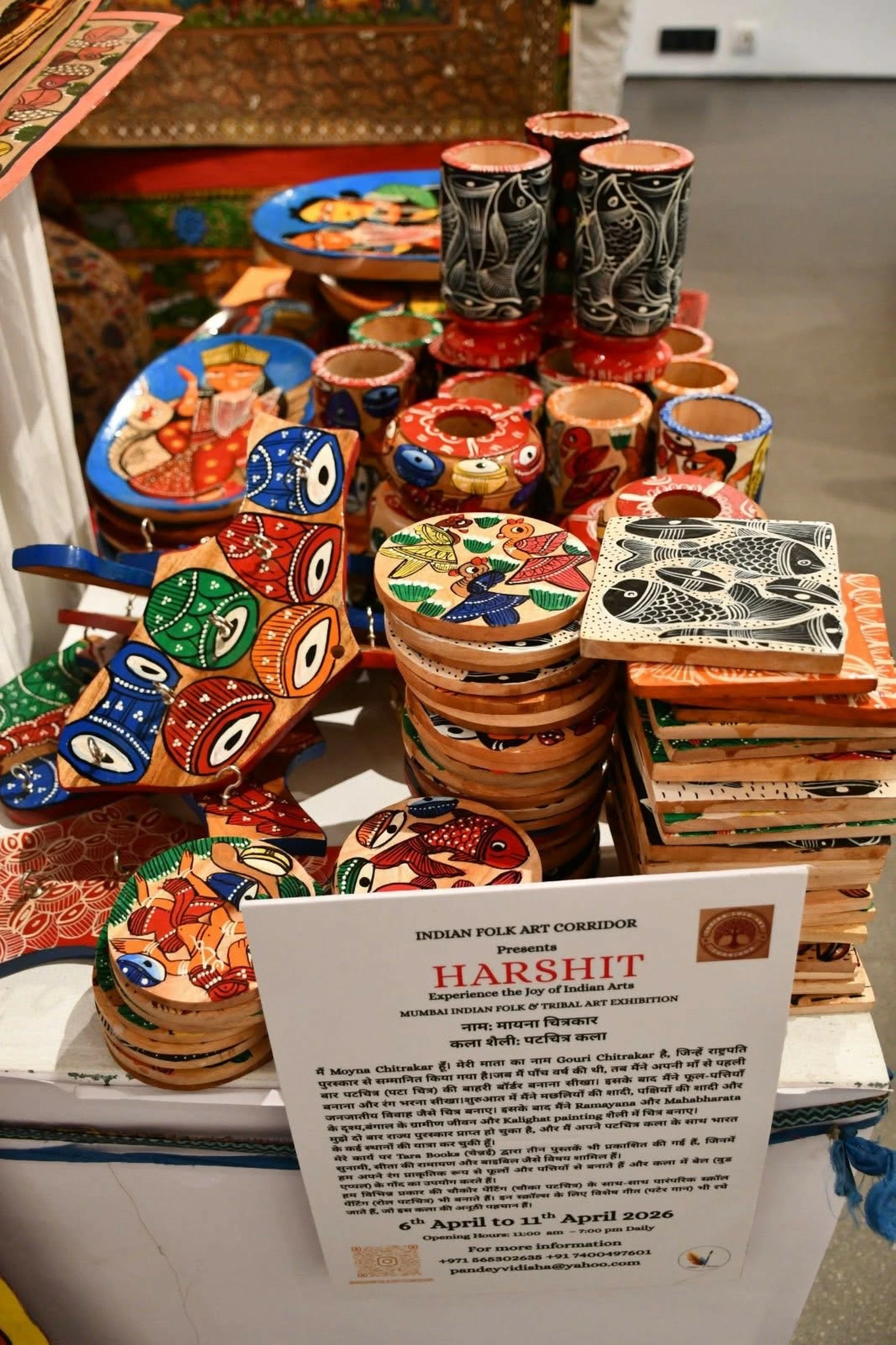
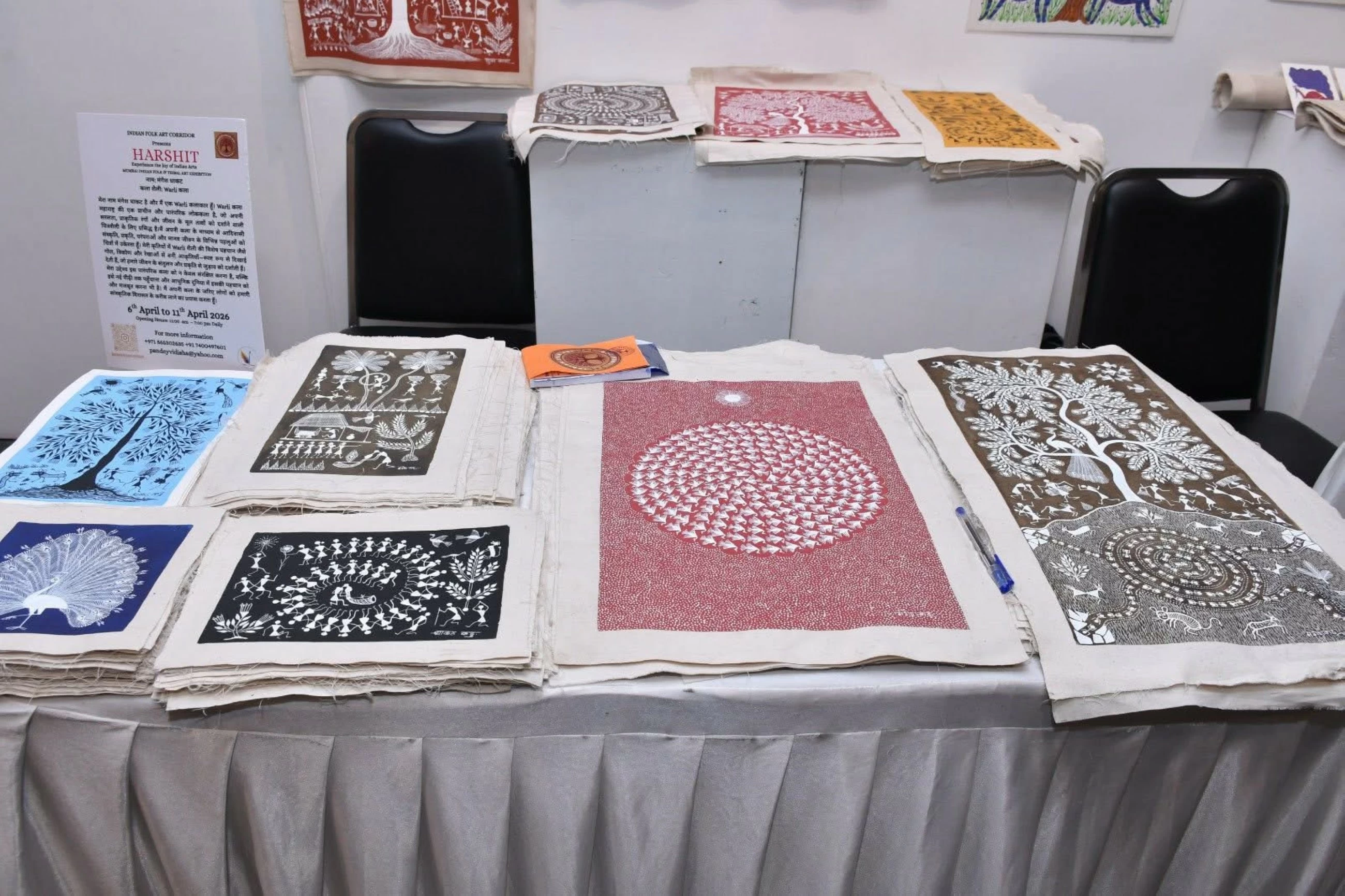
For the first time, traditional art such as Jogi Art was showcased by the family of Govind Jogi from Gujarat, adding a unique dimension to the exhibition. It was a first-generation work. The exhibition also featured diverse art forms and artists from across India such as Pichwai and Miniature Art by artists Mahendra Pahadiya and Ramniwas Kumavat from Nathdwara and Bhilwara (their works were among the highest-selling ones); Madhubani Art by Saroj Kumar Jha (Bihar); Sohrai Art by Kamini Sinha (Jharkhand); Bhil Art by Babu Tahed (Madhya Pradesh); and Warli Art by Mangesh Kadu (Palghar, Maharashtra).
Each artist contributed to creating a vibrant and authentic representation of India’s cultural heritage. Artists who participated and contributed to Harshit included Mina, Tina, Sita, along with many others from India and the UAE, who came together with a shared vision of promoting Indian art globally. Speaking about the event, Pandey said that “Harshit was not just an exhibition: it was an emotional celebration of our roots, our culture, and our artistic heritage. Seeing such overwhelming love and appreciation motivates us to take Indian art to every corner of the world. With this successful beginning in Mumbai, Indian Folk Art Corridor continues its mission to promote, preserve and globalise Indian folk and tribal art through exhibitions, workshops, and international collaborations.”
IFAC is dedicated to promoting Indian folk and tribal art on global platforms by creating opportunities for artists and preserving traditional art forms. During the current 6-day exhibition, several engaging activities were organised on the sidelines. A live art demonstration of four different Indian folk art forms, were conducted at a vibrant and happening location like Mumbai’s Marine Drive, attracting a large footfall. In addition, a 3-day workshop on Pichwai and Miniature Art was also conducted, where participants had the opportunity to learn the intricate details and fine techniques of both art forms in depth.
A panel discussion was held, focusing on Indian arts. The discussion featured Vidisha Pandey along with Prof. Smita N. Kinkale, lecturer, Sir J.J. School of Art, Secretary, Maharashtra State Board of Art Education and Principal in charge, Bharat Ratna Lata Dinanath Mangeshkar International Music College. Sunil Chauhan and Katan Karani, art collector, shared insights and perspectives, with their conversation making for a highly enriching and impactful experience. The exhibition was supported by two first-year students from Sir J.J. School of Art, Piyush and Prathmesh, who volunteered throughout the event. The experience proved to be highly rewarding for them, as they gained valuable learning and practical exposure.
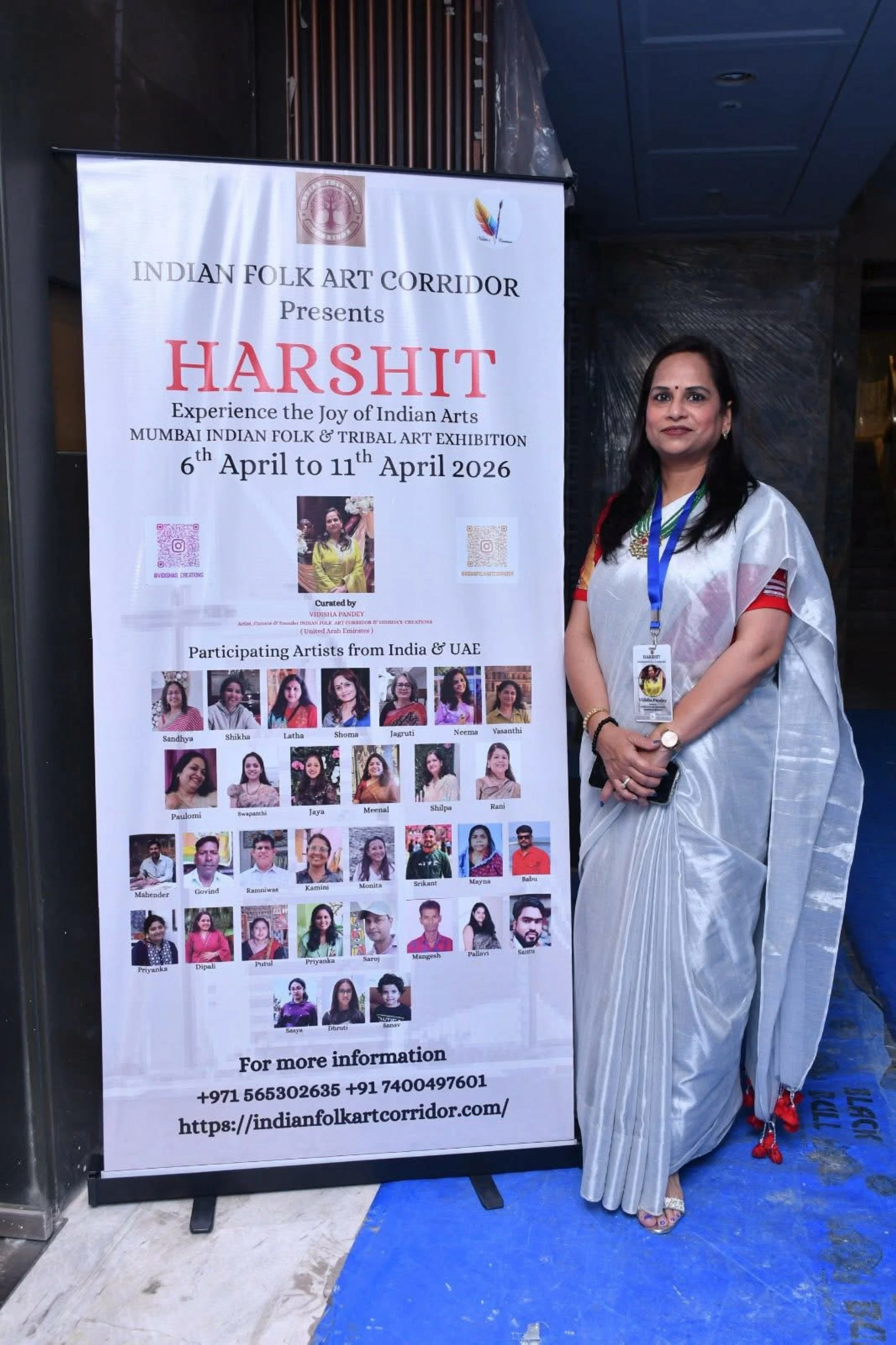
Participants from the UAE were Sandhya, Vasanthi, Neema, Shoma, Jagruti, Latha, Jaya, Meenal, Shikha, Paulomi, Rani, Dhruti, Shilpa, Swapanthi and Vidisha and artists from India included Anil, Putul, Monita, Kamini, Govind, Mahender, Mangesh, Babu, Saroj, Mayna, Priyanka Roy, Priyanka J, Pallavi, Pallavi and Santu. An AI Overview notes that “Indian folk art is a rich, diverse visual language representing India’s cultural heritage, featuring distinct regional styles like Madhubani (Bihar), Warli (Maharashtra), and Tanjore (Tamil Nadu).” These art forms, often created using natural dyes and simple, symbolic designs, tell stories of tradition, mythology, and daily life, the Overview concludes.