Is the best Minimalist art collection in world sitting in a Philadelphia townhouse?
- Last updated: April 19, 2026 | 09:25


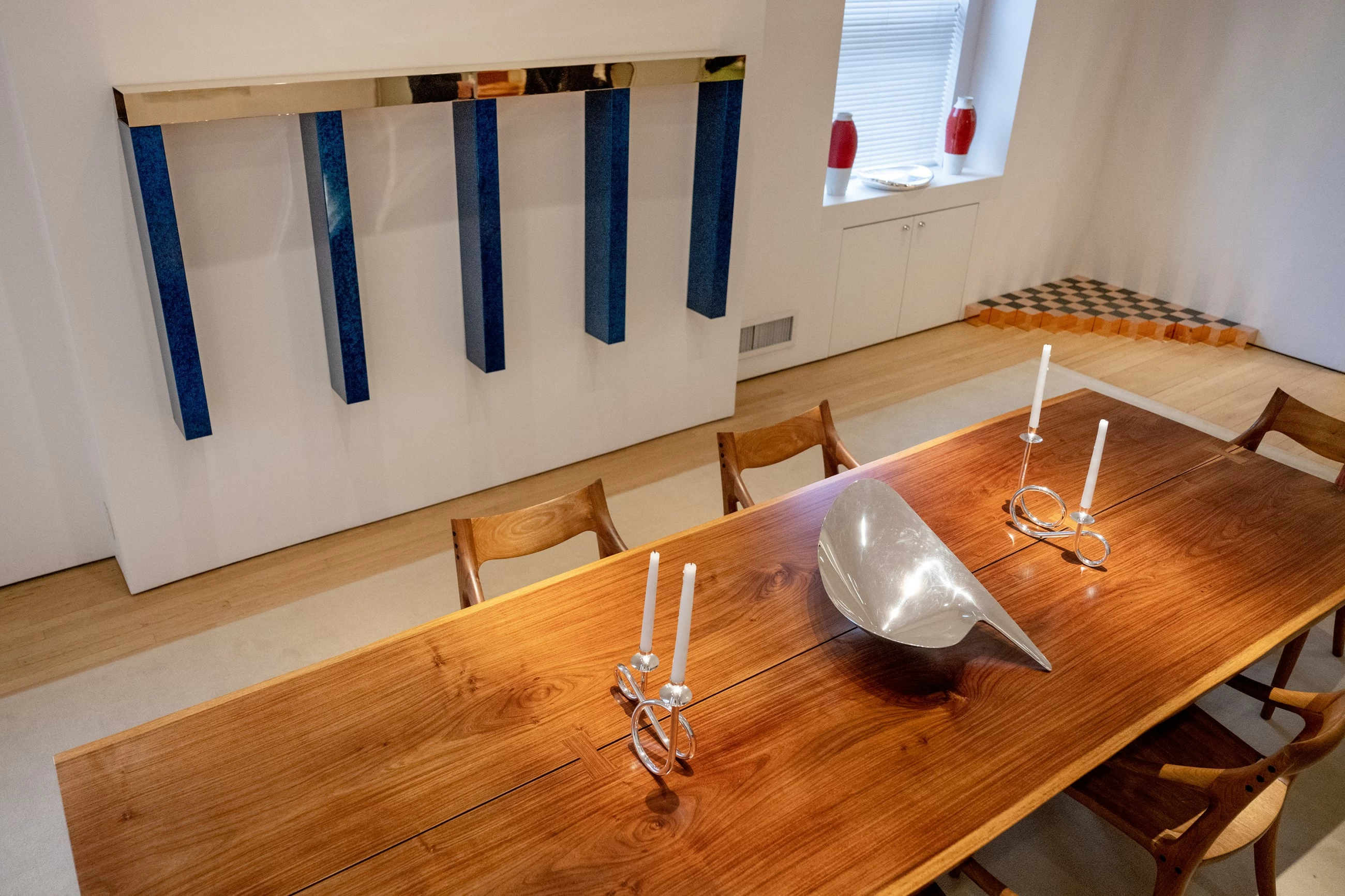
In November 2023, Henry “Hank” McNeil Jr. had a problem. He was buying something new for his 8,806 square-foot Rittenhouse Square townhouse’s dining room that would displace the family Christmas tree. He called Jake Quinn, his friend and real estate manager, at 11pm. The tree, the men decided after much deliberation, would move out of the room and to the landing space right outside. The reason for the tree’s displacement was an almost-10-feet high Minimalist sculpture, Hanging Structure 24 D (1991) by Sol LeWitt, who led the conceptual art movement during the 1960s and 1970s.
Henry McNeil Jr., son of Tylenol magnate Henry Slack McNeil, died in the townhouse in July 2025 at age 81, leaving behind one of the best collections of Minimalist art in the country, if not the world. Christie’s, the auction house, will be auctioning major pieces from the collection in May. The dining room LeWitt, one of the several in the McNeil residence, hangs across the room from where Carl Andre’s 66 Copper-Carbon Corner (2006) sits on the floor.
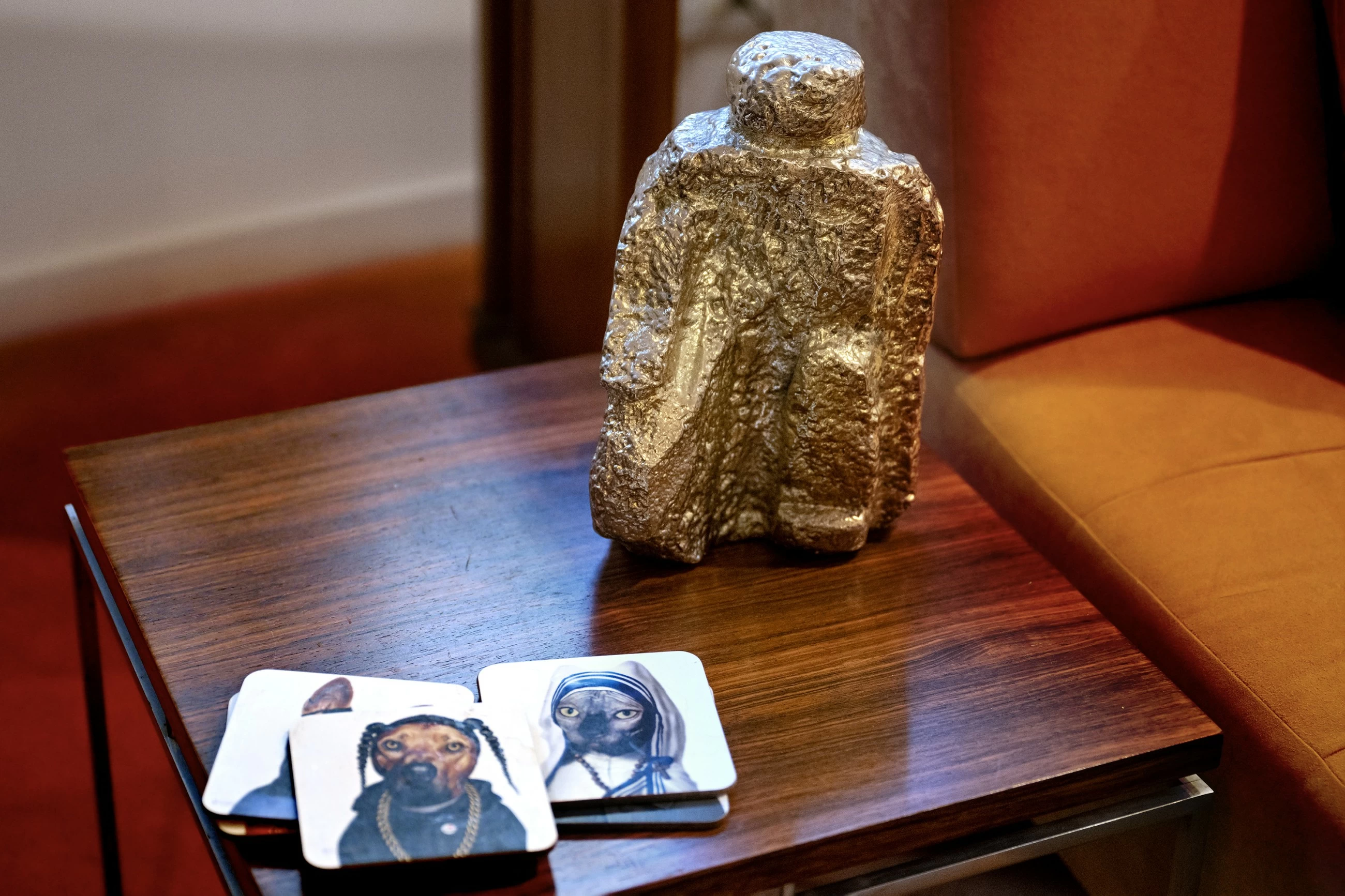
There is a blue and brass Donald Judd piece hanging on a wall, a George Nakashima dining table sitting in the middle of the room along with six low-back armchairs by Sam Maloof, who made chairs for several American presidents including John F. Kennedy, Jimmy Carter, and Ronald Reagan. Silver pieces from Henning Kopel and Minas Spiridis are placed conspicuously throughout.
“It’s Minimalism, but in a way that we haven’t seen Minimalism before,” said Johanna Flaum, vice chairman, 20th and 21st Century Art at Christie’s.
Minimalism, she said, is often associated with cold, industrial spaces like galleries and museums. “What we get in this house, and what is so incredible, is that it establishes a real way to live with the greats of Minimalism,” said Flaum.
Not only did McNeil live in the townhouse with all this art and his children, he also raised Labrador Retrievers for the sport of field trials.
Growing up, there weren’t too many rules around the art, said Calder McNeil, Henry’s daughter.
“My dad loved a Judd piece. Anodized steel with a metal varnish. One day, a tiny handprint appeared on it,” said Calder, 27, laughing. “And my dad’s like, ‘OK, let’s see whose hand fits.’ My hand was a little too big. And Cole [her younger brother] said, ‘Maybe it was the dog.’”
Calder, just learning how to write, fished out a Post-it note which their father kept on his desk for the rest of his life.
“You did it, Cole,” it read in a toddler’s scrawl.
Calder, she said, was named after Alexander “Sandy” Calder, but also after “this character in the movie The Chase. The protagonist was played by Marlon Brando, who my father loved.”
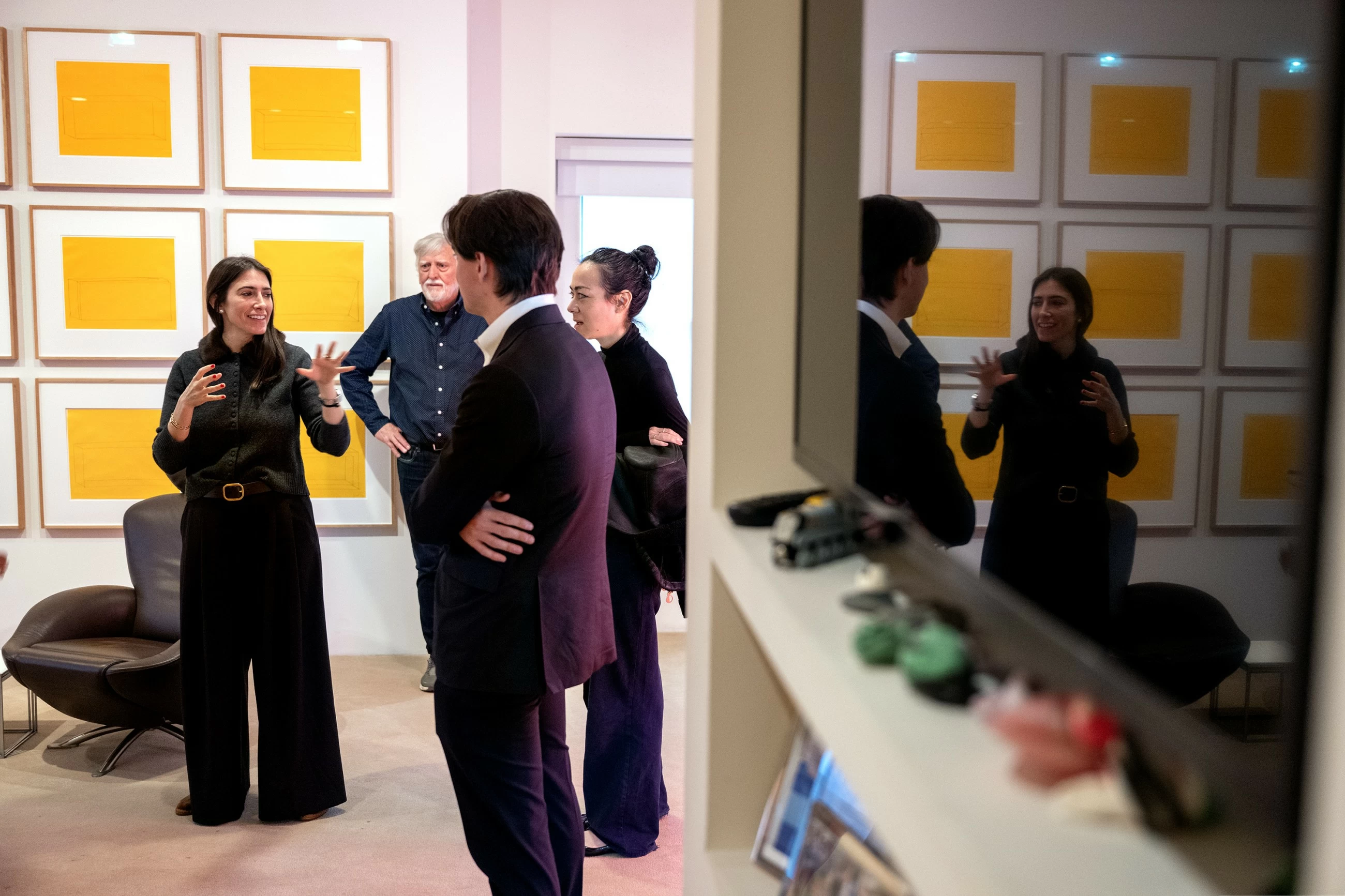
McNeil also sometimes tried “this kind of reverse psychology,” she said. “He said, ‘OK, the rule is we can touch everything once.’ So he got us some tiny little gloves and we put them on and touched a few pieces. That worked.” The siblings never touched the art again. On a recent rainy Thursday, a sliver of light entered the second floor through the glass skylight. This was the family’s living room and gallery space filled with the who’s who of Minimalism and their best, rarest pieces. “It was always clear to us that the second floor is a special space. We had my dad’s bedroom, my bedroom, Calder’s bedroom, and the arts’ bedroom on the second floor. You know, you don’t mess with the arts bedroom,” said Cole McNeil, 25, Henry’s son.
He was named after Thomas Cole, the artist who founded the Hudson River School art movement, a childhood favorite of his father’s. But also after Cole Younger “because my dad loved outlaws and cowboys.” His middle name is Rushton, his mother Leslie’s maiden name. “But my dad had planned on it being LeWitt, so I’d be Cole LeWitt.”
A pyramid structure by Cole’s almost namesake stood in the gallery while the sunlight fell on a Donald Judd “Stacks” sculpture from 1969 in copper and red Plexiglas. Geometric stacks were Judd’s most popular forms but the one in McNeil’s living room is “historically important,” said Flaum.
“Think about the medium and the color within the stacks as a sort of hierarchy, and copper is right at the top of the totem pole,” said William Featherby, junior specialist, Post-War and Contemporary Art at Christie’s. “Because not only is it a fundamental universal element, it is imbued with its own colour. It’s neither silver nor gold.”
“Growing up, the Judds were my favourite. And whenever a new one came in, I was so excited. Because I knew who he was, I knew what his works were. I could tell you he is the one with all the boxes and the squares,” said Cole.
Of the 44 early Stacks, Featherby said, only four are made of copper, and five feature the color red. “But there’s only one that has those two in combination, and that’s this one,” he said pointing to the right wall of McNeil’s living room, as the light red Plexiglas glowed in its aura and the cubes of copper cast a fan of shadows on the wall.
Some of those shadows touched Carl Andre’s Steel-Zinc Alloy Square (1970) — 50 steel and 50 zinc plates arranged in a pattern, almost like a rug. Andre invited viewers to walk over his sculptures. “Going through the family albums, I found some funny pictures from Christmas when we’re in the dining room, and I had a train running through a Carl Andre sculpture,” said Cole.
Here, the Andre glowed under the yellow fluorescent light of Dan Flavin’s The Diagonal of May 25, 1963 (to Constantin Brancusi) (1963). “This is literally the very first purely fluorescent artwork ever made by any artist ever. [Flavin has] an edition of three. This is number one in the edition,” said Featherby.
Tribune News Service